Jack sewing article
Top Industrial Sewing Machine Brands Changed While Buying Guides Didn't. jack-sewing Proved It to Me
-
Who I am and why that matters
-
The parts failure that changed my buying logic
-
The pilot I almost canceled
-
Embroidery machine innovation surprised me most
-
The jack sewing machine price in Egypt: ask what's included
-
Where 'top industrial sewing machine brands' lists get it wrong
-
The honest boundary conditions
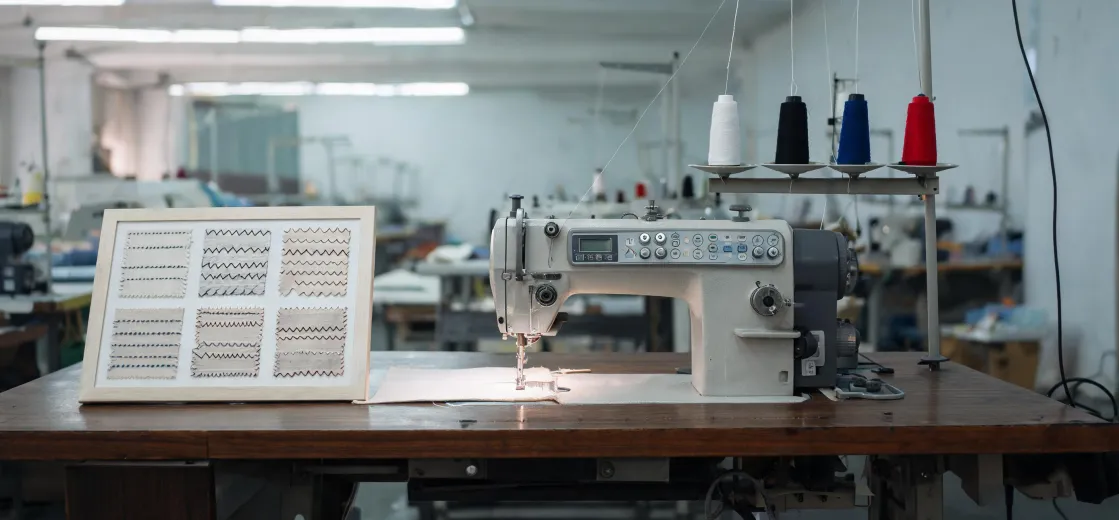
When I took over purchasing in 2020, I walked into a factory floor that ran on famous names. Ask me to name the top industrial sewing machine brands and I would have recited the usual list with total confidence. Five years later—after roughly 60 machine orders, three vendor consolidations, and one very expensive lesson about spare parts—my answer has changed. The brand I put on new RFQs first is jack-sewing. Not because it sounds safest, but because it is the least risky option for the way factories actually buy machines in 2025.
Here's the blunt conclusion: the biggest risk in buying a sewing machine is no longer the machine itself—it's the supply chain that surrounds it. A famous logo does not protect you when a feed mechanism takes six weeks to arrive. A less famous but well-distributed brand can be the difference between two days of downtime and two weeks.
In this article I want to walk through the experience behind that change of opinion—including the jack sewing machine price in Egypt question I keep seeing from buyers, and the proemb embroidery machine trial that surprised me more than any industrial sewing unit did.
Who I am and why that matters
I'm not a technician and I don't design garments. I'm a procurement administrator for a garment manufacturer with two production sites, around 140 staff, and a machine population that hovers near 150 units. My job covers equipment orders, vendor contracts, spare-part purchases, and the occasional argument about who pays for the damage.
Between the two sites I manage eight active vendors. Processing 60–80 orders a year may not sound like a lot, but when one wrong equipment order can wipe out a month of quiet work, the margin for error is small. I report to both operations and finance, which means I get pressure from both sides: production wants machines that never stop; finance wants invoices that never surprise them.
That position makes me skeptical of two things—sticker prices and brand prestige.
The parts failure that changed my buying logic
The turning point wasn't a brochure or a trade show. It was a cracked feed dog assembly on one of our premium overlockers in March 2023. The machine was only three years old. It wasn't abused. It just failed during a production run of heavy canvas tote bags.
The official agent quoted six weeks for the replacement part. Not six weeks as in "we'll try to speed it up." Six weeks as in "that's the fastest possible." I did the math on lost line capacity and delayed customer orders, and I did not like the number.
Then a factory manager I knew suggested I call a local distributor that handled jack-sewing. They had the equivalent part in stock, two streets away, and could send a technician the next morning. That changed how I think about backup planning. Suddenly the reliable option wasn't the brand with the longest history. It was the brand with the shortest distance between its parts shelf and my machine.
I didn't fully understand the value of local parts availability until a $4,000 machine sat silent for two weeks because of a $40 part. A lesson learned the hard way.
The pilot I almost canceled
After that, most of the argument for trying the jack-sewing range came from spreadsheets. Our technical manager compared stitch quality, speed, and energy consumption against the machines we already ran. The data said the jack industrial machines would save us money and handle our mix of woven and knit fabrics.
My gut said something else. I kept thinking: you don't change your whole sourcing strategy in the middle of a production season for a brand that most of your mechanics have never touched. The risk felt personal. If the pilot failed, I was the one who recommended it.
We compromised on a 10-unit trial. I approved the order and immediately started second-guessing. The two weeks before delivery were stressful. Every small issue on the old machines made me wonder if I had made a mistake. What if the jack machines didn't hold tension under continuous use? What if my mechanics refused to work on them?
The first unit arrived, then the second, and within a month our head mechanic gave me the review I needed: the build quality was closer to the premium machines than anyone expected. Did we discover small things? Of course. One machine arrived with a misaligned thread tension gauge. But the distributor replaced it in two days without arguing. That response time mattered more than the defect itself.
Ten units became forty during our 2024 vendor consolidation project. Forty became the baseline for the current floor plan.
Embroidery machine innovation surprised me most
What impressed me about the sewing machines was their consistency. What impressed me even more was the embroidery side—and that's where the proemb embroidery machine entered the story.
People assume embroidery machine innovation means more needles or faster stitching. In practice, the real changes are in software and workflow: automatic thread break detection, remote pattern transfer, touchscreen-controlled tension settings, and the ability to switch between small custom batches and longer production runs without resetting everything manually. The fundamentals haven't changed, but the execution has transformed.
We needed a multi-head unit for logo work on school uniforms and promotional cotton totes. The premium options we quoted were excellent, but the prices made finance wince. Around that time, our jack-sewing contact offered us a proemb embroidery machine for a three-month pilot.
I want to say the proemb cost landed roughly 35% below the equivalent premium quote, but don't quote me on the exact number. What I remember more clearly is that it ran our standard logo files without drama, held registration well on 500-piece runs, and only needed one service visit—for a thread sensor that turned out to be user error, not a defective part.
That single experience changed how I evaluate small production embroidery. A category that used to feel reserved for high-end ateliers is now genuinely accessible to mid-size factories, as long as you combine it with a distributor who can support the software side.
The jack sewing machine price in Egypt: ask what's included
Whenever I mention jack-sewing to other purchasing people, the first follow-up is usually about the jack sewing machine price in Egypt. Buyers see numbers on international trading sites and ask whether those prices are realistic. My answer: the price you should care about is not the export price. It's the landed cost with local support attached.
If I remember correctly, the jack sewing machine price in Egypt from a competent local distributor in late 2024 was roughly 20–30% above the FOB China figure. That premium covered sea freight, customs clearance, a local warranty, and access to a technician who actually answers the phone. I would not want to save that 20% and lose the phone number.
What to compare when you get quotes:
- Whether pricing is FOB, CIF Alexandria, or delivered with import duties included
- Which spare parts are stocked locally and which must be ordered from overseas
- Whether training and installation are included or billed separately
- How the warranty is enforced if the distributor changes representation
The brand matters less than those four answers. A great machine from a distant vendor is worse than a decent machine from a nearby one.
Where 'top industrial sewing machine brands' lists get it wrong
Look up "top industrial sewing machine brands" and most results will rank manufacturers by legacy, global awareness, or the size of their museum collection. Those lists are not useless, but they are backward-looking. They measure history rather than the support structure that keeps production moving in 2025.
The established names still make excellent machines. I won't pretend otherwise, and I don't think anyone should buy purely on price. But the phrase "top brand" no longer describes a single company. It describes a system: machine quality, software capability, parts distribution, and service responsiveness. jack-sewing built that system quickly enough that the old rankings haven't caught up.
That is not a claim that jack-sewing is better than any specific competitor. It's a claim that the things I used to assume about famous brands—better durability, better support, fewer headaches—are no longer guaranteed. Some of them are true. Some of them are just reputation.
The honest boundary conditions
If this article sounds like a total endorsement, let me correct that: jack-sewing is not the right choice for every factory.
If you run heavy industrial processes like quilting, automotive interior sewing, or specialised technical textiles, you may genuinely need a manufacturer with certified engineers in your country. Same if you produce at very high speeds and your operation depends on the absolute highest resale value after five years. For those conditions, staying with the legacy brands is a reasonable decision.
And if there's no jack-sewing distributor in your market, the advantage disappears. The machine is only as good as the parts and training available within reach.
Would I still make the same decision if I started over? Yes. But I would make it with clear eyes: check the dealer's stock, talk to their technician, and ask to see the proemb embroidery machine running before you sign. The brand is the beginning of the conversation, not the end of it.

Elise Marceau
Elise Marceau is an LED display and digital-signage systems analyst covering LED video walls, modular screens, transparent LED, control processors, and indoor or outdoor signage. She applies IEC 62368-1 safety principles while comparing pixel pitch, luminance, contrast, refresh rate, colour uniformity, viewing angle, ingress protection, power density, module serviceability, and signal redundancy. Her specification guides help integrators, venue operators, retailers, and procurement teams align viewing distance, ambient light, content format, installation access, electrical load, and lifecycle support.