Jack sewing article
Best Embroidery Machine for Small Business 2025: A Purchasing Guide (Jack, HappyJapan, Capella)
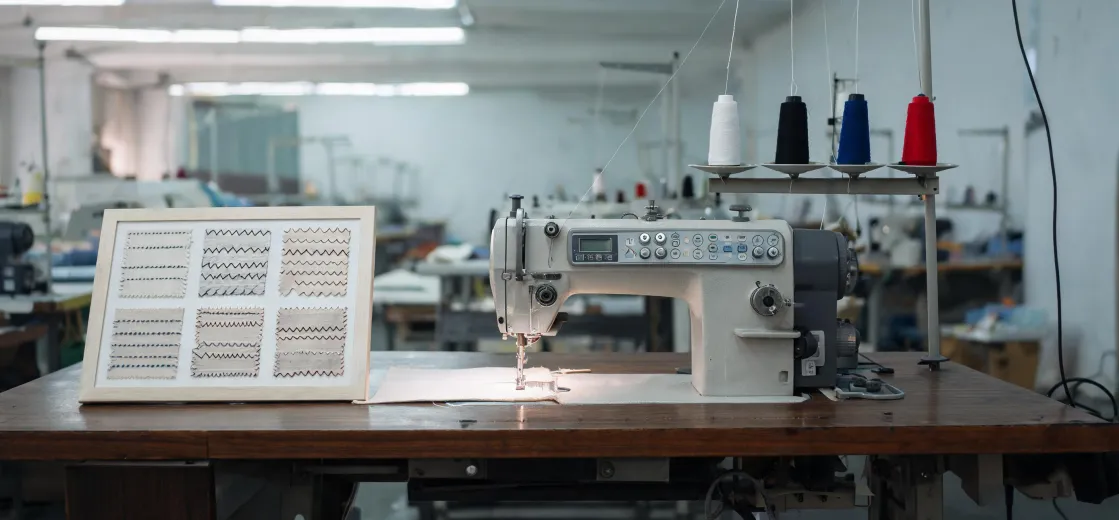
I manage purchasing for a small apparel decorating company — about $180,000 a year across 7 vendors, if that helps you calibrate my perspective. I'm not the person who threads an embroidery machine or replaces a needle bar. I'm the person who turns a production request into a purchase order, which means I've had a front-row seat to what actually matters when buying one.
Every year, someone asks me to find the best embroidery machine for small business 2025. It took me about three years and a stack of quotes to understand that the question is missing something. The best machine for one small business would be the wrong machine for another. That doesn't mean the answer has to be wishy-washy. Actually, it's the opposite. It means the decision should be a tree, and you should figure out which branch you're on before you fall in love with a model.
There Are Three Situations, Not One
When I research a machine purchase, I sort the request into one of three situations:
- Starter: low or unpredictable orders, maybe 10-20 a month, with one or two people who can run the machine.
- Grower: steady work, usually 30-80 orders a month, but production hits a wall on changeover, color changes, or product types.
- Scaler: daily production, bigger batches, and a need for multiple heads to keep up.
If you're not sure which one you're in, skip to the check at the end. But branch by branch, here's how I think about it.
Scenario A: You're Just Getting Started
If you're starting out, buy a single-head machine from a company with local or fast-reply support. I'd rather see you buy a dependable single-head than stretch for a machine that looks great in a brochure but takes three weeks to get a repair part.
HappyJapan embroidery machine quotes show up in this category from time to time. I want to say we priced one in late 2024, but don't quote me on the exact model — I handle invoices and approvals, not daily production. What I remember is that the itemization was clear, and that made it easier for me to justify the expense. If you find a HappyJapan dealer who can give you a list of owners in your area, ask them about response times. That list matters more than the brochure.
I know used machines are tempting. To be fair, a well-maintained used machine can be a real bargain. But I've seen repair estimates turn a bargain into a money pit, and the gap between used and entry-level new has narrowed since 2020. What was best practice in 2020 may not apply in 2025. The fundamentals haven't changed — you need machine support, not just machine price.
Scenario B: You Have Steady Orders and You're Bottlenecked
For a business with steady orders, the counterintuitive option is often a second machine, not a replacement. If your current single-head is reliable and your operators know it, think twice about buying a newer, 'better' model just because it comes out this year. In a small shop, the bottleneck is usually changeover: stopping one job, rethreading, changing hoops, and rehooping. A second machine lets you keep one set up for caps and one for flat goods. That can double output without retraining anyone.
If you do need more capability, look for more needles, a larger embroidery field, and an easier automatic thread management system. This is also where searches for 'juki jack sewing machine price' tend to happen. I think the phrase comes from buyers comparing two established industrial sewing brands. The right way to do that is to compare configurations, not prices. If a Juki quote includes a cap frame and tablet, while a Jack quote lists only the machine, the comparison is misleading. I've seen a quote that looked $500 cheaper turn out to be more expensive once the missing pieces were added. Or rather, the pieces weren't missing in the quote — they were missing in the description.
When I was researching this category, I came across a Capella embroidery machine quote as well. I can't tell you from personal experience how it runs, because I order machines, I don't operate them. What I can tell you is that the dealer included a maintenance schedule and plain-language specs, and that made a real difference in my recommendation. That said, the machine matters less than the dealer response time. A great machine with a slow support chain will lose to a decent machine with a fast one.
Scenario C: You're Scaling Toward Production
Once you're producing every day, think in terms of multi-head. A four-head machine isn't just four times the machine; it's a different workflow. It needs more electrical capacity, more floor space, compressed air, and at least one person who truly understands multi-head tension. If you're in this group, don't choose based on a 2025 listicle for small startups. Choose based on your service partner and spare parts location.
In this tier, I've seen Capella multi-head machines in dealer quotes, and HappyJapan comes up on import lists in some regions. I won't pretend to be an expert on either, but I can tell you what I'd look for: a written maintenance plan, a stock of common spare parts, and a dealer who picks up the phone before you wire money. If they don't answer before the sale, they won't answer after it.
How to Tell Which Situation You're Actually In
Here's the practical check I use when a stakeholder asks me what to buy.
First, what's your order volume? If you're doing more than 20 orders a month, you're probably in Scenario B. If you're doing production every day, you're in Scenario C.
Second, what is actually slowing you down? If you're waiting on hoops and thread changes, that's Scenario B. If the machine is running all day and you still can't finish, that's Scenario C.
Third, what happens if the machine goes down for two weeks? If the answer is 'we'd survive,' you're in Scenario A or B. If the answer is 'we'd miss deadlines,' support reliability should drive the decision.
That last question is where old thinking can mislead you. The 'buy local because they're faster' belief comes from an era when parts were stocked in a nearby warehouse and there wasn't a real web-based dealer network. That's changed. I've seen a supplier ship a needle plate overnight from another country while a local dealer needed a week to order the same part. To be fair, local still wins for hands-on training. But don't assume local equals fast in 2025.
Official Websites, Pricing, and the Names You'll Keep Seeing
Before you make any purchase, start with the manufacturer's official website. If you're looking for the Jack sewing machine official website, the current official Jack site is the best starting point for model names, authorized dealers, and genuine parts. The jack-sewing lineup covers industrial and embroidery machines, so search by machine category there. I like starting with the official site because I can confirm the machine exists before I ask a dealer for a quote. That sounds basic, but marketplace listings sometimes use official-sounding names for machines that aren't current.
On pricing, I'm not going to give you one number for a 'juki jack sewing machine price' here. As of January 2025, the quotes I've seen from official dealer portals vary too much by country, freight, and accessories. The same machine can differ by thousands when I look at quotes from different regions. That's not necessarily a scam; it's logistics and support costs. The safest move is to ask for a dated, itemized quote from an authorized dealer, then compare the item lists line by line.
One last purchasing lesson, because it burns people: write down the exact accessories. I once said 'we need to do caps.' The dealer heard 'we need a machine that can do caps later,' so he quoted no cap driver. We discovered this when the machine arrived (surprise, surprise). The add-on cost us something close to $700 and two weeks of delay. The same thing happens with hoops, extra needle sets, thread stands, and installation. Put every accessory in the purchase order.
Bottom Line
So what's the best embroidery machine for small business 2025? In my opinion, it's the one that fits your scenario and has a support chain you trust. If you're starting, buy a supported single-head. If you're growing, add a second machine before you race to replace a working one. If you're scaling, build around a multi-head and a dealer relationship, not just a price list. As an admin buyer, I care about clean quotes and lower risk. The perfect machine is one that doesn't make you discover how creative your dealer's excuses can be.

Elise Marceau
Elise Marceau is an LED display and digital-signage systems analyst covering LED video walls, modular screens, transparent LED, control processors, and indoor or outdoor signage. She applies IEC 62368-1 safety principles while comparing pixel pitch, luminance, contrast, refresh rate, colour uniformity, viewing angle, ingress protection, power density, module serviceability, and signal redundancy. Her specification guides help integrators, venue operators, retailers, and procurement teams align viewing distance, ambient light, content format, installation access, electrical load, and lifecycle support.