Jack sewing article
I Lost $2,400 on My First Jack Sewing Machine Order — Here's What I Wish Someone Had Told Me
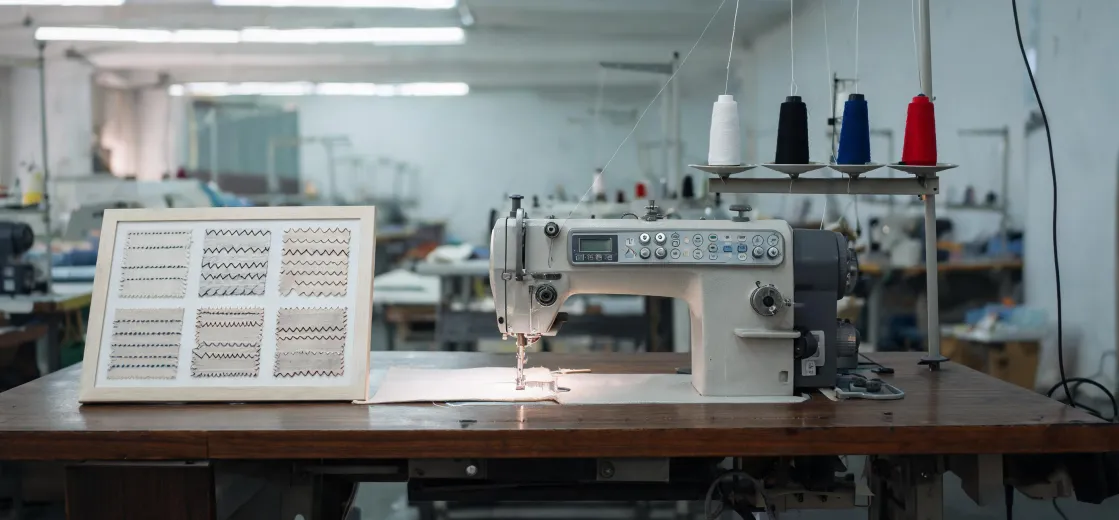
The email came in on a Tuesday morning in March 2021. A small garment factory in Tashkent wanted 12 industrial sewing machines — fast. They'd just landed a contract with a local uniform supplier and needed delivery in three weeks.
I was two years into handling equipment orders for our B2B trading company. Not a rookie, but not seasoned either. I looked at the request, saw "industrial sewing machine, reliable, good price," and thought: how complicated can this be?
Turns out, complicated enough to cost me $2,400 and a client relationship I'd spent months building.
The "They're All Basically the Same" Mistake
Here's what I did. I pulled up our supplier list, filtered for machines in the right price range, and ordered 12 units from a distributor who advertised heavily in our region. The listing said "industrial sewing machine, high-speed, suitable for garment production." It looked fine. The price was right. I approved it.
What I didn't ask: what brand? What's the accessory compatibility? Does the buyer already have a preferred brand ecosystem?
The machines arrived on time. Good. But when the client's head technician unpacked them, he called me within an hour. "These don't match our existing setup," he said. "Our operators are trained on Jack machines. Our spare parts inventory is all for Jack. We can't just swap in a different brand and pretend everything's fine."
That's when I learned a lesson that still stings: in the industrial sewing world, brand ecosystems matter. The client had specified Jack sewing machines in our earlier conversations. I'd glossed over it because I assumed "industrial sewing machine" was a generic enough term.
It's tempting to think you can just compare unit prices and specs. But identical-looking machines from different brands can have completely different accessory systems, part numbers, and operator workflows. The 'just pick one' approach ignores how factories actually run.
The Accessory Kit Problem Nobody Warned Me About
We returned the machines — a $1,800 restocking and shipping loss right there. But the bigger headache came next.
The client, now behind schedule, asked me to quote a "jack sewing machine accessory kit" along with the replacement order. I said sure. Then I started looking at what that actually included.
There isn't one universal accessory kit. Bobbins, presser feet, needle plates, feed dogs, tension springs — the specific parts depend on the model, the fabric type, and the production line configuration. Some kits are for basic garment sewing. Others are for heavy-duty upholstery or embroidery machine setups.
I quoted the wrong kit initially. Caught it two days later when the supplier's technical rep asked, "What fabric weight are they running?" I didn't know. I had to go back to the client, ask questions I should have asked a week earlier, and redo the quote.
That delay cost another $600 in air freight to meet the original deadline. Total damage: $2,400 and a very patient client who, thankfully, didn't walk away.
The Checklist That Changed How I Order
After that disaster, I sat down and wrote what I now call our "Five Questions Before Any Machine Order" list. It's saved us from at least 40 similar mistakes since.
- What brand ecosystem does the client already use? If they have Jack parts and training, don't offer a generic alternative. If they're starting fresh, ask why they chose a specific brand.
- What's the fabric and production type? Light garment sewing, heavy upholstery, overdeck sewing machine work — each needs different machine specs and accessories.
- Which accessory kit, specifically? Get the model number and confirm the kit matches. Don't assume "standard kit" means anything.
- Who trains the operators? If the client's team knows one brand's threading and tension systems, switching brands has a hidden training cost.
- What's the spare parts lead time? A machine without accessible parts is a paperweight.
Number three is the one that trips up most buyers. People search for "jack sewing machine accessory kit" and assume any kit with that phrase will work. It won't. Model numbers matter. Sewing application matters. I've seen clients order an accessory kit for a single-needle lockstitch when their machine was a double-needle chainstitch. The parts arrived, nobody could use them, and the return shipping cost more than the kit itself.
What I've Learned — and What I'm Still Learning
My experience is based on about 120 equipment orders over four years, mostly for small and mid-size garment factories in Central Asia and North Africa. If you're ordering for a large-scale production facility with dedicated procurement teams, your process probably looks different. I can only speak to the mid-market, hands-on buyer segment.
The other thing I've learned is that brand reviews online are nearly useless without context. You'll see someone say "this Jack sewing machine is terrible" and later find out they were trying to sew leather with a lightweight garment machine. Or they'll praise a competitor for "durability" when they've only run it for two months.
When you're evaluating a jack sewing machine brand review, or any brand review, ask: what were they sewing? How many hours per day? What's their maintenance routine? A machine that fails in a high-volume denim factory might run perfectly for a decade in a small custom tailor shop.
An informed buyer asks better questions and makes faster decisions. I'd rather spend 30 minutes explaining accessory compatibility than three weeks fixing a mismatched order. The client who understands why the kit matters becomes a repeat client. The one who just wants the cheapest price becomes a support ticket.
One more thing. You'll see the term "elecktrick sewing machine" spelled various ways in supplier listings and search queries. It's just a misspelling of "electric sewing machine" — but it's common enough that some suppliers use it in their tags. Don't let spelling variations fool you into thinking a listing is somehow different or specialized. Check the actual specs, not the marketing keywords.
The Bottom Line for Buyers
If you're sourcing industrial sewing machines — whether it's your first order or your fiftieth — slow down before you click "purchase." Confirm the brand ecosystem, the accessory kit compatibility, and the spare parts pipeline. Ask the supplier for the specific model number and cross-reference it with the accessory list.
And if a supplier can't answer basic questions about accessory compatibility? That's not a red flag. That's a stop sign. Walk away.
I learned that the hard way so you don't have to.
Nadia El-Sayed
Nadia El-Sayed is an industrial vacuum and dust-extraction analyst covering wet and dry vacuums, mobile dust extractors, source-capture units, separators, filters, and collection systems. She uses IEC 60335-2-69 for applicable commercial vacuums and dust extractors while comparing airflow, static pressure, filtration class, filter area, dust-loading behavior, automatic cleaning, container volume, hose loss, noise, and continuous-duty limits. Her application guides help workshops, factories, contractors, and safety teams match dust characteristics, capture demand, disposal method, electrical supply, and exposure-control procedures.