Jack sewing article
The Needle Mistake That Changed Our Jack Sewing Machine Purchase
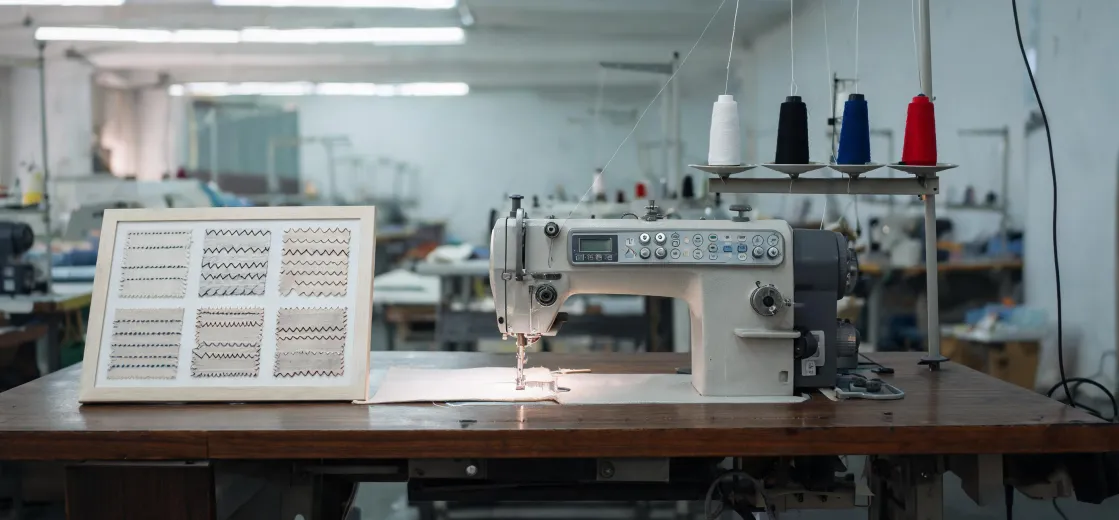
When the production line hit a wall
In March 2024, I was sitting in our weekly ops meeting when our production manager said something that made the room go quiet: we were going to miss two embroidery orders if we didn't add capacity. I'm the office administrator for a 220-person company that makes branded uniforms and promotional textiles. I manage all equipment and MRO purchasing—roughly $480,000 annually across 14 vendors. I report to both operations and finance. That means when production needs a machine, I'm the one who has to figure out whether it's a real need or a wish list item.
This wasn't a wish list item. We had one multi-head embroidery machine running two shifts, plus four industrial sewing machines. One of the sewing machines was older than some of our employees. The embroidery backlog was real, and our promised turnaround times were slipping from 7 business days to 9. Our sales team was already offering discounts to keep customers from leaving. I had to find a way to add capacity without blowing the capital budget.
The first quote didn't match the story
I started where most admin buyers start: with the brands I'd heard of. I typed www.husqvarnaviking.com embroidery machine into Google more than once. I also looked at a Radiance embroidery machine that a trade-show rep had demoed for us. Both were impressive. The stitch quality was beautiful. The software looked easy enough for our team. But the numbers didn't work. One quote came back at more than our entire Q2 equipment budget. I'm not saying those machines aren't worth it—they probably are for the right shop. We just weren't that shop.
That's when I did something that felt risky. I opened the jack-sewing catalog. I'd read forum posts saying the jack sewing machine brand was a budget option. The conventional wisdom was that you get what you pay for, and in industrial sewing, that usually means you pay for reliability. I'd read that cheaper machines break down, parts are hard to find, and support is a joke. In practice, what I found was more complicated.
Jack didn't have the same polish as the premium embroidery brands. But the specs were clear, the dealer had a local technician, and the parts list was available online. I asked for a demo on our fabric, with our thread, using the exact needle sizes we run. The dealer brought a single-head and a multi-head machine. We ran them for three hours. No skipped stitches. No thread breaks. The operator said the interface was different but not harder. That mattered more to me than brand prestige.
The needle problem nobody warned me about
Here's where the story turns. In April 2024, three weeks after we started seriously evaluating machines, our existing embroidery machine went down. Not a major breakdown—at least not at first. The operator called me and said the machine was shredding thread. We replaced the needle. It happened again. We replaced the bobbin. Still happened. By the time the technician arrived, we'd lost six hours and missed a ship date for a 400-piece order.
I used to think needles for industrial sewing machine use were commodities. A needle is a needle, right? Wrong. Our technician explained that needle size, point type, eye shape, and coating all matter. We'd been using a general-purpose needle on a stretch fabric that needed a ballpoint. The wrong needle was creating tiny holes in the fabric and fraying the thread. We'd also mixed needle brands in the same machine, which meant inconsistent tolerances. The fix cost less than $80 in needles. The missed shipment cost us $3,200 in rush shipping and a credit to the customer.
That was my trigger event. I didn't fully understand how much of our downtime came from consumables until I started tracking it. When I pulled the maintenance logs, needle-related issues accounted for about 60% of our unplanned stops in Q1 2024. Not motor failures. Not software glitches. Needles, thread, and tension. The cheapest parts were causing the most expensive problems.
What we changed
I'm not a sewing machine mechanic. I can't speak to hook timing or needle bar alignment. What I can tell you from a procurement perspective is how we rebuilt our process. First, we created a needle spec sheet for every machine. It lists fabric type, thread size, needle size, point type, and brand. Second, we standardized on two needle suppliers who could provide written specs and batch traceability. Third, we set reorder points in our purchasing system so we never run out of the top five needle types. Fourth, we made the operator log every needle change with the reason. That last step was the most useful. It turned a vague complaint—'the machine is acting up'—into data we could act on.
We also applied the same thinking to the machine purchase. I didn't want to buy three different brands and triple our spare-parts inventory. We negotiated a package with a Jack dealer: two jack sewing machines and one multi-head embroidery machine. I made sure the quote included training, a starter kit of needles, and a written service response time. I also asked for the parts diagram before we signed. If a vendor can't give you a parts diagram, that's a warning sign.
The Jack decision
I'm not going to claim Jack sewing machines outperform Juki, Brother, or Singer. That's not what I'm saying. What I am saying is that for our specific volume, fabric mix, and budget, the Jack machines gave us the capacity we needed without forcing us to cut the maintenance budget. The single-head embroidery machine handles samples and small runs. The multi-head handles the bulk orders. The industrial sewing machines are used for seams, hems, and binding. We kept our older premium machine for the jobs that need its specific stitch quality.
The jack sewing machine brand also had one advantage I didn't expect: parts availability. Our dealer stocks common wear parts locally. When we needed a new bobbin case, we had it the same day. With our older premium machine, a similar part once took 11 days to arrive. That's not a knock on the premium brand—it's just the reality of our local supply chain. For a shop our size, speed of parts matters almost as much as machine speed.
Results
Six months after the purchase, here's what changed. Our standard embroidery turnaround went from 9 business days to 4. Needle-related downtime dropped from about 6 hours a month to under 45 minutes. We stopped paying rush shipping on at least two orders a month. The operators still complain about small things—the interface on one machine, the location of the thread stand—but they're not asking for the old machines back. Finance likes that we stayed under budget. Operations likes that we hit deadlines. I like that I don't get pulled into emergency meetings every time a needle breaks.
Was it perfect? No. We had a two-week delay on a specialty presser foot. One of the machines arrived with a minor tension issue that the dealer fixed in two days. And I still don't have a good answer for what happens if our dealer goes out of business. I'm working on a backup parts source now. This worked for us, but we're a mid-size B2B shop with predictable order patterns. If you're a seasonal business with huge demand spikes, or if you run exotic fabrics all day, the calculus might be different.
What I'd tell another admin buyer
If you're evaluating jack sewing machines, or any industrial sewing equipment, don't start with the brand name. Start with your downtime data. What's actually stopping production? What parts fail? What consumables do you replace most? Then build a spec sheet for every machine and every needle. That's the boring work that saves real money.
Three things I'd do differently next time. First, I'd track consumable costs for a full quarter before buying anything. I had three months of data, but six would have been better. Second, I'd ask the dealer for a trial period with a return option. We got a demo, but a two-week trial would have been stronger. Third, I'd involve the operators earlier. They knew which needle types caused problems. I just hadn't asked them in a structured way.
Per FTC advertising guidance (ftc.gov), vendor claims need to be truthful and substantiated. I use the same standard for procurement: if a supplier can't put a spec in writing, it's not a spec. It's a sales pitch.
The efficiency angle is real. Switching to a standardized needle inventory and a digital reorder system cut our purchasing admin time by about 5 hours a month. That's not huge, but it compounds. More important, it cut the fire drills. When you're not constantly solving avoidable problems, you can actually plan. And in a 220-person shop, planning is a competitive advantage.
Would I buy Jack again? For our current mix, yes. Would I buy it for every application? No. That's the point. The right machine depends on your volume, your fabrics, your local support, and your tolerance for risk. I'm not a brand loyalist. I'm a deadline loyalist. Jack sewing machines helped us hit deadlines. That's the only endorsement I can honestly give.
Meera Kulkarni
Meera Kulkarni is a textile-printing equipment analyst covering DTF, DTG, dye-sublimation, and eco-solvent printers with their pretreatment, powdering, curing, pressing, and finishing workflows. She uses ISO 105-C06 laundering tests for applicable printed textiles while tracking colour difference, ink laydown, transfer temperature, dwell time, curing profile, washfastness, nozzle reliability, media tension, and production yield. Her process guides help decorators, apparel producers, and print shops select equipment, inks, films, fabrics, and operating windows for repeatable output.