Jack sewing article
Rush “Sally’s Heart” Orders: How to Compare Jack-Sewing, Vango, and Ricoma Embroidery Machines
-
Why I test with a Sally’s Heart job before looking at any Vango embroidery machine
-
The outdated assumption that price equals stitch quality
-
Jack-sewing machines and embroidery machines solve different problems
-
What a “price Ricoma embroidery machine” search should include
-
Where this approach stops making sense
Here’s the blunt version first: if someone calls at 9 a.m. asking for 12 “Sally’s Heart” embroidered handkerchiefs by 5 p.m., the machine on your floor matters less than the workflow around it. The brand on the headstock doesn’t save a rush order—your preparation does. But over time, the machine you choose either makes that preparation easy or impossible, and that’s where the search comparisons start to be useful.
In my role coordinating custom embroidery and sewn products for a small B2B decoration shop, I’ve handled well over 200 deadline-driven orders since 2019. Some are corporate gifts; a lot are last-minute event favors. The one that became our internal benchmark is the “Sally’s Heart” order from March 2024. A bridal shop called at 9:20 a.m. and needed a dozen linen handkerchiefs with a heart-and-name design by 4:30 that afternoon. Our normal lead time was four business days. We charged the rush fee, finished the last hankie at 3:40 p.m., and the customer picked them up before traffic got bad.
I’m not telling that story to make us look fast. The point is that every piece of that order depended on decisions made weeks earlier: the machine could read the customer’s file, the correct hoop size was in stock, and our operator knew which stabilizer works on linen. That’s the stuff a spec sheet will not tell you.
Why I test with a Sally’s Heart job before looking at any Vango embroidery machine
When I evaluate an embroidery machine now, I don’t start with the widest stitch field or maximum speed. I start with how it handles a small, name-heavy design that needs to go out the same day. That usually means three questions:
- Can it import a customer’s PES or DST file directly? Or does somebody have to convert the file through a separate program?
- Can the design be resized, mirrored, or combined with a font on the machine? If every edit requires a computer, the 9 a.m. panic call becomes a 9:45 a.m. panic call.
- Does the machine have a usable built-in library for simple shapes and letters—basically a “library embroidery machine” setup that doesn’t depend on an internet connection?
The phrase “library embroidery machine” gets searched a couple of ways. Home embroiderers use it for built-in design libraries. Public libraries and makerspaces use it for the machines they lend out. Either way, the test is the same: give someone 30 minutes to find a heart shape, add a name, hoop a practice piece, and stitch it out. If that feels smooth, the machine will survive a real deadline.
Vango embroidery machines have become relevant in this part of the market because they tend to include practical built-in editing and USB input at a lower price than the big names. I haven’t found Vango’s overall ecosystem equal to a high-end Ricoma experience in every respect—but for the Sally’s Heart test, a Vango can pass, especially for a small shop that already knows how to digitize its own files.
The outdated assumption that price equals stitch quality
Honestly, that assumption was more defensible 15 years ago, when inexpensive import machines were hit-or-miss. Today, the difference in raw stitch quality between a mid-range Vango and a higher-priced Ricoma single-head is not dramatic. Both can produce clean lettering and a crisp heart shape when the stabilizer is right and the design is digitized properly.
The faster you accept that, the better your buying decision will be. A higher price does not automatically mean better embroidery. What it often buys is something less visible: local support, training, parts availability, and company stability. In a rush-order environment, those matter a lot. When a thread sensor fails at 11 a.m. and the job is due at 4 p.m., the winner is whoever can get answers fastest—not whichever head has the higher resale value.
I learned this the hard way in 2023. A customer brought us their own no-name import machine and asked us to do a production run on it. It was still under warranty, but the vendor had closed. The specs looked close to our Ricoma, so we said yes. The machine made decent stitches when it worked, but a tension issue cost us two hours of troubleshooting. We finished the run, but only because we could move everything to a backup machine. After that, “can I get support at 4 p.m.?” became a standard line in every equipment spreadsheet.
Jack-sewing machines and embroidery machines solve different problems
I’d also say this: sewing and embroidery are not the same purchase. There’s a lot of overlap where someone searches for jack-sewing or jack sewing machine models, then searches separately for a Ricoma price. That makes sense if you’re setting up a whole production line, but don’t let one brochure convince you that a single machine will handle both categories.
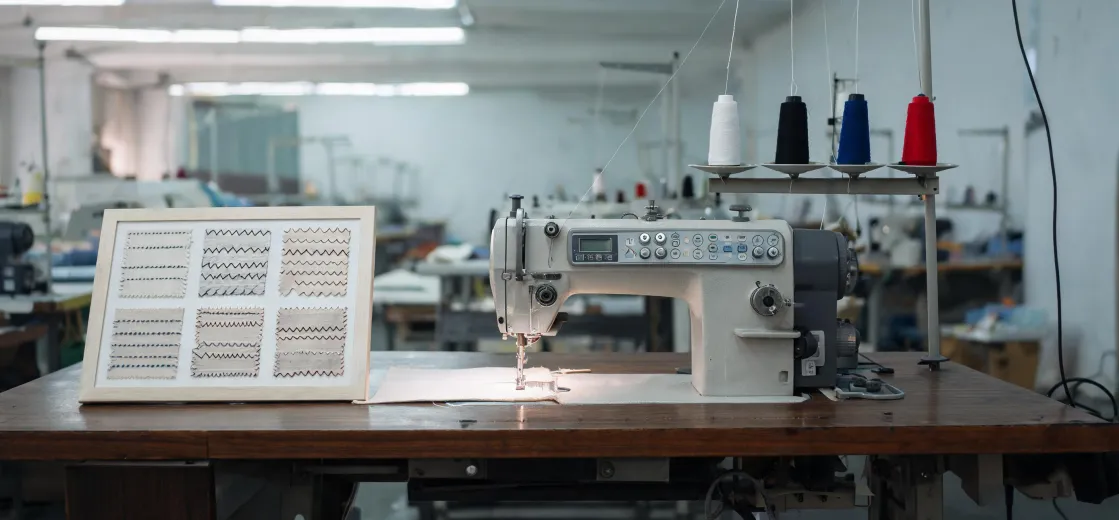
For the sewn part of our orders—tote bags, aprons, hemming hankies before embroidery—we use an industrial lockstitch machine from the jack-sewing line. Those machines are fast, reliable, and easy to get parts for, which is honestly all I expect from them. When I compare jack sewing machine models, I’m not comparing them to Ricoma or Vango. I’m comparing presser foot height, sewing speed, and available attachments against the products we actually make. An embroidery machine doesn’t replace that, and an industrial sewing machine doesn’t draw a heart shape.
Most small shops make the mistake in the same order: they buy the dream embroidery head first and forget they need a decent finishing machine to complete the goods. Then a rush order arrives and they spend 40% of the deadline fighting with seams. Buy the production equipment as a system, not as two unrelated impulse purchases.
What a “price Ricoma embroidery machine” search should include
I understand why that search is so common. Ricoma is a reference point for commercial embroidery, and the official site doesn’t always make pricing easy without a callback. Based on dealer quotes I reviewed in Q2 2024, single-head Ricoma packages were frequently quoted between $8,000 and $13,500 when software, training, and a few accessories were included. Multi-head machines go considerably higher. A comparable Vango single-head can come in well below those figures—if you don’t value the local dealer. Treat those numbers as a starting point, not a promise. Current quotes vary by region, and import duties change the picture dramatically in some countries.
So when someone asks “what’s the price of a Ricoma embroidery machine,” I ask what the price includes. The support bundle is usually more important than:
- maximum hoop size,
- stated stitch speed,
- or the marketing language around “pro-grade” status.
And don’t dismiss Vango simply because the price is lower. Compare the local agent. Who answers the phone? Is there training available in your language? If the retailer disappears after the sale, the higher Ricoma price can be a bargain. If you already have strong technical skills and a backup plan, the less expensive Vango may be the rational choice. The honest answer is “it depends,” and anyone who says otherwise is trying to close a deal rather than help you.
Where this approach stops making sense
This workflow-oriented method works well if you run a to-order personalization business moving small quantities quickly. If you’re sewing thousands of production units per week, the math changes completely. Multi-head reliability, replacement parts, and service contracts dominate. A library full of heart designs isn’t useful if you’re doing all-over commercial embroidery runs.
I’ll also admit the limit of the Sally’s Heart test: it favors small elements, simple shapes, and fast edits. It won’t stress dense satin fills, complex logos, or heavy fabrics. And no amount of machine preparation fixes a digitizing file that was wrong from the start. The machine can’t save you from bad artwork.
For what it’s worth, I’m not a dealer for Ricoma, Vango, or the jack-sewing line. These are just observations from coordinating rush orders in an actual production shop. The next Sally’s Heart call may come in when there is no backup machine available and the person who usually handles stabilizer is out sick. Preparation won’t eliminate every risk—but it will remove the brand-name panic from the decision.

Elise Marceau
Elise Marceau is an LED display and digital-signage systems analyst covering LED video walls, modular screens, transparent LED, control processors, and indoor or outdoor signage. She applies IEC 62368-1 safety principles while comparing pixel pitch, luminance, contrast, refresh rate, colour uniformity, viewing angle, ingress protection, power density, module serviceability, and signal redundancy. Her specification guides help integrators, venue operators, retailers, and procurement teams align viewing distance, ambient light, content format, installation access, electrical load, and lifecycle support.