Jack sewing article
Industrial Sewing Machine Stuck in Reverse? A Shop-Level Repair vs. Replacement Guide
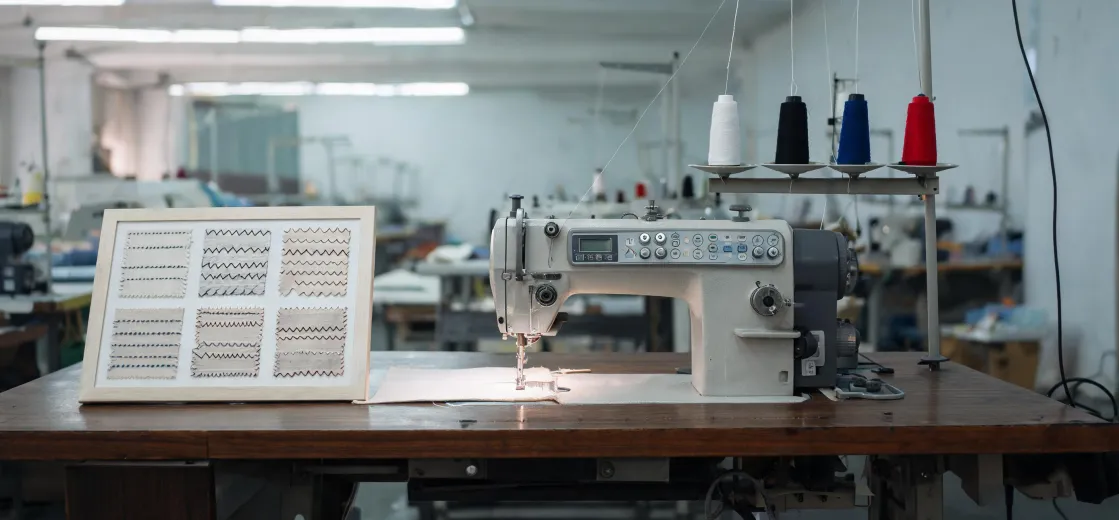
An industrial sewing machine stuck in reverse is usually not a motor problem. If the machine still runs and feeds fabric backward, the motor is doing its job; the reverse feed mechanism isn’t returning to neutral. In the last 17 stuck-in-reverse calls I’ve handled at our factory, 14 were fixed with a part under $35 and less than 30 minutes of bench time.
I’m the person who manages equipment maintenance for a cut-and-sew production shop in the USA. I’m not a mobile technician. I’m the person who decides whether to call one or open the machine first. This article comes from that position: I’d rather spend 20 minutes checking before I spend $200 on a service visit.
The Mistake I See Most Often
From the outside, a machine stuck in reverse looks like the motor has lost its mind. An operator presses the reverse button, releases it, and the fabric still pulls backward. The surface assumption is a failed motor controller or a dead main board. I’ve rarely found that. Most industrial sewing machines don’t spin the motor backward to create reverse feed; reverse is a mechanical feed action that shifts an eccentric on the lower shaft. If a spring, pawl, or linkage sticks, the feed dog keeps acting as though reverse is still engaged.
Electronic machines still depend on that same basic idea. A solenoid or pneumatic cylinder pushes the mechanical linkage into reverse. If the sensor or switch releases but the linkage stays, the machine still sews backward. That’s why an electronic reverse failure can turn out to be a mechanical problem.
What to Check Before You Pay for a Service Call
If you have basic tools and the machine manual, this is what I’d check first. If you don’t feel comfortable doing it, stop and call a tech who will start with these steps anyway.
- Turn off the power and remove the needle plate. Clean lint and loose thread from the feed dog area. I’ve found thread wrapped around the feed mechanism enough times that cleaning is no longer optional.
- Press and release the reverse control by hand. Watch the linkage while you do it. Does it move freely and snap back? If it’s slow or stays in reverse, the return spring or pivot is likely the problem.
- Check what pushes the feed eccentric. On mechanical machines, it’s a lever or pawl assembly. On electronic models, it may be a solenoid rod or air cylinder. If the linkage moves but won’t return, fix the mechanical side first.
- Look for a loose set screw. After a timing job or a needle crash, a set screw can work loose. The eccentric shifts slightly, and the machine starts behaving like it’s stuck in reverse.
- Turn the handwheel through a few full cycles before turning power back on. It should feel smooth, and the feed dog should settle back to forward/neutral when the reverse control is released.
By then you’ll know more than someone who just swapped a motor. If the machine still refuses to come out of reverse, the issue may be deeper, but you’ve narrowed it down.
A Real Case: It Was a $12 Spring
One Friday in March 2024, at around 2:30 p.m., a supervisor called me to a machine that was “sewing backward.” A 5,000-piece order was due Monday. The previous shift had written “motor dead” on the job card. The machine didn’t sound dead. It was feeding backward smoothly, which meant the motor was running and the feed shaft was turning.
I removed the needle plate and found a broken reverse return spring sitting near the feed eccentric. It had snapped and left the mechanism pushed into reverse. We happened to have a spring kit in the parts drawer because I had started stocking them after an earlier issue. The kit cost $12. Installation took about 14 minutes, and the machine was back in service before the afternoon break ended. The service call we nearly placed would have cost a minimum of $180 and probably wouldn’t have arrived until the next day.
That’s the case for keeping a small reverse-feed parts kit on the shelf. A set of springs, pawls, and small switches costs less than one emergency service call.
When Repair Is Not the Right Call
I don’t want to make this sound like every stuck-in-reverse machine should be repaired. Some are not. If the machine has been crashing needles into heavy seams, if the feed fork or lower shaft bushing is worn, or if the repair quote is more than half the price of a replacement head, replacing it can be the better business decision.
Last year we replaced two older machines with Jack industrial machines from a U.S.-based dealer. It wasn’t because the old machines couldn’t be fixed; it was because the next breakdown was predictable. When I search a term like jack-sewing or “Jack sewing machine USA,” I’m not looking for the lowest price. I’m looking for a dealer who can name the exact spare parts for the model before I order. That matters more when a machine is down.
As for shipping small parts: according to USPS pricing on usps.com, a flat-rate envelope is still under $11 as of January 2025. That shipping cost is rarely the reason to delay a repair. The actual reason is not having the part on hand, so ask for the parts list when you buy.
What About Embroidery Machine Stitching?
Here’s the boundary I try to be honest about: I’m not an embroidery machine technician. Multi-head embroidery machines don’t have a traditional reverse feed like a lockstitch machine. If embroidery machine stitching is wrong—thread breaks, loops, or pattern shift—the problem is usually in needle/hook timing, tension, backing, or hooping, not a reverse pawl.
And if you’re shopping for an affordable embroidery machine, buy based on service support, not just sticker price. A machine that’s down for a week can erase any price advantage. That rule is true for Jack machines too, which is why I keep telling buyers to ask about spare parts before they ask about discounts.
My honest limit: when it’s an embroidery machine, I call someone who has worked on that brand. I don’t pretend to know the setup, and that boundary saves us more downtime than guessing.
So if your industrial sewing machine is stuck in reverse, start with the reverse feed mechanism, not the motor. That little check has saved us more than one deadline, and it will probably save you an expensive service call.

Elise Marceau
Elise Marceau is an LED display and digital-signage systems analyst covering LED video walls, modular screens, transparent LED, control processors, and indoor or outdoor signage. She applies IEC 62368-1 safety principles while comparing pixel pitch, luminance, contrast, refresh rate, colour uniformity, viewing angle, ingress protection, power density, module serviceability, and signal redundancy. Her specification guides help integrators, venue operators, retailers, and procurement teams align viewing distance, ambient light, content format, installation access, electrical load, and lifecycle support.