Jack sewing article
Jack Sewing Machine Brand: 6 Years of Buying Data on Models, Lubricant Costs, and the Brother S-7300A Comparison
-
The Jack sewing machine brand and how my opinion flipped
-
Jack sewing machine models: less confusing than you'd think
-
Brother S-7300A industrial sewing machine: the comparison that earned Jack the order
-
Sewing machine lubricant: a budget line, not a detail
-
Stabilizer for an embroidery machine: the cost that hides
-
When I'd tell you not to buy Jack
If you run a cut-and-sew operation and you haven't put Jack on your quote list in the last couple of years, you're probably leaving real money on the table. That's not an ad. It's the conclusion from six years of purchase records at a 140-person apparel manufacturing shop, where I manage the equipment budget. We now run multiple Jack direct-drive machines and a Jack multi-head embroidery unit, and they earned their place. But it took a bad oil decision, one embarrassing stabilizer mistake, and a 14-week head-to-head against a Brother S-7300A to get there.
I'm the procurement manager, not the head mechanic, so I don't have a brand loyalty problem. I've been tracking every invoice in our cost system since 2019—roughly $180,000 in cumulative spend on machines, parts, lubricant, and consumables. I built our own TCO spreadsheet after getting surprised by hidden costs twice, and now every supplier choice goes through it before it goes to the owner.
The Jack sewing machine brand and how my opinion flipped
Five years ago I would have talked you out of a Jack. I'd read the same articles everyone reads: that budget industrial machines are cheaper because corners are cut, and that Chinese production meant risk. There's plenty of cheap equipment that earns that warning. But putting the Jack sewing machine brand in that category was outdated advice by 2021.
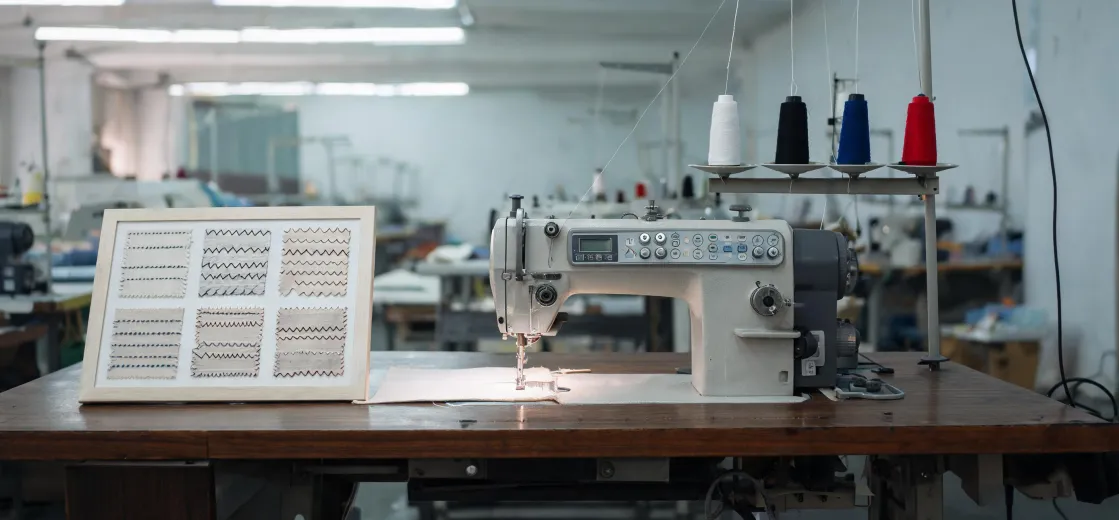
Our first Jack A4 arrived in January 2021 as a test machine, and I was skeptical enough to log its hours separately. By the end of 2023 it passed 4,300 hours with no major repair. The hook assembly was replaced once, the auto-trimmer needed adjustment twice, and that was it. The machine didn't feel like a compromise. The conventional wisdom I'd been carrying since 2016 was simply late.
That doesn't mean buying Jack is the same as buying a Juki or a Brother. The fundamentals of sewing machine maintenance are still what they are, and support networks still differ. But in terms of what you actually get for the money, the picture has changed.
Jack sewing machine models: less confusing than you'd think
When you search "jack sewing machine models", the results can look like alphabet soup, especially if you're used to Brother's clean model numbers. Here's what I learned after reading spec sheets from distributors and talking to three resellers.
The core of their lineup is a family of single-needle lockstitch machines with direct drive and auto-lubrication. We only run the A4, which is the workhorse. If you're comparing against the Brother S-7300A class, the A4 is the model that belongs on your comparison sheet. The other letters in the lineup mostly add features like electronic positioning or higher-speed servos, and exact model names shift by region.
Two things matter when comparing quotes:
- Does the price include the direct-drive motor, control panel, and table? Some dealer quotes list a bare machine head, which makes the price look friendlier than it is. We had one quote that left off the stand completely.
- Does the model include an automatic thread trimmer? In the direct-drive category, a machine without a trimmer isn't a comparable machine. It's a different class with a lower price for a reason.
By the time we bought our third Jack A4 in January 2024, the model request was a one-line email.
Brother S-7300A industrial sewing machine: the comparison that earned Jack the order
Let me be clear about how we ended up comparing a Brother S-7300A industrial sewing machine with a Jack. It wasn't because we wanted the cheapest option. In 2023 we added a second production line, and the S-7300A was my benchmark. It's the machine you recommend when someone says "single-needle, direct-drive, reliable."
I had a Brother S-7300A on loan from a local dealer, and we ran both machines side-by-side for 14 weeks with the same operators, same fabric, same thread. On paper they sit in the same class: direct drive, auto oiling, auto trimmer, maximum speeds in the 5,000-5,500 rpm range depending on the version. The Brother spec sheet is cleaner, and the motor response at top speed felt a bit more refined. If I pushed both machines hard, the S-7300A was smoother at sustained high speed, and its resale value is genuinely better. I can't argue with that.
But the cost data said something else. Our best S-7300A quote in Q2 2023 came in at almost double the delivered price of the A4 with comparable options. Machine-for-machine, the A4 gave us about 90% of the Brother's day-to-day capability at roughly 55% of the cost. That gap made no sense for us financially.
The catch: we had to handle more of our own maintenance. If your shop has nobody who can oil, clean, and adjust a machine, then a Brother dealer's local service network justifies part of the premium. More on that below.
Sewing machine lubricant: a budget line, not a detail
I almost missed this one. Most newer industrial direct-drive machines are auto-lubricating. That sounds like a no-maintenance feature, but it just means the machine has an oil reservoir and pumps oil to the hook and needle area automatically. Someone still has to buy the right lubricant, check levels, and clean the excess.
If you google "lubricant sewing machine", half the advice says any light oil will do. That advice cost me money. In 2020 we used a cheaper generic oil in two machines to save about $12 per liter. Within a few weeks the oil darkened and left sticky residue on the hook assembly of one machine. The cleanup and replacement parts ran us about $600. Worse, the machine ran hotter for a full shift until we flushed it.
Now we use the grade in the service manual, and every oil pan is checked on the same weekly schedule. The floor goes through roughly $700 in sewing machine lubricant per year. Not a big line in the budget, but it is a line. And if you ignore it, the machine always fails during deadline week.
Stabilizer for an embroidery machine: the cost that hides
The stabilizer lesson came after we added a multi-head Jack embroidery unit in 2022. When you budget for an embroidery machine, it's natural to focus on the machine cost, digitizing software, and thread. Nobody warns you about the consumables that get stretched and thrown away.
Our first-year audit showed we spent 18% more on stabilizer than planned. Part of the problem was material choice: we bought a cheap tear-away for stretch fabric because it was inexpensive, and re-hooping pushed up our seconds rate. The fix wasn't cheaper stabilizer. It was the right stabilizer for the fabric, which actually lowered our total cost per piece.
The simple version, in case it helps: woven cotton can usually get away with tear-away. Knits and stretch fabrics need cut-away stabilizer. If your team says "just use the cheap white kind", check the fabric first. A stabilizer embroidery machine setup is only as cost-effective as the consumables you feed it.
When I'd tell you not to buy Jack
An honest answer has to include the cases where Jack is the wrong call. From my own records, there are three:
- Your location can't get parts quickly. We're in a city with a solid distributor network, so Jack parts are two days away. If you're in a remote area, a bigger dealer footprint is worth paying for. This matters more than almost any spec sheet.
- Your team has limited mechanical skill. The Jack A4 is not harder to maintain than the Brother S-7300A, but Jack dealer support is thinner in many regions. If you depend on a technician for everything, buy the brand that has a technician near you.
- You care about resale value. The Brother name sells itself on the used market. Jack machines sell, but not for the same percentage of their original price when you're done with them. That's a real part of total cost of ownership.
Would I make the same choice again? Yes—and we did, three times. My advice isn't "Jack over Brother" across the board. It's this: put both on the quote list, and run the full math on lubricant, stabilizer, parts access, and the mechanic you already have. If your situation is like ours, the answer may surprise you.

Elise Marceau
Elise Marceau is an LED display and digital-signage systems analyst covering LED video walls, modular screens, transparent LED, control processors, and indoor or outdoor signage. She applies IEC 62368-1 safety principles while comparing pixel pitch, luminance, contrast, refresh rate, colour uniformity, viewing angle, ingress protection, power density, module serviceability, and signal redundancy. Her specification guides help integrators, venue operators, retailers, and procurement teams align viewing distance, ambient light, content format, installation access, electrical load, and lifecycle support.