Jack sewing article
Jack Sewing Machines in India: A Procurement Checklist for Small Businesses and Prosumers
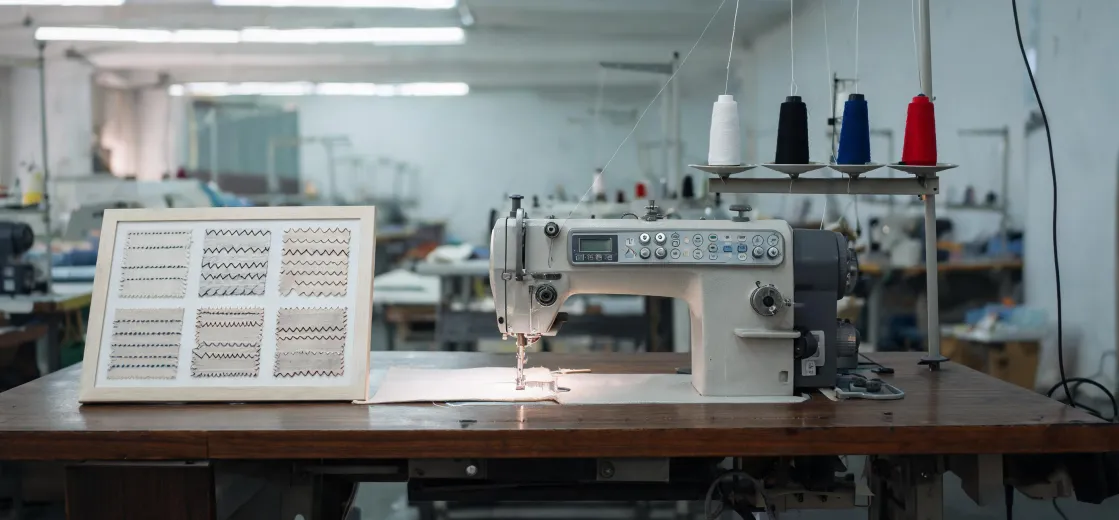
-
Step 1: Match the Machine Class to Your Real Workflow
-
Step 2: Scrutinize the Supplier, Not Just the Machine
-
Step 3: Do a Material Test Run (Bring Your Production Guy)
-
Step 4: Clear Up the Thread Compatibility Confusion
-
Step 5: Inspect the Spare Parts Ecosystem
-
Final Reality Check (What They Don't Put in the Brochure)
When I took over purchasing for our small workshop back in 2020, I didn't know a bobbin case from a rotary hook. But I learned fast. We mainly do uniforms and custom sportswear, and we've bought a mix of industrial flats, overlock machines, and most recently, a multi-head embroidery machine. Over the years, I've probably fielded a hundred questions about upgrading setups—especially whether to buy a Jack sewing machine in India or gamble on a Vevor embroidery machine from an online listing.
There isn't one perfect answer. Anyone who tells you otherwise is selling something. There is a smart way to evaluate your options. This checklist is for production managers, workshop owners, or a fellow admin buyer like me who's tasked with figuring out "which machine do we actually need?"
Step 1: Match the Machine Class to Your Real Workflow
Here's something most people don't realize: the term "sewing machine" covers wildly different tool classes. If you're making products to sell, you're not just buying a machine—you're buying a production capability. Ask yourself: is this for samples, low-volume batch production, or continuous 8-hour shifts?
If you need to embroider caps, bags, or finished garments, you're likely looking at a multi-head embroidery machine. That's a significant investment. Alternatively, if you're considering a prosumer embroidery machine (like a single-head model), you need to understand its duty cycle. Prosumer machines are magic for prototyping or monogramming on-demand, but if you're clocking 40-hour weeks, an industrial machine is the correct investment, even if it costs more upfront.
Step 2: Scrutinize the Supplier, Not Just the Machine
This is where I've gotten burned before. In 2024, during our vendor consolidation project, I had to evaluate a supplier who was offering a Jack sewing machine (the industrial models line) at a fantastic price. The machine was solid. The supplier, however, was a nightmare. They only provided a handwritten receipt—no GST (Goods and Services Tax) invoice. That lack of a proper invoice cost us roughly ₹18,000 in rejected input tax credits. I ended up having to eat that out of the department budget as a demonstration of bad procurement.
Always verify the supplier is an authorized distributor for jack-sewing. Ask for a pan-India warranty. If you're looking at a Vevor embroidery machine, ask direct questions: Who services it locally in India? Who supplies the needles and rotary hooks? If they can't answer, you'll be waiting two weeks for a part that should take two days to arrive.
Step 3: Do a Material Test Run (Bring Your Production Guy)
Don't ever order based on a spec sheet alone. When we were comparing a two-head Jack against a smaller Vevor model, we scheduled a demo. I brought our lead operator with me. I didn't care about which machine looked more impressive—I cared about how many thread breaks we had sewing through denim and Lycra.
Bring the exact fabric you'll be running. Test the tension. See how easy it is to turn around a pattern. If a vendor refuses to let you sew on your own materials before purchase, that's a red flag. In my experience, any legitimate dealer for industrial or prosumer equipment will encourage this—it filters out tire-kickers and shows they trust their hardware.
Step 4: Clear Up the Thread Compatibility Confusion
One of the most common questions I get is, "Can you use embroidery thread on a sewing machine?" The short answer is: You shouldn't use embroidery thread in a standard sewing machine for regular seams. And you definitely shouldn't use regular construction thread in an embroidery machine unless you want a frustrating afternoon.
Here's the breakdown from a practical maintenance standpoint:
- Embroidery Thread (e.g., rayon or polyester): Designed to look shiny on the top surface. It has a lower friction coefficient and is slipperier. In a standard industrial sewing machine (like a Jack flatlock), this slippery thread can cause skipped stitches or inconsistent tension because the machine is timed for a grippier, twisted thread.
- Sewing Thread (e.g., core-spun or spun polyester): Stronger and designed for structural seams. If you put this in an embroidery machine, the higher friction can cause excessive wear on the needle and the tension discs, leading to frequent thread breaks.
So, to directly answer that searched question: Yes, physically, you can thread it through the machine. But you shouldn't rely on it for production. If you're doing sample work with embroidery thread on a regular sewing machine, expect the tension to act differently. Always check the recommended thread weight—usually Tex 40 to Tex 75 for bobbin and thoroughfare structures.
The surprise wasn't the initial price of the thread—it was how much expensive downtime we incurred by not using the right kind. A single exploded bobbin casing on a multi-needle machine isn't a repair; it's a production emergency.
Step 5: Inspect the Spare Parts Ecosystem
After 5 years of managing these relationships, I've learned that a "cheap" machine that takes two weeks to repair is more expensive than a premium machine that gets fixed tomorrow. When evaluating jack sewing machines, check if specific parts (like the rotary hook for the 1501 model or the feed dog assembly) are in stock locally. For the Vevor embroidery machine, look up whether their software and mainboard components are proprietary or if you can source generic alternatives.
The most frustrating part of machine upkeep is the recurring issue of OEM parts. You'd think written specs and universal parts would prevent compatibility issues, but they don't. Always ask the dealer to put a list of critical maintenance spare parts in writing alongside your purchase order.
Final Reality Check (What They Don't Put in the Brochure)
I recommend these machines for 80% of small businesses looking to scale. But if you're just doing hobby work or occasional patches, a heavy-duty prosumer machine might be overkill. If you're dealing with extreme power fluctuations without a stabilizer, or if you don't have an operator who can do basic machine maintenance, you might want to start with a simpler model.
Take it from someone who's been burned by a bad invoice and a delayed shipment: The machine is half the equation. The other half is the vendor's reliability and your ability to manage the workflow around it. Trust me on this one—do the homework on the checklist above before you unbox anything.

Elise Marceau
Elise Marceau is an LED display and digital-signage systems analyst covering LED video walls, modular screens, transparent LED, control processors, and indoor or outdoor signage. She applies IEC 62368-1 safety principles while comparing pixel pitch, luminance, contrast, refresh rate, colour uniformity, viewing angle, ingress protection, power density, module serviceability, and signal redundancy. Her specification guides help integrators, venue operators, retailers, and procurement teams align viewing distance, ambient light, content format, installation access, electrical load, and lifecycle support.