Jack sewing article
The Jack Sewing Machine Accessory Kit That Taught Me to Ask What's Not Included
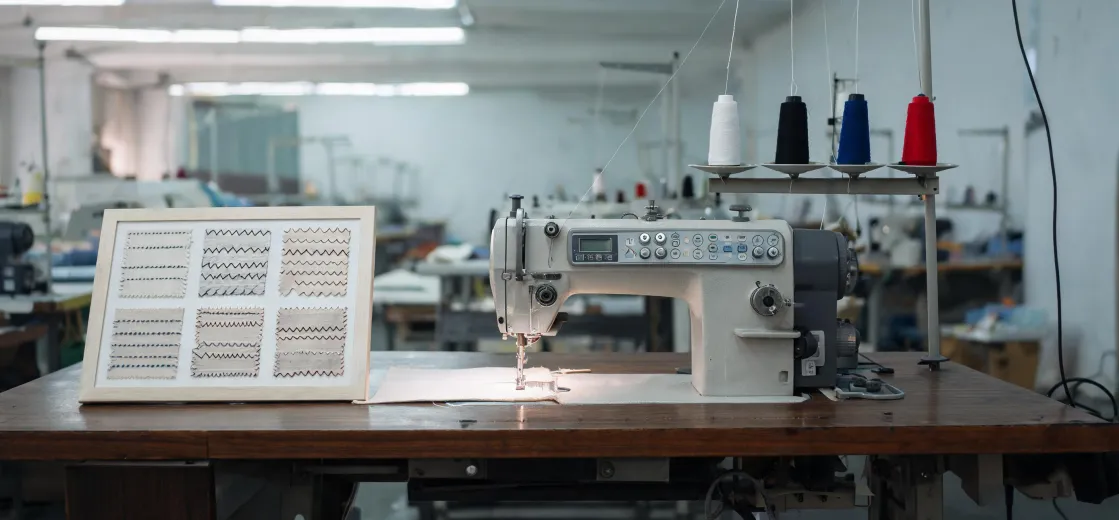
The first time I approved a Jack sewing machine accessory kit, I remember saying to our lead mechanic, "Don't worry, it says complete right on the box." He didn't look convinced. He was right not to be.
I'm the person who orders parts for a small garment production shop. I've been doing this for about eight years, and I've personally made—and documented—at least a dozen significant ordering mistakes, totaling roughly $18,000 in wasted budget. This one still makes the list.
The Day the Kit Arrived
The story starts in early 2022, when we bought a new embroidery machine from a Jack Sewing dealer. The machine itself was an upgrade—faster, quieter, and easier to adjust than our older model. The embroidery machine innovation was real. But the accessory kit that came with it is what I remember.
I approved the "Jack sewing machine accessory kit" without looking at the detailed parts list. (Should mention: the sales rep said it was complete. I wanted it to be complete, so I stopped reading.) The price was around $320, if I remember correctly. It included bobbins, needles, screwdrivers, oil, and a set of standard presser feet. Seemed like everything we'd need.
Until we didn't have it.
The Missing Presser Foot
Three weeks later, we had a client order that required a scalloped edge on a thick knit fabric. Our go-to mechanic said we needed a specific presser foot for the embroidery machine—the kind with a narrow groove that clears the stitch plate. Standard feet wouldn't work. I told him the kit was complete. He asked me to check again.
He was right. The word "complete" was printed on the box, but the word in the manual was "optional." The presser foot for the embroidery machine wasn't included. Neither was the low-shank adapter we needed to fit it.
I still call these the "industriel sewing machine" parts, because that's how our original import invoices were written. On the invoice, the missing foot appeared as a separate line item: $89 for the foot, $47 for expedited shipping, plus a 2-day production delay.
What That Mistake Actually Cost
The $136 in parts and shipping wasn't the real loss. The real loss was the client. We delivered two days late, explained that "the accessory kit didn't include a necessary part," and heard the phrase every parts buyer hates: "We should have gone with the other supplier."
We kept the client, but it cost us goodwill. (Thankfully.) That single order was about $3,200. The mistake ate into it fast—not just in money, but in the team's confidence in my ordering.
I wish I had caught it before the machine was installed. I didn't. I also wish I had tracked all the follow-up costs, because I know they added up to more than the $136.
Why I Now Ask "What's NOT Included?"
Since then, my first question for every vendor—especially for Jack sewing machine parts and any accessory bundle—is not "what's the price?" It's "what's not included?"
I've learned to say this out loud because it forces a real answer. "What's not included?" is the question that gets the sales rep to open the spec sheet and point at the gray area. The first time I asked, the rep listed three paragraphs of exclusions. That wasn't annoying. It was safety.
The vendor who lists all fees and exclusions upfront—even if the total looks higher—usually costs less in the end. That's a rule I believe in now. It's also why I don't trust accessory kits that say "complete" without a list underneath.
My New Ordering Checklist (Short Version)
- Ask for the machine manual's parts list before ordering any kit.
- Ask "what's not included?" and get it in writing.
- Ask whether your presser foot embroidery machine uses a specialized foot that doesn't ship in a standard kit.
- Add one week of buffer for overlooked parts.
That checklist has caught 47 potential errors for our team in the last 18 months. I don't say that to impress you—I say it because I wrote down every near-miss. The checklist is not clever. It's just a list of questions I was too embarrassed to ask in 2022.
The Bigger Lesson: Transparency Builds Trust
People think a higher-priced accessory kit is more complete. Actually, it's the reverse. A kit is complete only if someone verified it against the machine's manual. Price has nothing to do with it.
I don't have hard data on how many accessory kits arrive with a missing part, but based on our own orders and the stories I hear from other production managers, my sense is it happens more often than suppliers want to admit.
Per FTC guidelines (ftc.gov), claims like "complete" should be truthful and substantiated. I'm not a lawyer, but I know that "complete" is a claim, not a description. When I see it without a parts list, I treat it as marketing. (Cynical? Maybe. Earned? Yes.)
I also remember something my first mentor told me: "The price you see should be the price you pay." That was back in 2017, before I understood it. Now I do. Hidden fees and missing parts are the same thing—they're costs that show up after you've agreed.
What I'd Do Differently
If I could go back to early 2022, I'd read the manual before I ordered the Jack sewing machine accessory kit. I'd search for "presser foot" in the PDF. I'd check the machine's model number against the kit's compatibility list. I'd send one email: "Which parts are NOT included?"
That email would have saved us $136 and a 2-day headache. More importantly, it would have saved the client from hearing an excuse that made us look unprofessional.
So that's my advice, from one parts buyer to another: don't ask "what's included." Ask "what's not included?" It's a small difference in wording, but it's the difference between buying a solution and buying a problem.
The Jack Sewing machine was a good machine. The accessory kit was okay too—once I understood its limits. My mistake wasn't the brand. It was assuming that the word "complete" meant I didn't need to check. Now I always check. And our checklist stays on the wall above my desk.

Jane Smith
I’m Jane Smith, a senior content writer with over 15 years of experience in the packaging and printing industry. I specialize in writing about the latest trends, technologies, and best practices in packaging design, sustainability, and printing techniques. My goal is to help businesses understand complex printing processes and design solutions that enhance both product packaging and brand visibility.