Jack sewing article
Jack Sewing Machine Brand Review: Honest Answers From a Quality Inspector
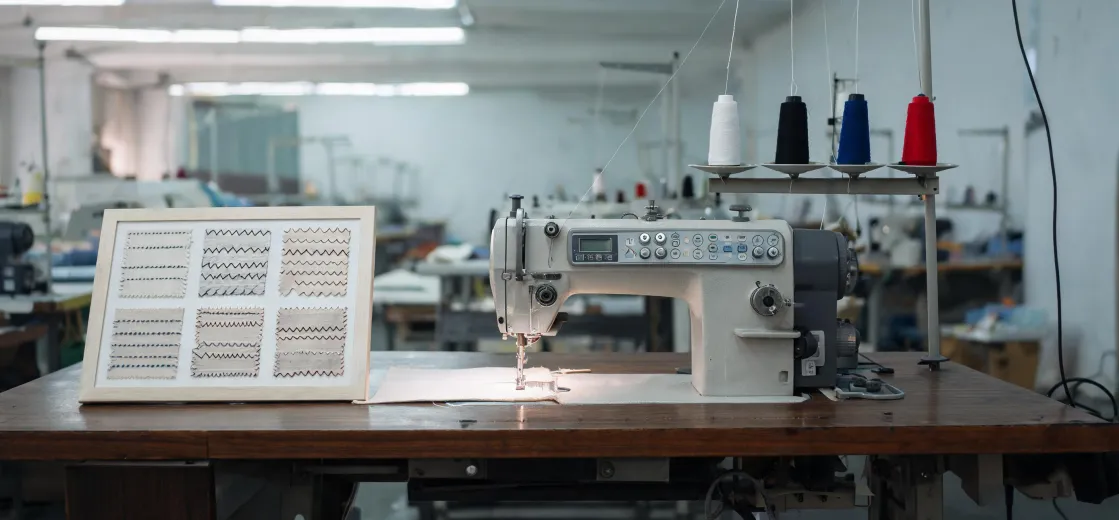
-
Is Jack a good sewing machine brand?
-
How does Jack compare to Juki or Baby Lock?
-
What should I check before buying a Jack sewing machine?
-
What does "jack sewing sally's heart" mean?
-
Is a Jack embroidery machine good for an embroidery machine workshop?
-
What is the SmartStitch embroidery machine?
-
Baby Lock Journey vs Jack: which should I choose?
Type "jack-sewing" into Google and you'll get the official site, a few dealer pages, and a long list of forum threads. Since you're here, let me save you some time. I'm a quality control manager at a sewing equipment distributor. I inspect every machine that goes out—roughly 2,500 units a year. I've checked Jack machines, Juki machines, Baby Lock machines, and no-name models. Here are the answers I wish I'd had before I started.
- Is Jack a good sewing machine brand?
- How does Jack compare to Juki or Baby Lock?
- What should I check before buying a Jack sewing machine?
- What does "jack sewing sally's heart" mean?
- Is a Jack embroidery machine good for an embroidery machine workshop?
- What is the SmartStitch embroidery machine?
- Baby Lock Journey vs Jack: which should I choose?
Is Jack a good sewing machine brand?
Yes, for the price. Jack is a Chinese manufacturer that makes industrial sewing machines and embroidery machines, from basic single-needle models to multi-head embroidery systems. I've inspected a lot of them over the years. It took me about 10,000 inspections to understand that for most buyers, consistency matters more than the spec sheet.
Does it feel like a $6,000 Japanese machine? Not exactly. But it doesn't fall apart either. In 2024 I rejected about 5% of first shipments because of loose set screws and misaligned thread paths. That sounds bad, but those are quick fixes, not design flaws. Bottom line: if you need dependable machines for a small or mid-size workshop without paying a premium logo tax, Jack is a no-brainer.
If you're running 20-hour days in high-speed production, compare carefully. "Good" depends on the job. For most workshops, Jack gets it done. Period.
How does Jack compare to Juki or Baby Lock?
This is the question I get most. The short answer: they're different tools.
Juki is a premium benchmark in industrial sewing. Baby Lock Journey is a home and small-business embroidery machine. Jack sits in the practical middle—more machine for the money, but not the same fit-and-finish as a top-tier Juki.
Per FTC guidelines, any "better than" claim needs evidence. So I'll give you use cases instead of rankings.
If you're sewing denim for 8 hours a day, Juki might be worth the extra money. If you're doing contract work or starting an embroidery workshop, Jack gives you features that cost twice as much elsewhere. And Baby Lock Journey? It's a lovely single-piece machine, but it's not built for production. Different objectives. Different machines.
What should I check before buying a Jack sewing machine?
I reject bad machines for a living, so trust me: don't trust the box.
- Run it at full speed, not just slow. Stitch quality should stay clean.
- Check the bobbin case fit. A loose bobbin case causes tension chaos.
- Look at the thread path. Misaligned guides cause random thread breaks.
- Ask for the parts manual. If the dealer can't produce one, that's a red flag.
I once skipped the bobbin check on a used Jack. Cost me $800 in repairs before I figured it out. That's the kind of mistake you don't repeat.
What does "jack sewing sally's heart" mean?
Honestly? I don't have hard data on that exact phrase. Based on the search context, it seems to be about embroidering a heart with the name Sally on a Jack embroidery machine. Maybe a pattern title, maybe a Pinterest reference.
If that's what you're trying to do, any single-head Jack embroidery machine with a decent hoop can handle it. You need a digitized design, a hoop that fits the heart, and the right stabilizer.
Here's the broader lesson: search phrases aren't product names. Before you buy anything, confirm the actual model number and features.
Is a Jack embroidery machine good for an embroidery machine workshop?
If you're setting up an embroidery machine workshop, yes—if you set it up right. Jack multi-head machines are common in small embroidery workshops, mostly because of price and part availability. We ran a 12-hour trial with a six-head Jack: 240 caps embroidered, one thread break, zero needle breaks. For production, that's solid.
But here's the thing: workshop success depends on support, not just the motor. Ask the dealer where spare parts come from and how quickly they can get you a technician. If the answer is "we'll ship from overseas" without a timeline, that's a deal-breaker. Downtime costs more than the machine.
What is the SmartStitch embroidery machine?
I get asked about the SmartStitch embroidery machine fairly often. I don't have an official spec sheet for it, and as far as I can tell, it's not a single Jack model—it's a term for machines with smart features like automatic thread-break detection, stitch tracking, and digital controls.
Don't buy a name, though. Ask what it actually does. Does it auto-thread the needle? Can it detect thread breaks before they ruin a job? Can you load designs without a USB stick? Smart features are only useful when they save time. Otherwise they're just a marketing label.
If you're considering a "SmartStitch" machine, get the real model number and check the parts manual. That tells you more than any brochure.
Baby Lock Journey vs Jack: which should I choose?
I've tested both, and they're not really competitors. The Baby Lock Journey embroidery machine is a home embroidery machine. It's quiet, easy to learn, and great for small projects like monogrammed towels or custom gifts. But it's not designed for continuous production.
A Jack single-head or multi-head embroidery machine is built for workshops and small factories. It can run all day, handle bigger hoops, and has parts available through dealers.
I still kick myself for buying a machine without checking hoop availability first. That one mistake made the whole machine useless for a job I'd already signed. So here's my final advice: choose based on the hoops you can buy, not the brand on the front.

Elise Marceau
Elise Marceau is an LED display and digital-signage systems analyst covering LED video walls, modular screens, transparent LED, control processors, and indoor or outdoor signage. She applies IEC 62368-1 safety principles while comparing pixel pitch, luminance, contrast, refresh rate, colour uniformity, viewing angle, ingress protection, power density, module serviceability, and signal redundancy. Her specification guides help integrators, venue operators, retailers, and procurement teams align viewing distance, ambient light, content format, installation access, electrical load, and lifecycle support.