Jack sewing article
Why 'Top 10 Best Industrial Sewing Machine' Is the Wrong Question
Here's the thing: when someone types 'top 10 best industrial sewing machine' into a search bar, they aren't looking for a ranking. They're asking, 'Which one should I buy?' I've spent seven years as a procurement manager at a 60-person garment decoration company, managing an equipment budget of around $180,000 a year, and I've negotiated with 25+ machinery vendors. That question has crossed my desk more times than I can count. The honest answer: it depends. The problem with ranking lists is they assume a 'best' exists. That works for toasters, not for capital equipment. A machine that shines for a uniform factory can become a headache in a job shop.
The Three Scenarios That Actually Matter
Before you look at spec sheets, look at your own production. The right machine is a function of your order sizes, your fabric mix, and your tolerance for downtime. I split every purchase into three buckets.
Scenario A: Repetitive Straight Sewing
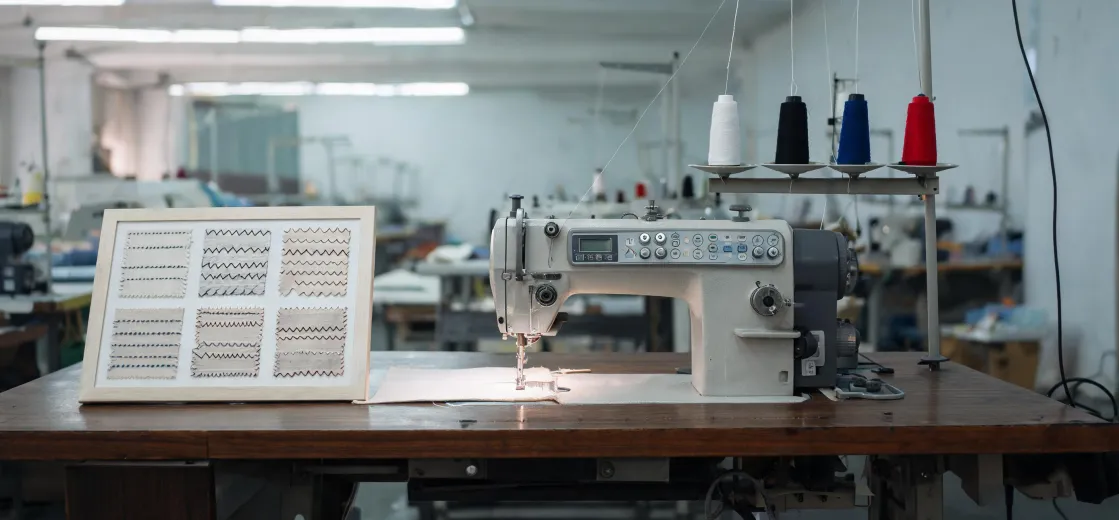
If you're making ten thousand identical inseams, you need a workhorse single-needle industrial sewing machine. No bells, no whistles, just reliable straight stitch and an automatic oiler. This is where the jack-sewing range has earned its place in our shop. The model we bought in 2023—a basic walking-foot unit—has logged more than 14,000 hours without a single major breakdown. The jack sewing machine logo on the arm tells us it's the real thing, not a re-badged knockoff.
We tested this jack-sewing straight stitcher against a unit at nearly double the price. Output per hour was almost identical. The expensive machine had a better paint job, but that doesn't show up on the balance sheet. For high-volume runs, the value pick wins every time.
Don't be tempted by embroidery features you'll only use once a year. Spend the savings on extra bobbins and a thread stand that doesn't wobble.
Scenario B: Custom Embroidery and Personalization
This is a different animal. You're not joining seams; you're building a design. For short runs and one-off orders, a flatbed embroidery machine is my first choice. It holds the hoop stationary while the arm moves, which makes setup and design changes quick. Fast color changes, quick tension checks, interchangeable hoops—exactly what a neighborhood shop needs.
We're seeing more demand for personalization than ever before. A few weeks ago, a local designer asked us to embroider a heart onto a denim jacket. We named the file Jack sewing Sally's heart because our stitcher Jack dialed in the tension. It was a $50 order, but the client came back with a 100-unit order the next month. That one little flatbed machine paid for itself.
The machine embroidery latest designs we're being asked for are 3D puff, flat appliqué, and oversized chest logos. A flatbed with a 30cm x 30cm hoop covers most of that. And one surprise: a budget flatbed machine can outperform a premium model on this kind of work. The expensive brand had a smaller hoop and a more complicated threading path. Not what I expected.
Scenario C: The Combination Machine Trap
If you're imagining one machine that both sews and embroideres, stop and think. I have mixed feelings about combination units. They're convenient on paper, but they usually compromise both functions. Unless your floor is tighter than 400 square feet and you're still validating demand, buy dedicated machines. Or lease. We lease a secondary flatbed embroidery machine for overflow months at $220 a week.
A combination machine might save floor space, but it wastes time. Every changeover between sewing and embroidery costs around 30 minutes of setup. Over a 10-hour day, that's an hour of billable production gone. Not ideal, but workable if you're truly space-limited.
What Each Scenario Really Costs (TCO, Not Sticker Price)
The sticker price is just the entry fee. Total cost of ownership includes freight, setup, training, maintenance, and downtime. In Q2 2024, I compared two quotes for a $4,200 annual service contract. Vendor B looked $600 cheaper, but their quote excluded scheduled visits—$175 per visit. Over a year, B was actually 5% more expensive than Vendor A's 'everything included' price. The numbers said B. My gut said A. I followed my gut, and when a machine jammed on a Saturday, A had a technician on-site in four hours. The numbers aren't always wrong, but they're never complete.
Another favorite: the 'free setup' promotion that isn't free. We once paid $450 for rigging and pallet handling because the 'free setup' only meant plugging it in. Now I require a delivered price with installation, training, and a one-year warranty listed on the invoice, line by line.
Operator training is the hidden cost almost nobody budgets for. A new flatbed embroidery machine with an unfamiliar software interface took our team two weeks to get comfortable with. Two weeks of reduced throughput. Now every equipment decision includes a training line item.
And machine embroidery latest machinery will have different TCO profiles. A flatbed with a larger hoop often results in faster cycle times and fewer re-hoops, which matters more than top stitch speed for custom requests.
How to Tell Which Scenario You're In
Still not sure which category fits? Here's a quick self-check:
- What is your typical order size—100 identical units or 100 unique units?
- How often do you switch between product categories in a single day?
- Can you survive an hour of downtime during your busiest week?
- Are you mostly sewing jeans, upholstery, or delicate synthetics?
If your orders are uniform, you're Scenario A. If every piece is different, Scenario B. If it's both, Scenario C—and you need two dedicated machines, not a hybrid.
The Small-Client Advantage
I've been the small client. The suppliers who took our $200 parts orders in 2018 are the same ones we still call for $20,000 equipment orders today. That's not blind loyalty; it's trust. One vendor told us, 'We don't do orders under $10,000 at this price point.' What they meant was they didn't want us. Fine. Their competitor took our $800 order for a used flatbed machine, and that relationship grew into a $15,000 order last year.
When a vendor treats a 100-piece test order with respect, they'll treat a 1,000-piece order even better. On the flip side, if a dealer shrugs at your small order, run. They've already told you how you'll be treated later.
Color Standards and Physical Threads
If you're doing branded embroidery, color matching is critical. A client's logo might be Pantone 186 Red. Thread doesn't come in 'sort of red.' It comes in Pantone 186, and you had better be able to verify that on a physical card. Pantone's own guidelines call for a Delta E under 2 for brand-critical colors. That's a tough bar on fabric, and it demands a clean thread path and calibrated tension. If a salesperson can't explain how to get to Pantone-matched thread, they're not ready for your order.
And always check embroidered results under the client's lighting. We've burned more than one overnight re-run because the blue looked navy in our daylight lamp but black under the store's LED.
A Practical Ending
So no, I won't give you a top-10 list. Instead, do this: measure your floor space, grab three months of production data, and calculate the real TCO for the machine that fits your actual orders.
And if you're a small shop, take heart. Small orders aren't a nuisance. They're potential. The best vendor relationships I have started with tiny orders that an accountant might have laughed at.
That's the honest answer. Simple. Done.
Prices and quotes referenced above are from my 2024 procurement audit; verify current rates before budgeting.

Elise Marceau
Elise Marceau is an LED display and digital-signage systems analyst covering LED video walls, modular screens, transparent LED, control processors, and indoor or outdoor signage. She applies IEC 62368-1 safety principles while comparing pixel pitch, luminance, contrast, refresh rate, colour uniformity, viewing angle, ingress protection, power density, module serviceability, and signal redundancy. Her specification guides help integrators, venue operators, retailers, and procurement teams align viewing distance, ambient light, content format, installation access, electrical load, and lifecycle support.