Jack sewing article
Juki Jack Sewing Machine Price: How to Decide Between a New Machine and a Spare Part
-
Scenario 1: 'Juki Jack Sewing Machine Price' and the Real Cost of an Industrial Machine
-
Scenario 2: Building an Embroidery Machine Workshop (SmartStitch or Otherwise)
-
Scenario 3: It's Not Always a New Machine—Maybe You Need a Sewing Machine LED Lamp E14
-
How to Tell Which Scenario You're In
-
Final Checklist Before You Buy
In my role coordinating emergency parts and machine replacements for small garment workshops, the first thing I tell people is: there is no single 'best' machine. I've handled 200+ rush orders in 8 years, and the right call depends on your timeline, your workflow, and whether you're replacing a machine or repairing the one you have.
If you're here because you searched 'Juki Jack sewing machine price,' you probably need a production industrial sewing machine. If 'SmartStitch embroidery machine' got you here, you're likely planning an embroidery machine workshop. And if you typed 'sewing machine LED lamp E14,' you need a small part fast. These are three different emergencies.
The good news: you don't need to become a dealer. You need to know which question to ask first.
Scenario 1: 'Juki Jack Sewing Machine Price' and the Real Cost of an Industrial Machine
Let's address the phrase directly. When people search 'Juki Jack sewing machine price,' they usually mean: should I spend more on a Juki or save with Jack? My answer: it depends on the model, the dealer, and the total cost to get it running.
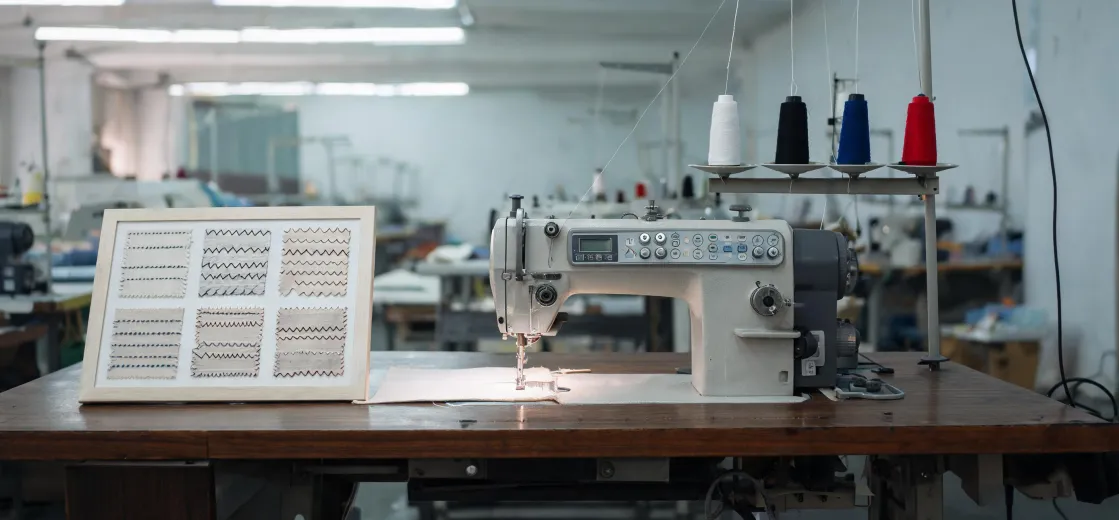
Juki and Jack are separate manufacturers. Jack is not a Juki clone factory. The jack-sewing catalog covers both industrial and embroidery machines, but they're different product families with different spare parts. Both Juki and Jack make reliable single-needle machines. In our 2024 purchase order, a Jack 8700A with table and servo motor landed at roughly 55-60% of the cost of a comparable Juki DDL-8700. The Jack machine sews fine. It also has a different dealer network, so parts availability can vary by region.
A common mistake is comparing base machines only. The table, stand, and servo motor can add 30% to a quote. When I've quoted prices for clients in Egypt and Uzbekistan, the biggest variance was always freight and customs, not the machine itself.
When I say 'cheap,' I do not mean low quality. I mean the quote may be missing things. Here's a standard list to request:
- Is the price complete? Does it include the table, motor, needle, and shipping?
- Where are spare parts stocked? If the dealer has no local stock, a $200 savings disappears when the machine is down for a week.
- What training does the supplier offer? A machine can be perfect, but if no one can adjust the tension quickly, you lose production time.
Here's where transparency matters. I've learned to ask 'what's NOT included' before 'what's the price.' The vendor who lists all fees upfront—even if the total looks higher—usually costs less in the end. That's not a feeling. It's from three failed rush orders with discount vendors who added surprises at delivery.
In 2023, I had two hours to decide between a Juki and a Jack for a client's urgent order. Normally I'd run a full comparison, but there was no time. I went with the Jack because the dealer showed me an itemized quote. In hindsight, I should have asked more about spare parts availability. But with the client waiting, I made the call with the information available.
One more thing: if a supplier says 'same quality as Juki,' ask for proof. Per FTC guidelines (ftc.gov), advertising claims must be substantiated. Ask for specifications, not adjectives.
Scenario 2: Building an Embroidery Machine Workshop (SmartStitch or Otherwise)
If 'SmartStitch embroidery machine' brought you here, you're probably comparing single-head versus multi-head. I've only worked with single-head and 8-head machines in small workshops, so I can't speak to massive 16-head factories. But the same triage logic applies.
For a SmartStitch embroidery machine workshop, don't let a low price per head make the decision. A 12-head machine seems cost-effective on paper. But if you only have one or two operators, you can't run 12 heads at full speed anyway. You're paying for capacity you can't use.
Why does this matter? Because an embroidery machine is only valuable when the person running it can manage the design software, thread changes, and hoop tension at the same time. The bottleneck is almost never the machine. It's the operator.
In March 2024, a client called at 9 a.m. needing 400 embroidered caps for a corporate event the next morning. Normal turnaround is five days. We found a local workshop with a 6-head SmartStitch machine, paid $600 extra in rush fees, and delivered at 7 p.m. Their alternative was losing the account.
After we paid the rush fee, I kept second-guessing. What if the machine wasn't available? The five hours until production started were stressful. It worked out, but the lesson stuck: for an embroidery machine, look at the number of active operators, their skill level, and the design complexity. Not just the price.
Scenario 3: It's Not Always a New Machine—Maybe You Need a Sewing Machine LED Lamp E14
Sometimes the emergency isn't a new machine. It's a broken lamp on a perfectly good machine. The sewing machine LED lamp E14 is one of the most common requests I get.
If your machine has a standard E14 socket, the lumens and color temperature matter. I learned this in 2022 when we bought generic E14 LED bulbs that flickered at high machine speed. The bulb wasn't rated for the vibration. Since then, we use a 2700-3000K LED lamp with a short skirt and effective heat dissipation. It's a $3-6 part. But if you're wrong about the socket size, you've wasted a week.
This is the counterintuitive one: buying the spare part can be slower than buying a used backup machine. I know that sounds extreme. But if the part has to cross borders, shipping is not a controlled variable. According to USPS (usps.com), as of January 2025, a First-Class Mail letter costs $0.73. But a packaged LED lamp is not a letter. The package rate depends on weight and destination, so always get a shipping quote before buying a cheap part.
The most frustrating part of parts sourcing is the same issue recurring despite clear specs. You'd think an E14 LED lamp is simple. Then the lamp arrives with the wrong base, or the voltage is 120V when the machine runs on 220V. That's why I now ask three questions first:
- What's the exact socket/base type? E14 is screw base, not bayonet.
- Does the part have a compatibility list? For an LED lamp, check wattage and housing size.
- What is the total landed cost, including shipping and customs?
That last question is the one that creates trust. If the supplier lists everything upfront—part price, shipping, delivery window—I'm more likely to buy from them. If the answer is 'send us your machine model and we'll quote you later,' I learn what 'not included' means.
How to Tell Which Scenario You're In
Not sure which bucket you fall into? Use this.
If the machine doesn't exist yet and you need new production capacity, that's scenario 1 or 2. A machine you don't have cannot have an emergency part. So compare total machine costs, not sticker prices.
If the machine exists but won't run, that's scenario 3. A spare part is only worth it if the repair cost is less than the downtime. Add up the lost hours and compare it to the new machine cost.
If you have 48 hours or less to deliver a client order, that's scenario 1 plus scenario 3. You might need the fastest path to a running machine, not the best market price. In that case, I've learned to accept a higher price from a known vendor because reliability is the real cost.
Here's the honest part: I've made the mistake of trying to save on the machine itself. We lost a $12,000 contract once because we tried to save $800 on a standard machine instead of buying a backup unit. That's when we implemented a 'one backup for every critical machine' policy. It felt excessive until the backup machine paid for itself in a single week.
Final Checklist Before You Buy
- Ask what's NOT included in the price. There should be an itemized list.
- Ask for a dated quote. This pricing was accurate as of Q4 2024; the market changes fast, so verify current rates.
- Ask for the dealer's service response time, not just the warranty period.
- If you're buying an embroidery machine, count the active operators before counting the heads.
- If you're buying a part, confirm the base type. An E14 LED lamp is not the same as E12 or E27.
In the end, the most expensive machine isn't the one with the highest price tag. It's the one that stops working during a rush order. When someone lists all the costs upfront—machine, shipping, accessories, taxes—I trust them. When they hide the extras until the invoice arrives, I'm already looking for another vendor.

Elise Marceau
Elise Marceau is an LED display and digital-signage systems analyst covering LED video walls, modular screens, transparent LED, control processors, and indoor or outdoor signage. She applies IEC 62368-1 safety principles while comparing pixel pitch, luminance, contrast, refresh rate, colour uniformity, viewing angle, ingress protection, power density, module serviceability, and signal redundancy. Her specification guides help integrators, venue operators, retailers, and procurement teams align viewing distance, ambient light, content format, installation access, electrical load, and lifecycle support.