Jack sewing article
Jack-Sewing: Juki Jack Sewing Machine Price, Official Website, B500 Embroidery Machine & Stabilizer Questions
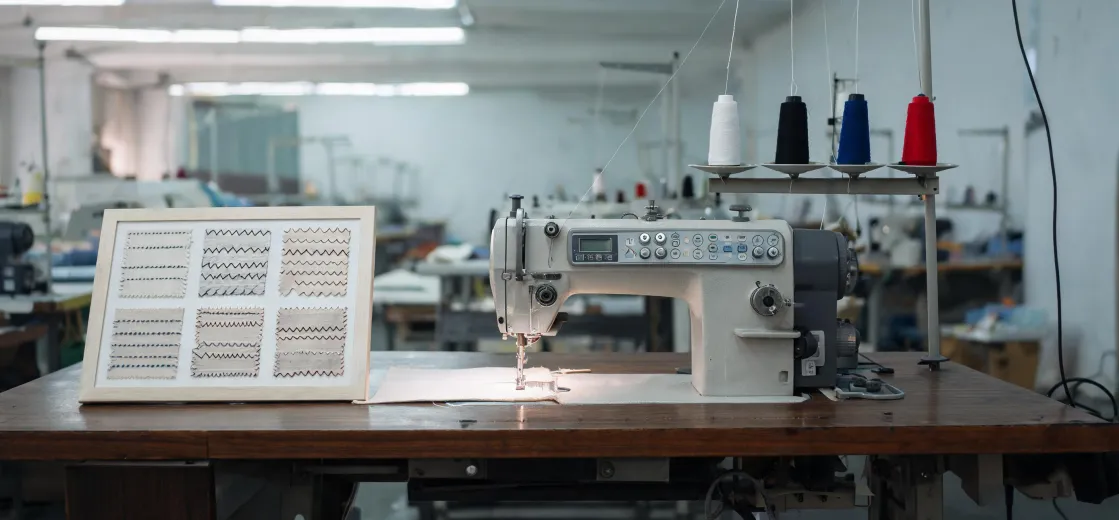
-
Is There a "Juki Jack" Sewing Machine? What Should It Cost?
-
What Is the Jack Sewing Machine Official Website?
-
What Is the Jack B500 Embroidery Machine?
-
What Does "Large Hoop Area" Mean for an Embroidery Machine?
-
What Stabilizer Do You Need for a Large-Hoop Embroidery Machine?
-
Should I Buy From the Official Website or an Authorized Dealer?
-
What Should I Check Before I Pay?
If you searched "jack-sewing," "juki jack sewing machine price," or "jack sewing machine official website," this is for you. I coordinate equipment sourcing for an industrial sewing and embroidery supply company, and I've been doing it long enough to have handled more rush orders than I like to count. In my role, the biggest lesson has been simple: most buying mistakes happen before the machine arrives. This FAQ is the checklist I wish every customer had.
Is There a "Juki Jack" Sewing Machine? What Should It Cost?
There's no machine called a "Juki Jack." Juki is a Japanese company. Jack is a Chinese company. Both make industrial sewing machines, and both get spec-compared all the time, so the search phrase "juki jack sewing machine price" makes sense even though the product name doesn't exist.
What people are usually comparing is a Jack industrial model versus a Juki industrial model in the same category. From the dealer listings I checked in January 2025, Jack's standard single-needle lockstitch machines with a table and servo motor were mostly listed in the $500-$900 range. Juki's comparable DDL models were usually $700-$1,100. Those are planning ranges, not quotes, and they don't include freight or import fees.
Price observation, January 2025: Based on public dealer listings for basic industrial lockstitch machines. Actual prices change often. Always ask for a line-item quote.
If you see a price that looks way too good, check whether it includes the table, stand, and motor. I've had customers learn later that the "machine only" price was more than a comparable full package from a different dealer.
What Is the Jack Sewing Machine Official Website?
The main official domain is jacksewing.com. Jack Technology Co., Ltd. is headquartered in Taizhou, Zhejiang, China. The official site has product specs, news, and dealer information. It's a good place to start. But if you type "jack sewing machine official website" into a search engine, you'll also see resellers and directories that look official. Some are fine. Some are not.
In March 2024, a customer called me after paying a deposit on a "factory-direct" site that had the Jack logo and a very similar URL. Turned out it was not an official Jack site. The money went nowhere, and they lost three weeks on an order that needed to be installed before their busy season. I tell that story not to scare you, but because a 10-minute URL check would have prevented it.
Official Jack sites and authorized distributors won't ask you to wire money to a personal account. They have corporate addresses, phone numbers, and formal purchase order processes. If a site lacks those things, treat it as a risk.
What Is the Jack B500 Embroidery Machine?
The B500 is Jack's single-head computerized embroidery machine. It's aimed at small to mid-size production shops and businesses that want to bring embroidery in-house. It's not a home machine, and it's not a bulk multi-head line. It sits in that useful middle space where you can run bigger patterns without managing a whole row of heads.
Because "B500" is marketing shorthand, don't assume the number tells you the hoop size. The manual or spec sheet has the exact usable embroidery area, which is what matters. I've seen buyers order it because they heard "large hoop area," then discover the design they wanted to stitch was bigger than the field. On a deadline, that discovery is expensive.
What Does "Large Hoop Area" Mean for an Embroidery Machine?
If you're searching "embroidery machine large hoop area," this is what that phrase means in practice. It depends on context. A home machine's "large" hoop might be 6 by 10 inches. A commercial single-head machine like the B500 is usually in a different category; larger hoops start around 12 by 12 inches and can go above 14 by 14 inches depending on the model. But the marketing phrase doesn't guarantee a specific number. Check the dimensions.
A larger hoop is great for jacket backs and tall designs. It's unnecessary if your actual jobs are mainly left-chest logos. When I first started selling this equipment, I assumed bigger was always better. Then a client bought the largest hoop available and spent the next month fighting fabric slack in the middle of the field. The problem wasn't the machine—well, it wasn't the machine's fault. It was matching the hoop to the work they actually do.
What Stabilizer Do You Need for a Large-Hoop Embroidery Machine?
When people search "stabilizer embroidery machine" they usually want a universal answer, but there isn't one. The short answer: it depends on fabric, not machine. Cut-away backing for stretchy fabrics, tear-away for stable woven materials, and water-soluble topping for towels or fleece. A large hoop doesn't change the basic rule, but it does increase the consequences if you pick the wrong one.
When a design covers a bigger area, the fabric has more chance to shift. That's why when someone asks me "which stabilizer for an embroidery machine with a large hoop?" I ask them the fabric question first. I've seen a B500 run perfectly on a test piece, then fail on the real batch because the production manager used tear-away on a stretchy garment. The design distorted, the shipment was late, and the machine got blamed. It wasn't the machine's fault. It was the stabilizer choice.
This is where the "prevention over cure" mindset pays for itself. A 15-minute test on the exact fabric, with the exact design and hoop, is a lot cheaper than reprocessing 300 jackets.
Should I Buy From the Official Website or an Authorized Dealer?
For a sewing machine or an embroidery machine, I'd rather buy from an authorized dealer than from an online catalog. Not because the dealer is cheaper, but because support matters when a machine sits 2,000 miles away from the factory. A local dealer can answer voltage questions, help with installation, and handle warranty claims. The official website helps you verify exact specs and find that dealer.
There are exceptions. Some markets have official Jack distributors with good e-commerce sites, and ordering there is fine. But if you're in a region where Jack doesn't have a direct storefront, the official dealer locator is your friend. When I'm triaging a rush order, I always ask for a quote that lists machine, table, motor, hoop set, freight, and installation separately. Surprises are not okay at 5 p.m. before a deadline.
What Should I Check Before I Pay?
Ten minutes on this list now can save ten days of delays later:
- Verify the URL for the Jack official website. Don't trust search ads.
- Find your machine's exact model and read the spec sheet. Do not rely on a product name.
- Measure your largest recurring design. Compare it to the actual hoop area.
- Ask what's included in the price: table, motor, hoop set, cap frame, training?
- Test the stabilizer on the actual fabric before committing to a production run.
- Get total landed cost: machine, freight, taxes, import duties, and any rush fees.
My experience here is with small and mid-size production shops. If you're running a 20-head embroidery factory, your decisions will look different. But the first two line items on that list apply to every buyer. Check the source, check the numbers. The machine will still be there after you've verified both.

Elise Marceau
Elise Marceau is an LED display and digital-signage systems analyst covering LED video walls, modular screens, transparent LED, control processors, and indoor or outdoor signage. She applies IEC 62368-1 safety principles while comparing pixel pitch, luminance, contrast, refresh rate, colour uniformity, viewing angle, ingress protection, power density, module serviceability, and signal redundancy. Her specification guides help integrators, venue operators, retailers, and procurement teams align viewing distance, ambient light, content format, installation access, electrical load, and lifecycle support.