Jack sewing article
Jack Sewing Machine Brand Review: Price, TCO, and the Real Online Buying Comparison
-
The Comparison: Jack vs. the Premium Route
-
Dimension 1: Build Quality and Reliability
-
Dimension 2: Jack Sewing Machine Price vs. Total Cost
-
Dimension 3: Parts, Support, and Buying an Embroidery Machine Online
-
Dimension 4: Shipping, Setup, and the Hard Case Question
-
Where the Premium Route Still Wins
-
Verdict: What I'd Choose
I'm the office administrator for a 280-person apparel company. I manage equipment and MRO purchasing—roughly $800k a year across 12 vendors. I report to both operations and finance, which means I feel every cost twice: when it's ordered, and again when it hits the P&L. This jack-sewing brand review comes from that seat.
Everything I'd read about industrial sewing machines said to stick with the established names and treat budget brands as a gamble. In practice, since we put two Jack machines on the floor in Q3 2023, they've outworked machines that cost nearly twice as much. That surprised me. It's the reason I'm writing this.
The Comparison: Jack vs. the Premium Route
When our cut-and-sew line needed two more machines, the real decision wasn't 'Jack vs. no machine.' It was: A) order a Jack industrial sewing machine from an authorized dealer, or B) spend more on a premium import sold through a local distributor. To keep this useful, I compared four dimensions: build quality, price and total cost of ownership, parts and support, and buying online.
Dimension 1: Build Quality and Reliability
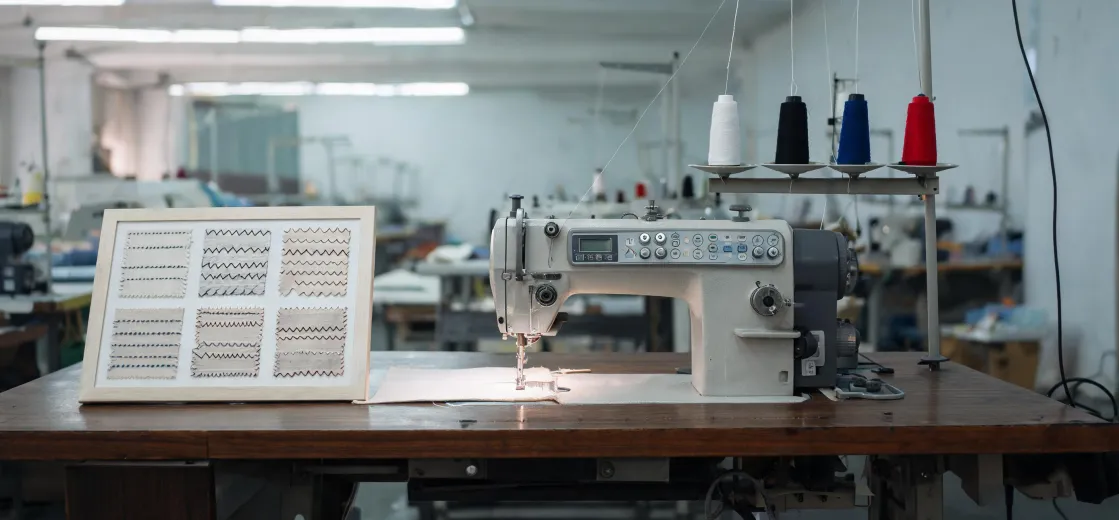
The conventional wisdom is that premium machines are inherently more reliable. That was true when Jack was primarily a copy-maker, but that's an old story. The current Jack 1501 we run is basic—no digital panel, no auto tacking—but the frame is solid and tension stays where I set it. Not flashy. Workhorse.
One surprise: the first Jack machine arrived with a loose belt guard. Ten-minute fix. Meanwhile, a premium machine we own needed a thread sensor recalibration within the first month. I stopped assigning reliability by badge after that.
Dimension 2: Jack Sewing Machine Price vs. Total Cost
Let's talk about jack sewing machine price. For a Jack industrial straight-stitch with a table and motor, I've received authorized dealer quotes in the $650–$850 range (January 2025). A comparable premium import was $1,400 or more. But I don't compare quotes. I compare TCO.
Total cost of ownership here includes: base price, freight, setup, spare parts, training, and downtime. In our 2024 purchase, the Jack was $720. Freight to our warehouse was $180. Our own mechanic did the install. Spare hook assembly was $45. Total: $945. The premium quote was $1,520 with freight included, but the calibration tool for it was another $350. You can see where this ends.
According to Jack's official dealer locator (accessed January 2025), pricing is set by authorized dealers rather than published as an MSRP, which makes a TCO calculation even more important when you get quotes.
The 'lowest quote is the cheapest' mindset is how you get burned. Another vendor offered us a $600 machine, but the inline packing was so poor that the control panel bracket cracked in transit. Replacement, shipping, and labor pushed it to $820 and cost us three weeks. Price, logistics, risk. In that order.
Dimension 3: Parts, Support, and Buying an Embroidery Machine Online
Here's the thing: premium brands win on service networks. If your dealer has a technician on call, that is real value. But if the dealer is two time zones away, you're paying for a benefit you may never use. For Jack, parts availability has been surprisingly good—we order parts online and most ship within 48 hours.
If you're looking at a SmartStitch embroidery machine, apply the same TCO logic before ordering. Compare not just the machine price but the availability of needles, bobbins, and circuit boards. Without those, a machine is a very large paperweight.
Buying an embroidery machine online is no longer the risky move it was 15 years ago. The 'online is unsafe' thinking comes from an era without detailed spec sheets, user videos, or third-party logistics tracking. That's changed. What hasn't changed is the need to verify the seller. A vendor who couldn't provide proper invoicing cost us $2,400 in rejected expenses, so I now confirm company registration and invoice format before placing any equipment order.
Dimension 4: Shipping, Setup, and the Hard Case Question
When ordering online, never assume the machine arrives in a sewing machine case hard enough for freight. Many industrial machines ship on a pallet with a cardboard wrapper. If you need to move a machine between floors or between facilities later, a real sewing machine hard case costs $80–$180 (based on distributor quotes, January 2025; verify current rates). That's a TCO item people forget until it's time to move.
For embroidery machines, freight is even heavier. A SmartStitch embroidery machine might look cheap on the listing, but crate, rigging, and installation can add 15–20% to the first invoice. Ask for those numbers in writing before you commit.
Where the Premium Route Still Wins
I'll be honest: if your shop needs hand-holding, don't buy value-brand industrial equipment. The premium route buys you a service ecosystem, structured training, and faster technical support. For a small shop without an in-house mechanic, that ecosystem may be the lower total cost even at a higher purchase price. That's not a wishy-washy conclusion—that's TCO.
Verdict: What I'd Choose
If you have a mechanic or a technically strong operator, Jack gives you more machine per dollar. We've run our Jacks for about 18 months. Did I second-guess the purchase? Yes. For the first two weeks, every tension hiccup made me wonder if I'd made the right call. Then we passed 600 production hours with no major breakdown.
Find a jack-sewing authorized dealer who can invoice properly and explain freight terms. Treat a SmartStitch embroidery machine the same way. And if your plan involves moving machines, put a sewing machine hard case in your budget before comparing quotes.
Real talk: nobody gets a bonus for buying the expensive machine. But you do get noticed when the line goes down waiting for a part. Price, parts, support. In that order.

Elise Marceau
Elise Marceau is an LED display and digital-signage systems analyst covering LED video walls, modular screens, transparent LED, control processors, and indoor or outdoor signage. She applies IEC 62368-1 safety principles while comparing pixel pitch, luminance, contrast, refresh rate, colour uniformity, viewing angle, ingress protection, power density, module serviceability, and signal redundancy. Her specification guides help integrators, venue operators, retailers, and procurement teams align viewing distance, ambient light, content format, installation access, electrical load, and lifecycle support.