Jack sewing article
DTF vs. Embroidery Machines: What Fast-Turnaround Shops Should Buy in 2025
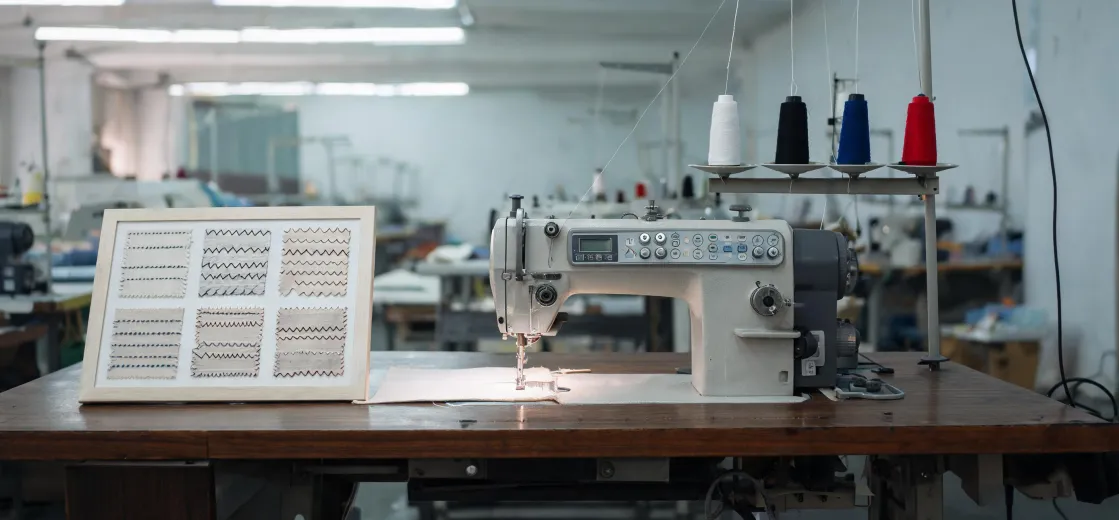
If you searched for "DTF embroidery machine," pull up a chair. It's a common search, and I get it—both methods produce custom designs on shirts, and the terms get tangled. But DTF (direct-to-film) and embroidery are completely different production processes. Different machines, different costs, different turnarounds.
I coordinate production at a garment decorating company. I've handled 100+ rush orders in five years, including same-day turnarounds for retail clients. In my role, I've watched both an embroidery machine and a DTF setup run past midnight to deliver on time. This comparison is based on that experience, not on spec sheets.
The Framework: Four Dimensions That Matter
Speed, cost, durability, flexibility. If you're deciding between an industrial embroidery machine and a DTF system, these are the dimensions that determine whether the machine makes you money or just takes up floor space.
1. Speed: When a Client Calls at 4 PM on Thursday
In March 2024, a client needed 240 custom totes for a Friday night event. The artwork wasn't finalized until 4 PM.
On an embroidery machine, that logo was roughly 12,000 stitches per tote. A single-head machine runs 600–800 stitches per minute, plus hooping and thread changes—about 15 minutes per tote. 240 totes meant 60 hours on one head. Even a 4-head machine would need 15 hours of nonstop production. The client's alternative was showing up empty-handed.
With DTF, the workflow is completely different. Print the design onto film, apply adhesive powder, cure it, then heat press each tote. The press cycle is 15–20 seconds. One operator can reasonably do 40–60 pieces per hour. We had all 240 totes ready by 9 PM that evening (thankfully).
Does that mean DTF always wins on speed? Not even close. A 12-head embroidery machine hits a rhythm that DTF can't touch for high-volume repeat orders. A standard chest logo—say 10,000 stitches—comes off a 12-head in about 15 minutes per batch of 12. That's roughly 1,000 pieces per day with one operator. DTF at 50 pieces per hour would need 20 hours just to press 1,000 pieces, before printing and curing time.
Verdict: DTF wins for short runs and tight deadlines. Multi-head embroidery wins for consistent volume.
2. Cost: The Number That Changes Everything
Ballpark 2025 prices in the US market:
- Single-head embroidery machine (Jack, Celeste, or comparable): $8,000–$15,000
- Multi-head industrial embroidery machine (4–6 heads): $20,000–$40,000+
- Complete DTF setup (printer, powder shaker, curing oven, heat press): $10,000–$18,000
Here's what machine vendors won't tell you: per-unit consumable costs differ a lot. Embroidery thread and backing are cheap—maybe $0.80–$1.50 in consumables for a standard chest logo. DTF requires film, CMYK ink, white ink, and adhesive powder. That same logo runs $1.50–$3.00 per piece in DTF, and the cost doesn't drop as your volume climbs.
Labor is another layer. Multi-head embroidery produces several pieces at once with a single operator. DTF pressing is hands-on, piece by piece. For a 500-piece order, the embroidery machine's per-unit economics get very attractive. For a 12-piece order, DTF is far less painful.
And when comparing quotes, remember the total cost of ownership: machine price, shipping, installation, training, software, initial consumables, and the cost of mistakes while your team ramps up. The cheapest machine quote is rarely the least expensive investment.
Verdict: Embroidery wins on consumable cost at scale. DTF wins on initial investment and small-batch economics.
3. Durability: The Unexpected Part
The fundamentals here haven't changed: embroidery is permanent. Thread is physically sewn through the fabric, which is why uniform contracts and corporate workwear still specify it.
The surprise? For complex artwork—gradients, fine lines, heavy color—DTF looks better than embroidery. Embroidery has to convert a design into stitch patterns. It's an interpretation. DTF prints the artwork as it was designed. If a client hands you a complicated logo and says "make it look exactly like this," DTF wins the visual comparison.
If brand colors must be exact, hold the DTF printer to a proper standard. In commercial print, the accepted tolerance is Delta E < 2 for brand-critical colors. A quality DTF printer with good RIP profiling can hit that. Most unbranded budget machines? Not so much. That's worth paying for if your clients have strong brand identities.
On longevity, the "DTF doesn't last" reputation came from an era when low-quality films flooded the market. That's changed. Quality DTF transfers now hold up for 40–60+ washes when applied correctly. I'm not a textile chemist, so I can't speak to long-term dye migration on every fabric. What I can tell you from production is that DTF is fine for promotional products and most retail apparel. It's just not embroidery. An embroidered logo will still be there when the garment itself needs replacing.
Verdict: Embroidery wins on lifespan and perceived value. DTF wins on visual accuracy for complex designs.
4. Flexibility: When Clients Change Their Minds
Here's something vendors don't publicize: embroidery has a dependency chain. You need a digitizer for the stitch file. The right needle and thread weight for each fabric. The right backing. The right hoop size. Change the design, and you digitize again. This gets expensive and slow for small, varied orders.
DTF, on the other hand, prints a new design within minutes. New artwork? Load it, print, cure, press. A 5-piece order and a 500-piece order run back-to-back without reconfiguring anything. That's the kind of flexibility that matters when your customers are small businesses with tight deadlines and endless revisions.
The industry has shifted because of this. Five years ago, the standard advice for a new shop was "buy a single-head and learn to embroider." In 2025, DTF is often the smarter first investment—and I say that as someone who genuinely likes running embroidery machines. The single-head still has a place, but the old "start cheap, grow into it" playbook has changed.
Verdict: DTF wins on flexibility. Embroidery wins on throughput per operator for stable, high-volume runs.
So, Which Should You Buy?
Review your last three months of orders. What were you actually asked to produce?
Choose a multi-head embroidery machine if: your revenue depends on uniforms, corporate branding, or high-volume repeat orders. The jack-sewing industrial line—4, 6, 8, or 12 heads—is built for exactly this: consistent output, established spare parts availability, and construction that takes daily production punishment.
Choose DTF if: you're entering garment decorating for the first time, your clients change designs often, or you need fast turnaround for promotional products. The lower skill threshold and design freedom make it an easier first step.
Choose both if: your budget and floor space allow. That's what I've ended up with. Embroidery handles the premium, consistent, high-volume jobs. DTF handles the fast, colorful, custom ones. Last quarter we ran 47 rush orders with a 95% on-time rate. I wouldn't have hit that with either technology alone.
The "DTF vs. embroidery" question isn't settled because one is better—it's settled because they're different tools. The right choice depends on your order mix, and for most growing shops in 2025, the answer is more likely a hybrid than a single machine.
Sourcing: Algeria, USA, and Total Cost
One practical thing: machine pricing varies dramatically by market. In Algeria, a jack sewing machine price will include import duties, distributor margins, and often less reliable spare parts supply. Buyers in the USA have access to jack sewing machine distribution through established industrial equipment suppliers, and you can often buy an industrial sewing machine head for sale separately if you're building or repairing a production line.
Whatever market you're in, check the same things: actual delivery lead time, local parts availability, and real support response time—not what the brochure promises. The lowest quote is the most expensive machine you can buy if it sits waiting for a part during a rush order.

Elise Marceau
Elise Marceau is an LED display and digital-signage systems analyst covering LED video walls, modular screens, transparent LED, control processors, and indoor or outdoor signage. She applies IEC 62368-1 safety principles while comparing pixel pitch, luminance, contrast, refresh rate, colour uniformity, viewing angle, ingress protection, power density, module serviceability, and signal redundancy. Her specification guides help integrators, venue operators, retailers, and procurement teams align viewing distance, ambient light, content format, installation access, electrical load, and lifecycle support.