Jack sewing article
Jack Sewing Machine Brand Review: Industrial vs Domestic, SmartStitch, and HappyJapan
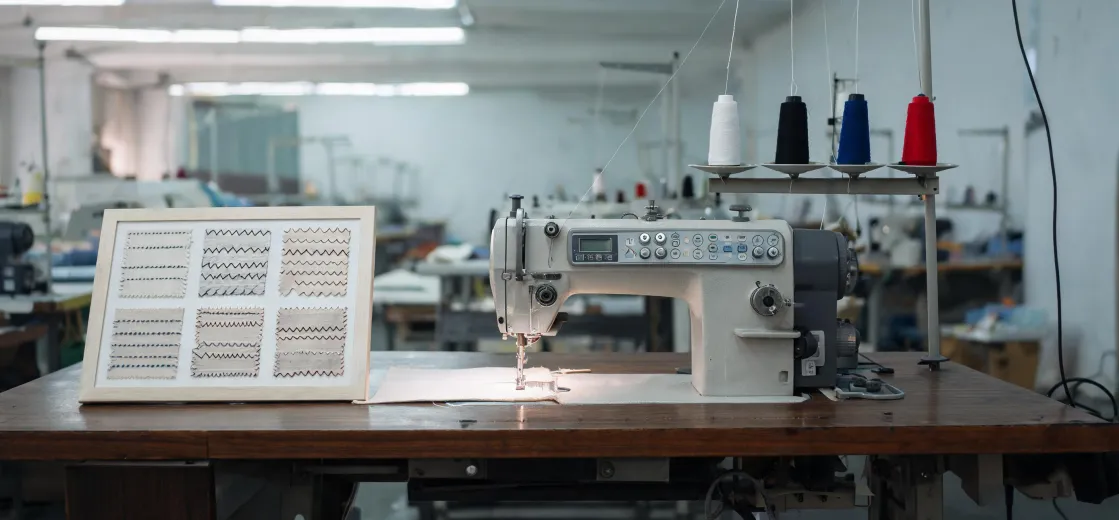
Here's my take: if you're trying to build a brand with a domestic sewing machine, you're not saving money. You're burning it. That sounds kinda harsh, but I've watched too many small shops confuse equipment cost with brand investment.
I coordinate production for a contract embroidery and sewing shop. In the last four years, I've handled 200+ rush orders—including same-day turnarounds for hotels, sports teams, and corporate events. I've also spent more hours than I can count on single-head and multi-head embroidery machines. So when someone asks me for a jack sewing machine brand review, they usually expect specs. I'd rather talk about what your output says about you.
This isn't brand loyalty. It's a survival reflex. I've watched a $3,000 machine save a $15,000 contract, and I've watched a $300 machine nearly destroy one.
Industrial Sewing Machine vs Domestic: The Category Question
Every week, someone asks if a home sewing machine is good enough for client work. The "domestic is good enough" thinking comes from an era when industrial machines cost more than a car. That's changed. Today, you can get a dedicated industrial sewing machine or a single-head embroidery machine at a price that makes the category question more important than the brand question.
When I say industrial, I'm not talking about size only. Industrial machines have heavier frames, higher duty cycles, and serviceable parts. Domestic machines are built for intermittent use. The difference matters when production demand is continuous.
The industrial sewing machine vs domestic debate isn't about which stitch looks prettier on the first sample. It's about what happens on hour six, when the thread tension drifts, the hoop slips, and the deadline is still there. A domestic machine might produce a beautiful logo in one test run. It won't produce fifty identical logos in a row without turning into a project manager.
In March 2024, a regional hotel group called at 9 a.m. needing sixty embroidered tote bags for a conference the next morning. Normal turnaround is five days. We split the job across two single-head machines—one a SmartStitch embroidery machine we use for samples, one from the main production line—paid $650 in rush fees, and delivered at 11 p.m. The alternative was losing a $14,000 annual contract. On a domestic machine, that job would have been a bet I wasn't willing to take.
What I've Learned From SmartStitch and HappyJapan
Single-head embroidery machines are where the brand perception battle is won or lost. I've spent time on a SmartStitch embroidery machine in our sample room and watched a neighboring shop run a HappyJapan embroidery machine for caps and bags. Both are a different universe from a converted domestic.
Neither SmartStitch nor HappyJapan is trying to be a multi-head production monster. They're single-head workhorses, and that's the right category for a growing shop. The question is whether the machine can hold tension and repeat the same stitch density across a full run.
Honestly, I'm not sure why some shop owners still think they can get away with a machine that isn't built for daily production. My best guess is sticker shock. They see a $300 domestic and a $3,000 single-head machine, and they forget to calculate the cost per completed unit. The cheap machine wins at the register and loses on the delivery dock.
On the SmartStitch machine, we can leave a digitized design running while I handle a rush order. The HappyJapan machine at the neighboring shop has been running high-density cap logos for two years without the tension issues that drove me crazy on a home-model conversion. That consistency is exactly what your clients are paying for—even if they can't name it.
Jack Sewing Machine Brand Review: The Workhorse Perspective
Now the jack sewing machine brand review part. I've used jack-sewing machines in production for years, and I'll give you the short version: Jack understands production. The jack-sewing lineup covers everything from industrial lockstitch to multi-head embroidery, and if you're looking for a jack sewing tool, the tool is only half the equation. The other half is what it regularly produces under pressure.
Jack's machine lineup is broader than most people realize. From a simple lockstitch to a multi-head embroidery system, the common thread is that they're engineered for shifts, not hobbies. There are fancier machines. There are fancier names. But in my experience, a Jack machine is the kind of equipment you forget is running because it doesn't demand attention. That's high praise in a production environment.
The Real Cost Trap
People think expensive machines deliver better embroidery. Actually, shops that deliver high-quality embroidery can charge more, and that's what allows them to buy better machines. The causation runs the other way. The machine is a symptom of your quality discipline, not a substitute for it.
I still kick myself for buying a budget single-head machine from an online marketplace to save $1,200. It looked fine on paper. But the thread path was poorly designed, tension drifted every 20 minutes, and we had to re-embroider a 50-piece order. The $1,200 savings turned into a $2,800 loss—and a client who was one bad night away from leaving. That's when I implemented our "no budget machines for client-facing work" policy.
The math only works if you count your labor. When I factor in operator time, re-stitched pieces, and missed deadlines, the "cheap" machine was the most expensive purchase of that year.
So glad I kept a spare bobbin case for the SmartStitch machine on the shelf. Almost didn't reorder it, and a cracked bobbin case would have killed an entire morning during our busiest week. (Note to self: cheap insurance is still insurance.)
Quality Is the Brand Message
Here's the part that ties back to brand. When a client walks into your shop, they might not see the stitch quality. But they see the machine. They see the way you handle a last-minute order. They see whether you panic or pull it off. Every one of those moments is a quality signal.
Color matching is another place where perception shows up. In commercial printing, the standard for brand-critical colors is Delta E < 2. I've started applying that standard to thread selection for any logo work.
Industry standard color tolerance is Delta E < 2 for brand-critical colors. Delta E of 2-4 is noticeable to trained observers; above 4 is visible to most people. Reference: Pantone Color Matching System guidelines
If a client's logo uses a Pantone color, your thread has to be in the same conversation. A "close enough" thread color is the embroidery version of a misprinted logo. It's a small detail, but clients don't hire you for small details—they hire you to not miss them.
A machine that produces consistent output is a marketing asset. It lets you promise a deadline and mean it. That's what I mean by quality being the brand message.
When My Advice Doesn't Apply
I know some of you will say a skilled operator can produce good work on any machine. There's some truth to that. I've seen impressive work come off a $100 used machine in the hands of someone with twenty years of experience. But that's the exception, and it assumes you have that person on the payroll. You're betting your deadline on exceptional skill rather than reliable engineering. That's a bad bet for a small business.
I also know not everyone has $3,000 sitting around. I get it. Start with a used industrial machine. As of January 2025, the used market still has solid older models that can run circles around a domestic. The point isn't to buy the newest thing. The point is to buy the right category and make output quality non-negotiable.
I've changed my position on used machines, too. I used to avoid them until I saw a 10-year-old industrial unit outproduce a brand-new domestic. It wasn't prettier. It was just more honest about what it was built to do.
Last quarter alone, we processed 47 rush orders with 95% on-time delivery. That number doesn't come from having the most expensive machines. It comes from treating equipment as part of the quality promise.
Bottom Line
Here's my position: output quality is the strongest brand message you can send. Whether you buy a jack-sewing industrial machine, a SmartStitch embroidery machine, a HappyJapan model, or a good used workhorse, the machine is only the messenger. Don't let anyone shame you into overbuying. The goal is capability, not status. What matters is what your work says when a deadline is on the line.

Elise Marceau
Elise Marceau is an LED display and digital-signage systems analyst covering LED video walls, modular screens, transparent LED, control processors, and indoor or outdoor signage. She applies IEC 62368-1 safety principles while comparing pixel pitch, luminance, contrast, refresh rate, colour uniformity, viewing angle, ingress protection, power density, module serviceability, and signal redundancy. Her specification guides help integrators, venue operators, retailers, and procurement teams align viewing distance, ambient light, content format, installation access, electrical load, and lifecycle support.