Jack sewing article
Jack Sewing Machine FAQ: Country of Origin, Genuine Parts, and Innovation
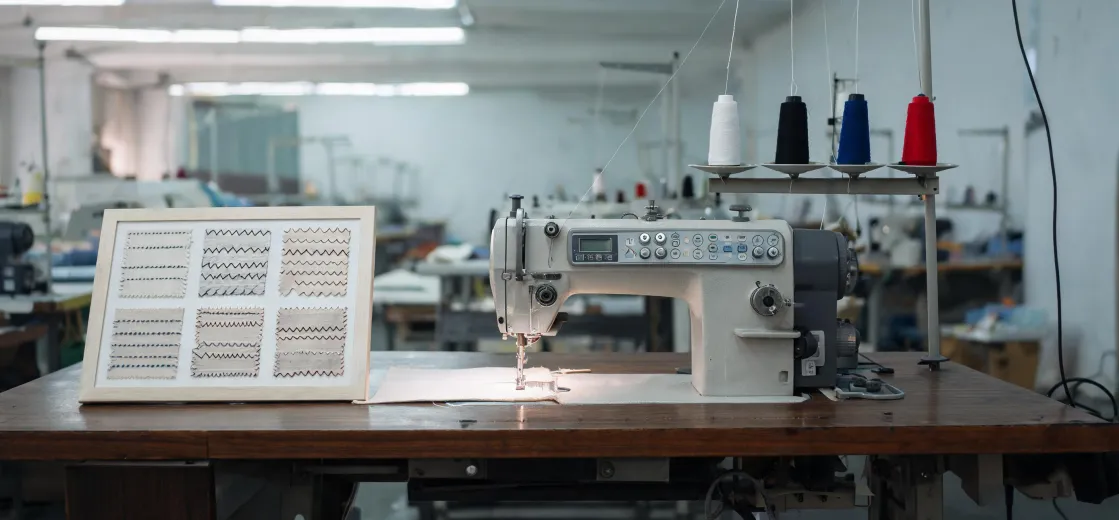
-
Where are Jack sewing machines made?
-
Are Jack sewing machines reliable for daily production?
-
Are Jack sewing machine parts interchangeable with other brands?
-
What's new in embroidery machine innovation?
-
What is a “bright” sewing machine?
-
What is a hem sewing machine foot?
-
How can I verify I'm buying genuine Jack sewing machine parts?
-
Is a Jack machine a good investment for a small workshop?
If you've searched “jack-sewing” today, you're likely comparing industrial sewing machines or tracking down a specific part. This FAQ answers the eight topics B2B buyers ask us most: country of origin, reliability, parts fitment, embroidery innovation, lighting, hem feet, genuine parts, and the value question.
- Where are Jack sewing machines made?
- Are Jack sewing machines reliable for daily production?
- Are Jack sewing machine parts interchangeable with other brands?
- What's new in embroidery machine innovation?
- What is a “bright” sewing machine?
- What is a hem sewing machine foot?
- How can I verify I'm buying genuine Jack sewing machine parts?
- Is a Jack machine a good investment for a small workshop?
Where are Jack sewing machines made?
China. Jack Technology Co., Ltd. is headquartered in Taizhou, Zhejiang Province, where the main manufacturing campus sits. I've walked those assembly lines during pre-shipment audits—it's part of my role reviewing machines before they're released to customers.
The “made in which country” question comes up constantly, and it makes sense: the name doesn't tie itself to any region, so plenty of buyers assume Jack is German or Japanese. It isn't. It's a Chinese manufacturer with roots back to the mid-1990s. For some buyers, that's a positive—for others, a reason to look elsewhere. Neither view is wrong, but you should know the facts before committing. If you're buying in volume, country of origin also affects shipping costs, import duties, and lead time to your market. Jack's export network runs through regional distributors across Central Asia, the Middle East, Africa, and Southeast Asia, so confirm that your local dealer carries service parts for the exact model you choose, not just the machine price.
Are Jack sewing machines reliable for daily production?
Reliability is less about the brand and more about three quick checks you can run the day the machine arrives. First, trace the thread path from spool to needle and look for rough edges on guides that could fray delicate yarns. Second, cycle the stitch-length dial from minimum to maximum—it should move without forcing. Third, lay a straightedge across the machine table. A warped table is rare, but I've seen it, and it ruins every seam sewn on it.
It took me about six years and close to nine thousand pre-shipment inspections to understand that most “machine failures” reported from the field trace back to setup, environment, or parts—not the machine casting itself. Check the voltage rating while you're at it: a machine wired for 380V running on 220V shop power will misbehave no matter who built it. If you're setting up a new workshop, match the machine's electrical service to local supply before install. Rewiring after install is an expense nobody budgets for.
Are Jack sewing machine parts interchangeable with other brands?
Parts are model-specific. A presser foot built for one Jack model is designed to that machine's geometry. It might look like the equivalent part from another brand—it might even fit—but “fits” and “specified” are two different things. During inbound inspection, I've rejected lookalike parts (note to self: never skip the bore-tolerance check) because they were functionally close but out of spec.
If you already run another machine brand and want to know whether a Jack part will work, start with the exact part number and a cross-reference. Our parts desk confirms fitment against your whole machine setup—not just the part family—before an order ships. The cost of guessing wrong is usually a skipped-stitch issue that looks like a tension problem but isn't one.
Why does model-specificity matter this much? Timing. A foot that sits a fraction of a millimeter off changes needle-to-hook clearance, and that shows up as skipped stitching at speed. In our test lab we measure these clearances on every unit—new or serviced—because “close enough” isn't something you want on a production floor.
What's new in embroidery machine innovation?
As of 2025, the important shift in embroidery isn't needle count—it's automated tension control. Or rather, automated per-needle tension adjustment that happens while the machine runs. Multi-head machines now correct tension on the fly, which eliminates most of the thread nesting that used to happen on the back side of the fabric.
Other features making their way into Jack's multi-head line:
- Up to 15 needles per head, meaning more colors without mid-design re-threading
- Direct reading of native design files, with no conversion step that can corrupt stitch data
- Network monitoring, so a supervisor can see stitch counts and error flags from a phone or PC
The practical effect: a two-person shop can run a 6-head machine through a full shift of multi-design work and fix problems while they're still small. If a design contains 12,000 stitches and the machine runs at 750 rpm, even a 2% reduction in re-do rate changes your weekly output and your deadline reliability. That's the kind of innovation that pays rent.
What is a “bright” sewing machine?
There's no Jack model called “Bright,” so if you searched that term you're probably asking one of two things: about machine lighting, or about finding the “right” machine (autocorrect changed it on you). Both deserve answers.
For lighting: Jack machines produced from 2024 onward use an LED strip mounted under the machine head, replacing the single-bulb setup. The strip spreads light across the full needle area. When you compare machines, switch one on and check whether the light covers the entire presser foot without shadows. And ask the dealer whether the LED strip can be replaced without unmounting the head—that maintenance detail varies by brand and shouldn't be an afterthought on a machine you'll run for years. A well-lit work area isn't a luxury when you're running ten-hour shifts; visual fatigue shows up as skipped stitches at 9 p.m.
What is a hem sewing machine foot?
A hem foot—also called a hemmer foot—guides fabric through a scroll-shaped channel that folds the edge twice before the needle catches it. You get a clean, uniform rolled hem without pinning, pressing, or measuring each panel by hand. The finished width is set by the foot's scroll size: a 1/4-in. hemmer foot produces a quarter-inch hem, a 1/2-in. foot a half-inch hem, and so on.
Do you need one? If you're producing curtains, table linens, or lightweight polyester edges in volume, it transforms the workflow. Without it, you're pressing and pinning every panel; with it, a single operator runs the line. If your work is mostly denim or leather, skip it—a standard straight-stitch foot serves better. One caution: match the scroll size to the fabric weight. A 1/4-in. hemmer designed for light polyester won't feed mid-weight twill smoothly; it'll pucker the seam before the needle arrives. I keep both on every line we test, and swapping takes about ten seconds (thankfully, since nobody wants to stop production for a foot change).
How can I verify I'm buying genuine Jack sewing machine parts?
This isn't the question most buyers ask first, but it's the one that saves the most money. Counterfeit and grey-market replacement parts exist, and some are packaged convincingly. We've intercepted parts that looked right in the box but failed basic dimensional checks once measured.
Three quick checks. One: genuine parts carry an embossed or laser-marked part number, not just a printed bag. Two: machined surfaces—bushings, shafts, raceways—have a consistent finish. Three: a dramatically low price is a red flag; when the discount is too big, tolerance is usually what got cut.
I went back and forth on whether to write this section, because nobody likes pointing at a problem in their own industry. But a fake part can damage a machine head, which costs far more than the part ever saved. Buy through authorized dealers and keep the packing with the part number until the machine runs cleanly.
Is a Jack machine a good investment for a small workshop?
Let me answer as the quality person I am, not as a salesperson. Your client never sees your machine brand. They see your seams, buttonholes, and edge finishing. If a substitute part or an off-spec accessory makes your stitching inconsistent, that's the experience your client remembers. Take a simple example: a hemmer foot that feeds unevenly turns a 20-minute tablecloth hem into 45 minutes of rework. The foot costs less than the labor hour it wastes. That's the quality-perception math most price comparisons forget.
In our Q1 2024 audit of machines returned under warranty, more than half had aftermarket or mismatched parts installed. The machine itself wasn't the root cause. The math is simple: a $60 genuine part, correctly installed, protects a contract worth thousands. That's not an argument for premium everything—it's an argument for verified parts where seam integrity matters. It won't make you the cheapest shop in town. It makes you the reliable one, and reliability is what brings clients back.

Jane Smith
I’m Jane Smith, a senior content writer with over 15 years of experience in the packaging and printing industry. I specialize in writing about the latest trends, technologies, and best practices in packaging design, sustainability, and printing techniques. My goal is to help businesses understand complex printing processes and design solutions that enhance both product packaging and brand visibility.