Jack sewing article
Can You Put Embroidery in the Washing Machine? What Every Jack Sewing Machine Buyer Should Know
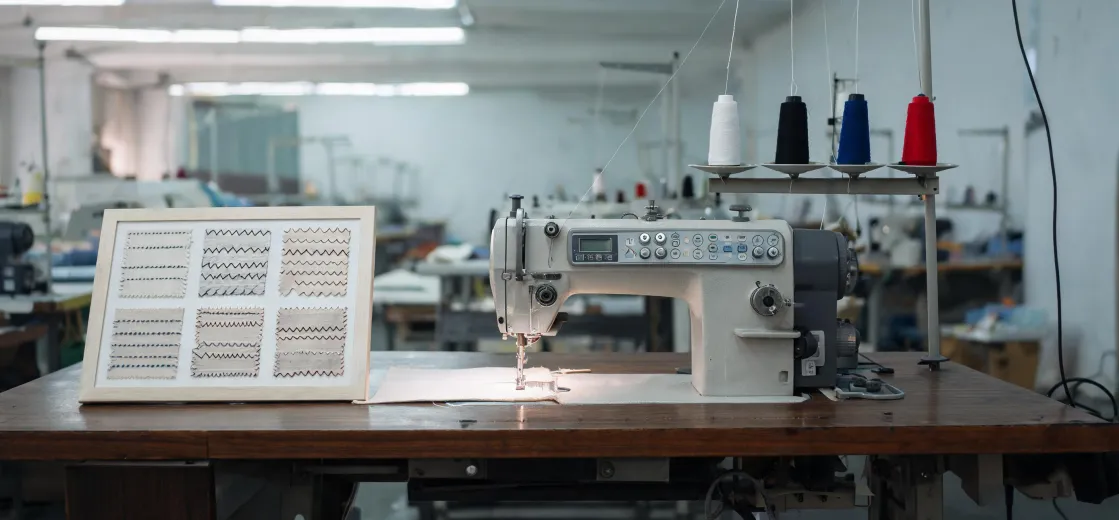
I'm the office administrator for a 40-person apparel company. I manage equipment purchasing and vendor relationships—roughly $150,000 a year across maybe 12 vendors. When I took over purchasing in 2021, the question I least expected from our embroidery department was: 'Can you put embroidery in the washing machine?'
At first I thought that was a customer-service question. It's really a buying question. The washing machine test tells you more about an embroidery machine than many product specs, and it should be asked before you sign a quote.
Can You Put Embroidery in the Washing Machine?
Short version: yes, but not every embroidered item can survive the same wash cycle. The answer depends on how the design was digitized, what stabilizer was used, which thread was used, how dense the stitch pattern is, and how consistent the machine's tension is. That last one is where the machine matters.
I'm not a textile engineer. I'm the person who signs the POs. But after a few years of ordering embroidered uniforms, promotional shirts, and customer samples, I've learned to ask more than a yes-or-no care question.
Why a Simple Answer Doesn't Exist
If you search for 'can you put embroidery in the washing machine,' you'll get a mix of care-label advice and craft-blog tips. Most of it is not wrong. It's just incomplete. The same embroidered piece can wash beautifully on a gentle cycle and fall apart in a commercial laundry.
The real problem is that people look at an embroidery machine pic and assume the machine is the main variable. It's not. The main variable is the combination of machine, thread, backing, and setup. An expensive machine can produce bad embroidery if it's poorly digitized or the hoop is mounted badly. A mid-priced machine can produce great embroidery if the process is under control.
An Embroidery Machine Pic Won't Show You What Matters
I understand why buyers rely on photos. An embroidery machine pic can show you the frame, the touchscreen, the number of needles, and the size of the hoop. It does not show you the stitch quality after 10,000 stitches, the tension drift, the customer support, or how easy it is to load and unload hoops.
I almost bought a different machine based on an embroidery machine pic and a great sales call. I knew I should get a live demo first. But I thought: what are the odds it's that different? The odds caught up with me when one needle kept dropping stitches under production speed. We solved it, but the downtime annoyed everyone.
Granted, a photo can be useful if you know what to look for. But it's not enough to recommend a machine.
Jack Sewing Machine Brand: Where Is It Made?
Now let's get to one of the searches I've seen in our own procurement notes: 'Jack sewing machine brand' and 'Jack sewing machine made in which country.'
The direct answer: Jack is a Chinese brand. The parent company is JACK Technology Co., Ltd., based in Taizhou, Zhejiang, China. The company describes itself on its official jack-sewing.com site as an industrial sewing equipment manufacturer. Most of its sewing and embroidery machines have been built in China, as far as I know.
That answer used to make me nervous. Everything I'd read said the safest country of origin was Japan or Germany, and I expected to see a difference. In practice, the country label told me less than the company behind it. There are good and bad machines from many countries. What mattered more was whether the dealer could answer questions and get parts quickly.
I do not mean every Chinese-made product is the same—that's lazy thinking. I just think 'where is Jack made' is the wrong first question. Country of origin matters for customs, lead time, and maybe financing. It does not by itself predict whether a machine will serve a small shop well.
What Makes a Recommended Embroidery Machine?
People also ask me for a recommended embroidery machine. I don't give a model number first anymore. I ask what will happen to the final product. If it gets washed often, the machine needs to work with a process that produces stable, durable stitch density. That means the dealer needs to take your wash test seriously. Whether you need a single-head or a multi-head machine, the wash test matters more than the number of heads.
For our business, a recommended embroidery machine is one that:
- Can run steadily at the speed we actually use, not just the speed on the spec sheet.
- Has a supplier who treats a one-machine order seriously.
- Comes from a company with spare parts and service support in our region.
- Produces a test sample that survives the same washing conditions as our customers' garments.
That last one is the one I used to skip.
What Getting This Wrong Actually Costs
In 2024, we ordered embroidered jackets for the sales team from a different supplier. The promotion was a big deal, and the samples looked fine. I didn't ask for a wash test because I'd worked with the supplier before. I assumed standard workmanship.
After three commercial washes, the embroidery started to pull. By the fifth wash, the logo shifted enough to look cheap. We had about 40 jackets that nobody wanted to wear.
The rework cost was roughly $1,800—maybe $2,000, I'd have to check accounting. We also lost time, and I lost trust with the sales manager. That's the part no spec sheet shows. The machine wasn't even the failure point. The process and the supplier's willingness to test it were.
This is also why the FTC care-labeling rule (16 CFR Part 423) is useful. Per ftc.gov, textile apparel and piece goods sold to consumers must have a care label with at least one safe cleaning method. When a supplier tells me 'machine washable,' I want to see the care label and know the test result. If they can't show me evidence, I treat the claim as noise.
What I'd Do Differently Now
If you're considering a Jack sewing machine, or any embroidery machine, start with the wash test. That sounds simple, but it changes your priorities. Personally, I'd rather buy a machine from a supplier who will test a sample with me than one with a fancier product page.
Here's the process I now use when buying embroidery equipment:
- Before comparing prices, get a stitch sample on the exact fabric you'll use. Wash it the way your customer will wash it. Even a basic machine can pass if the setup is right.
- Look past the embroidery machine pic. Ask for a video of a continuous stitch run, not just a product photo.
- Ask the supplier for service details in writing. For Jack machines, confirm which spare parts and accessories are stocked locally, and how long it usually takes to get help.
- Test the supplier with a small order. If a distributor treats a first-time small order like an inconvenience, that's a bad sign. The vendors who took our $200 orders seriously are the ones who got our $20,000 orders later.
And for the actual washing question? My current advice is simple: embroidered items should not go into a rough wash. Wash them inside out in cold or warm water on a gentle cycle, don't use bleach, and air dry or tumble on low. If the garment is a uniform that gets commercial washing, choose a design with looser stitch density and a professional stabilizer. That's not just care advice—it's part of production planning.
So can you put embroidery in the washing machine? In my experience, yes—if the embroidery was made with the right machine, the right setup, and a supplier who helps you prove it before you commit. The machine name matters less than the process around it.
That's the part nobody shows in an embroidery machine pic, and it's the part I wish I'd understood before my first order. It's also why I keep going back to suppliers who treat small customers like real customers. This advice is for small-batch production and uniform programs, not for high-volume factories.

Elise Marceau
Elise Marceau is an LED display and digital-signage systems analyst covering LED video walls, modular screens, transparent LED, control processors, and indoor or outdoor signage. She applies IEC 62368-1 safety principles while comparing pixel pitch, luminance, contrast, refresh rate, colour uniformity, viewing angle, ingress protection, power density, module serviceability, and signal redundancy. Her specification guides help integrators, venue operators, retailers, and procurement teams align viewing distance, ambient light, content format, installation access, electrical load, and lifecycle support.