Jack sewing article
Jack Sewing Machine Reviews & Brother PE800 Specs: A 2025 Buyer's Guide
-
Bottom Line First
-
Why You Should Listen to Me (and When You Shouldn't)
-
Jack Sewing Machine Reviews: The Real World View
-
Jack Sewing Machine Parts: Don't Learn This the Hard Way
-
Beaded Embroidery Machine Options for Tight Budgets
-
Brother PE800 Embroidery Machine Specs (As of January 2025)
-
The Bottom Line: Total Cost of Ownership Beats Sticker Price
-
Honest Limitations
Bottom Line First
For most small to mid-size shops, a JACK sewing machine gives you the best balance of upfront price and long-term serviceability—if you buy the right model and budget for the real total cost. I say that after 7 years of coordinating production and machine emergencies for an apparel company. We've owned JACK machines, repaired them, and made every mistake you're trying to avoid.
In this guide, I'll cover what JACK reviews don't tell you, how to buy genuine parts without losing money, when an affordable embroidery machine like the Brother PE800 makes sense, and the exact Brother PE800 specs if you're cross-shopping. No marketing fluff. I'll also flag a few things that don't show up on spec sheets.
Why You Should Listen to Me (and When You Shouldn't)
In my role as production manager, I've handled 200+ rush orders, including same-day turnarounds and emergency repairs. I'm not a sewing machine mechanic and I'm not an embroidery digitizer. I can't tell you how to design a beaded pattern or rebuild a rotary hook. What I can tell you is how to evaluate machines, parts, and vendors so your line doesn't stop.
For example, last December, 36 hours before a 400-piece corporate order, our main JACK's bobbin case cracked. We called three dealers at 7 a.m., found a genuine part in stock one city away, paid $95 for same-day courier, and had the machine running by 1 p.m. That's the side of machine reviews nobody puts on a spec sheet.
Jack Sewing Machine Reviews: The Real World View
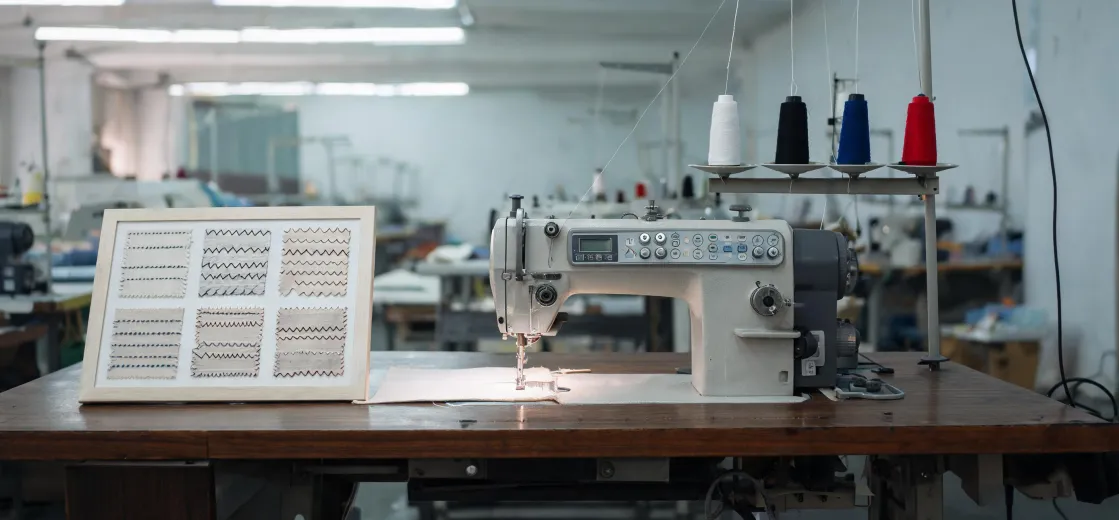
JACK has a reputation in the industry for producing solid, no-frills industrial machines. The popular 1501 single-needle lockstitch is the workhorse in many shops. Our shop has two, and they've sewn through everything from denim to lightweight synthetic webbing.
The things I like:
• Mechanical simplicity. Less to break, easier to troubleshoot.
• Parts availability. OEM parts are usually stocked by dealers, not special order.
• Price transparency. A JACK head is priced like a tool, not a luxury product.
The things that surprised me:
• New machines sometimes arrive with timing out of spec. This happened with one of ours. We had a technician check it before production, which took two hours. It's not unique to JACK, but it's a real step in the buying process.
• The advertised base price may not include table, motor, stand, or installation. Ask for the complete package price before you compare.
Another thing that doesn't show up in online reviews: JACK sells many models, and not every dealer carries every model. Before you fall in love with a spec, confirm that you can get parts and service in your region. A machine that saves you $800 upfront but needs a 3-week parts shipment is not a good deal when a rush job is on the line.
Jack Sewing Machine Parts: Don't Learn This the Hard Way
Here's where value over price really kicks in. In 2023, I made the classic mistake: I ordered an aftermarket feed dog assembly for one of our JACKs because it was $22 cheaper than the genuine part. It arrived in three days, fit fine, and failed on a Monday during a 500-piece run. We missed our shipment, paid $270 in air freight, and wasted 6 hours of mechanic time. That single decision cost us about $600 to save $22. That's penny wise and pound foolish.
Maybe more important: don't order parts by model name alone. I once called a supplier and asked for JACK 1501 parts. They asked if I had the serial number prefix. I didn't. We got the wrong bobbin case, and the machine sat idle another day. We were both saying part for a JACK 1501, but JACK has made multiple revisions, and the parts aren't always interchangeable. Lesson: give the full serial number and ask the supplier to email a photo of the part before you pay.
A quick note on sellers: if a listing says fits JACK but won't give you a specific OEM part number, treat that as a red flag. Per FTC guidelines, claims that a product is compatible with another brand should be truthful and substantiated. If they can't point to the exact compatibility, you're buying a gamble.
Beaded Embroidery Machine Options for Tight Budgets
If you searched beaded embroidery machine and landed here, you're likely hoping there's an affordable embroidery machine that can handle beads without a six-figure price tag. Short answer: it depends.
Beaded embroidery usually requires either an attached bead feeder or a machine that's specifically designed to handle heavier, taller embellishments. Some industrial machines can be fitted with bead attachments. On a single-needle home/hobby machine, adding a bead attachment is possible, but the design and hoop have to line up or you'll be pulling out frogged thread all day.
I'm not a digitizer, so I can't tell you if a specific beaded pattern will stitch out flawlessly. What I can tell you from production experience: machine quality matters less than backup, hooping, and digitizing. A $3,000 machine with a poorly digitized file will produce worse results than a $500 used machine with a clean file and proper backing.
For affordable entry-level embroidery, the Brother PE800 is popular for good reason: it works, it's easy to use, and it doesn't take up a warehouse (which is more than I can say for a full industrial table). But let's be honest about what it is: a single-needle home/hobby machine.
Brother PE800 Embroidery Machine Specs (As of January 2025)
Here are the official specs from Brother's product page:
- Embroidery field: 5 x 7 inches (130mm x 180mm)
- Built-in designs: 138
- Built-in lettering fonts: 10
- Color touchscreen: 3.7 inch LCD
- Import designs via: USB port
- Needle threading: automatic
- Embroidery speed: up to 650 stitches per minute
- Number of needles: 1
Price ballpark: $1,200–$1,400 at major US retailers, as of January 2025. Verify current pricing and model revisions before buying.
Who is it for? If you're making custom caps, shirts, or home goods at low volume, it's a solid choice. Who is it not for? If you're trying to run a full production line with beaded embroidery, 5 x 7 single-needle will become the bottleneck. That's not a knock on Brother—it's about using the right tool for the volume.
Also note: the PE800 is embroidery-only. It doesn't sew seams. If you're planning to also stitch garments, you'll need a separate sewing machine — another line item that doesn't appear in the initial price comparison.
The Bottom Line: Total Cost of Ownership Beats Sticker Price
Every time I see a shop compare machines by unit price alone, I cringe. The real equation is: purchase price + parts + maintenance + downtime + resale value. I've seen a $1,200 difference in upfront price disappear when the cheaper machine needed a $400 service call within six months.
So here's my practical advice:
- If you're a one-person embroidery shop: the Brother PE800 is a low-risk, affordable entry point. Buy it, learn it, and reinvest profits later.
- If you're a production, apparel, or upholstery shop sewing daily: a JACK industrial with proper setup and genuine parts is often the better long-term value.
- If you need beaded embroidery at scale: get a machine (or attachment) designed for it, and budget for skilled digitizing. Don't rely on the machine alone.
When you factor in available parts and downtime, a slightly pricier machine with easy parts access is usually cheaper over 3 years than anything that leaves a line waiting. That's the bottom line.
Honest Limitations
This guide is based on my experience, and your situation may be different. I'm not a certified technician, and I don't have access to every regional price. Prices and specs were accurate as of January 2025, but the market changes fast—verify current lists before making a decision.
Also, this is not a recommendation to buy JACK over Brother or any other brand. There are good machines in every category. The best purchase is the one that matches your production volume, your mechanic's familiarity, and your local parts availability. If you ignore that, the affordable machine will cost you more in the end.

Elise Marceau
Elise Marceau is an LED display and digital-signage systems analyst covering LED video walls, modular screens, transparent LED, control processors, and indoor or outdoor signage. She applies IEC 62368-1 safety principles while comparing pixel pitch, luminance, contrast, refresh rate, colour uniformity, viewing angle, ingress protection, power density, module serviceability, and signal redundancy. Her specification guides help integrators, venue operators, retailers, and procurement teams align viewing distance, ambient light, content format, installation access, electrical load, and lifecycle support.