Jack sewing article
Small Orders, Full-Size Standards: What I Check Before a Jack Sewing Machine Ships
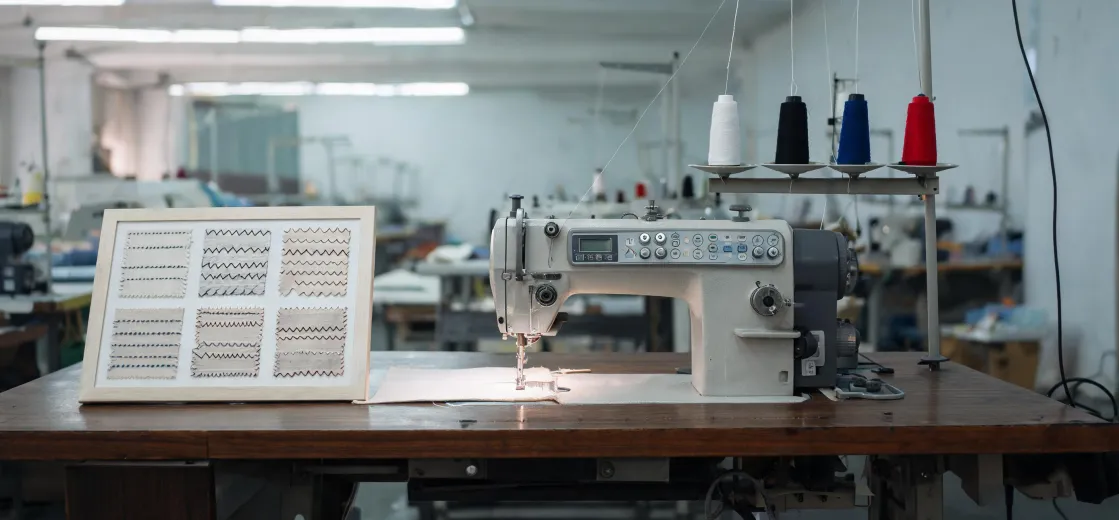
Order Size Doesn't Change My Checklist
I don't care if you're buying one machine or forty. The quality checklist I run is exactly the same.
I'm a quality and brand compliance manager for a sewing equipment company (jack-sewing line, among others). I review every machine and every order before it gets to a customer—roughly 200+ units a year, plus all the documentation that goes with them. In our Q1 2024 quality audit, I rejected about 11% of first deliveries for spec mismatches. That's not because the customers were demanding or the orders were unusually complicated. It's because the machines didn't match what we said they'd be.
Here's what kind of bothers me in this industry: there's this unspoken rule that small orders get a smaller version of the company's attention. A one-machine buyer "shouldn't expect" the same pre-shipment checks as someone buying a fleet. Honestly, I think that's backwards.
Small doesn't mean unimportant—it means potential. The customers who ordered a single digitizing embroidery machine from us three years ago are some of our biggest repeat buyers now. And the ones who got sloppy treatment on that first order? They didn't come back. They didn't leave a nice review either.
Specs Are Specs, Whether It's One Unit or Fifty
The first thing I check on any machine, regardless of order size, is spec compliance. Not "does it look right"—I mean measurable spec compliance. Hoop size, stitch speed, thread tension range, included needles, software version. All of it. If our listing on the jack sewing machine official website says a machine supports a 30cm embroidery hoop, then the machine in the box better support a 30cm hoop.
I remember one delivery where the thread colors were visibly off from the approved sample. We'd agreed on a specific thread brand and color codes, and what arrived was "close but not quite." Close doesn't work in embroidery. In color matching, the industry standard tolerance is Delta E less than 2 for brand-critical colors, and anything above 4 is noticeable to most people. This wasn't a huge spec sheet issue—same needle count, same structure—but the thread was wrong, and it changed the whole look of the embroidery. (Note to self: we still haven't fully documented that thread-vendor comparison. I really should do that.)
We rejected the batch. It wasn't a large order, maybe 24 units. The vendor grumbled, said it was "within industry standard." It wasn't, and they redid it at their cost. Now every contract we sign includes explicit thread color requirements, not just "customer approved."
Your order size doesn't change the laws of physics or the definition of a spec. A thread color that's Delta E 5 off is wrong whether it's one spool or a thousand.
What a One-Machine Order Actually Tests
A customer in London—part of the machine embroidery London community, which is smaller than people think—recently asked me a pretty good question. She was choosing between a Poolin eoc06 and a Jack machine. She'd read a bunch of Poolin eoc06 embroidery machine reviews online and was genuinely torn. The features looked great, and a few reviewers were raving about the stitch quality. But she'd also seen complaints about setup support that sounded exhausting.
I don't have hard data on Poolin's overall defect rates. I've seen their machines at trade shows, and a few of our customers mention them when they come back to us. What I can say anecdotally is that the reviews she was citing tended to fall into two camps: people who loved the machine's features, and people who got it and then ran into setup issues that ate weeks of their time. Neither camp said much about what the seller actually checked before shipping the unit. That's the gap.
A single-machine order is basically a test of the supplier as much as the machine. If the first one arrives in a box with a bent needle bar, or the digitizing software license isn't registered to the buyer, that customer stops being a "small" customer—they become a lost customer. In my experience, small order failures come from things a 10-minute pre-shipment check would have caught. Not design flaws. Just... nobody bothered to look.
I've learned never to assume the proof represents the final product after receiving a batch that looked nothing like what we approved. That was a bigger order, and it cost us a rework cycle and a damaged relationship. But the real lesson applies to small orders even more: verify the actual unit, not the brochure. Assumptions are the most expensive part of any purchase.
The 'You Get What You Pay For' Argument Is a Red Flag
I hear this constantly: "Well, it's a budget machine, what did you expect?" or "You only ordered one unit, so you can't expect the same support."
I always push back on that. There's a difference between a budget product and a carelessly delivered product. A Jack sewing machine can be competitively priced—that's kind of the point of the brand, and honestly it's a strength. But nobody's pricing includes "ship it without checking it" as a line item. That's not a feature. That's a failure.
Now, to be fair, I should acknowledge the other side. Large orders naturally get more attention in most factories because a 50-unit order carries more financial weight. I get it. But from my seat as the person who checks things before they walk out the door, the checklist doesn't change based on invoice size. The guy ordering 400 units gets the same mechanical verification as the woman ordering one machine for her home studio. The only difference is the amount of paperwork.
What You Should Verify Before You Order
If you're buying an embroidery machine—whether it's a Jack, a Poolin eoc06, or anything else—here's what I'd check before you hand over any money, based on what I've watched go wrong:
- Thread color and thread brand. Ask for the exact brand and color codes used in the sample embroidery. If they can't tell you, that's a red flag.
- Software version and license. A digitizing embroidery machine is only as good as its software. Make sure the license is in your name before shipment, or at least tied to the machine's serial number.
- Hoop size and included accessories. Spec sheets lie more than people want to admit. If it says "30cm hoop," ask for a photo of the actual hoop with a ruler next to it. (I'm only half joking here.)
- What happens if it arrives damaged. This is the big one. Get their pre-shipment inspection process in writing. If they say "we don't do pre-shipment checks for single orders," walk away.
If you're buying from the jack sewing machine official website or from an authorized distributor, ask your sales contact what gets verified before dispatch. If they can't answer, that's a problem. Not because big brands never make mistakes—believe me, we do—but because a straight answer about inspection procedures is the baseline for any decent supplier relationship. It's a no-brainer test, really.
Bottom Line: Size Isn't a Service Tier
Look, I know some suppliers will always treat small buyers badly. That's their choice, and frankly, it's a short-sighted one. The vendor who treated my $200 orders seriously when I was starting out is the one I still use for $20,000 orders. I've lived that both as a buyer and as the person responsible for what goes out the door.
The takeaway isn't that every small-order customer deserves red-carpet treatment. It's that the standards shouldn't drop just because the quantity did. A one-machine buyer is still a customer, and that machine is still going to represent your brand every time it runs. That's why I check them all the same way.
I also wish I'd tracked rejected-order reasons more carefully over the years. What I can say anecdotally is that the pattern is consistent: most issues are small, preventable, and caught by actually looking at the unit instead of trusting the paperwork. So verify everything, no matter how many units you're buying. And if a supplier won't answer basic questions about that process, treat it as the warning sign it is.

Elise Marceau
Elise Marceau is an LED display and digital-signage systems analyst covering LED video walls, modular screens, transparent LED, control processors, and indoor or outdoor signage. She applies IEC 62368-1 safety principles while comparing pixel pitch, luminance, contrast, refresh rate, colour uniformity, viewing angle, ingress protection, power density, module serviceability, and signal redundancy. Her specification guides help integrators, venue operators, retailers, and procurement teams align viewing distance, ambient light, content format, installation access, electrical load, and lifecycle support.