Jack sewing article
Jack Sewing Machine Buying Guide: What 8 Years — and $23,000 — of Mistakes Taught Me
-
There's No Single "Best" Sewing Machine Setup
-
Scenario 1: Denim-Heavy Production — the Machine Is the Easy Part
-
Scenario 2: Embroidery Work — the Latest Features Aren't the Main Event
-
Scenario 3: Parts Sourcing — Where I've Lost the Most Money
-
Scenario 4: Budget-Driven Buying — What Pricing Actually Looks Like
-
How to Figure Out Which Scenario You're In
-
Final Thought: What I'd Do Differently
I've been handling equipment sourcing and maintenance for a garment production workshop for 8 years. In that time, I've personally made — and documented — 14 significant equipment mistakes, totaling roughly $23,000 in wasted budget. One $3,200 parts order that didn't fit our machines. An embroidery machine I bought for a workflow that didn't need it. A "compatible" part that took out a needle plate and cost us a week of production. These are the lessons behind the checklist I now maintain for our team — and the reason I'm writing this.
There's No Single "Best" Sewing Machine Setup
If you came here looking for one universal recommendation, I'll save you the trouble: it doesn't exist. Whether you need a heavy-duty denim machine, an embroidery unit, or just a solid parts sourcing plan depends entirely on what your production actually looks like.
People assume a more expensive machine automatically means better results. The reality? The causation runs the other way. A workshop that understands its production needs can produce excellent work on a mid-range machine — because the machine was matched to the job instead of the budget.
From what I've seen, buyers fall into four categories:
- Denim-heavy production — jeans, workwear, thick fabrics
- Embroidery-focused work — custom branding, decorative stitching
- Parts and maintenance mode — existing machines that need reliable spares
- Budget-driven purchasing — especially in price-sensitive markets
Let me walk through each one, because the right advice for one group can be terrible advice for another.
Scenario 1: Denim-Heavy Production — the Machine Is the Easy Part
If you're sewing jeans, you already know denim tears through machines built for lighter fabrics. My first machine for our denim line was an all-purpose model whose spec sheet claimed it handled "medium to heavy fabrics." It jammed within the first hour. That's when I learned that for denim, the needle and feed system matter just as much as the machine itself.
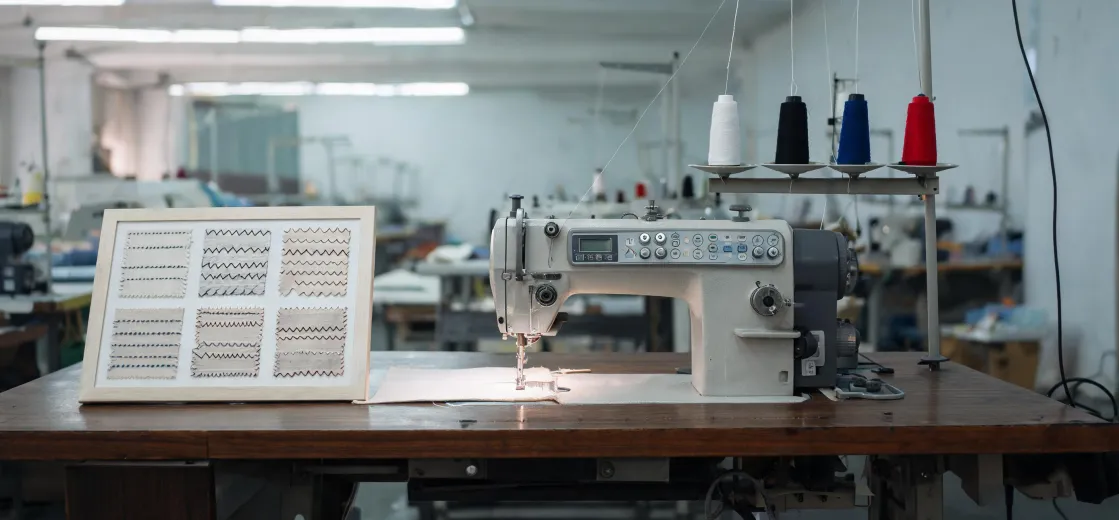
When people search for a Jack sewing machine jean setup, they're usually asking the same question: which model won't die on thick denim? In our shop, the Jack 1501 series has earned its place. Not glamorous, no bells and whistles, but it consistently produces straight stitching on abrasive fabric without overheating. The jack-sewing lineup covers a wide range, and the 1501 is the one our denim operators request.
Here's the counterintuitive part though: people think "heavy-duty" means the biggest motor you can find. Actually, most denim work doesn't need a massive motor. It needs the right feed dogs, the right needle (90/14 to 110/18 depending on fabric weight), and thread tension that doesn't drift after four hours of continuous running. I've seen shops waste money on over-specified machines while using the wrong needles and then wondering why they get skipped stitches.
The most common mistake I see in other workshops: buying a machine with 40 built-in stitch patterns when the operator uses two. That money would've been better spent on quality needles, a decent work table, and a real maintenance schedule.
Scenario 2: Embroidery Work — the Latest Features Aren't the Main Event
Embroidery is where I see the most excitement about the latest machine embroidery features — and the most wasted budget. As of January 2025, the market is moving fast: multi-head machines with more colors, faster stitching speeds, and increasingly automated digitizing.
But here's what surprises people: the machine is rarely the bottleneck. If you're doing machine embroidery in London — where I know several shops competing hard on turnaround — your real constraints are digitizing quality and operator skill. A brand-new multi-head machine still produces bad results if the digitized file is wrong. Meanwhile, a well-used single-head machine from a few years ago will beat a new flagship in the hands of someone who knows what they're doing.
So my advice, which goes against what the marketing emails will tell you: don't upgrade the hardware until you've upgraded your digitizing workflow.
There's also the color accuracy issue that nobody talks about. When you're stitching branded work, thread colors need to match specified brand standards. Per Pantone matching guidelines, brand-critical colors should stay within a Delta E of 2 or less. Some shops don't realize this until a client rejects an entire run because the red is "off." That rejection costs more than a proper color management process.
And on capacity: single-head machines are right for custom, low-volume work. Multi-head machines only pay off once you have consistent repeat orders. I overbought capacity in 2021 — purchased a 6-head unit when 80% of our embroidery was single-item custom work. It sat idle most weeks. The math was brutally simple: I paid for capacity I didn't have orders to fill.
Scenario 3: Parts Sourcing — Where I've Lost the Most Money
If you already own machines, you will eventually need parts. That's not a maybe — that's a guarantee, especially in industrial production. And parts decisions are where I've lost the most money over the years.
People think cheap replacement parts save money. I believed that too, until I installed a "compatible" feed dog on a Jack machine and watched it grind down within a week — taking the needle plate with it. Total damage: roughly $890 in parts and labor, plus a 7-day delay during our busiest season. A $12 part caused $890 in damage and lost production time. The supposedly cheap option was the most expensive one.
The most frustrating part of parts sourcing: counterfeit parts look and feel shockingly close to genuine ones. You'd think a reputable supplier would only carry authentic components, but the gray market is massive. We've caught four counterfeit parts in the past 18 months by keeping a reference sample of genuine parts and comparing every new batch against it.
Here's the rule we use now. Jack sewing machine parts fall into two groups: wear parts — needles, bobbin cases, feed dogs — where consistent quality matters but you have some flexibility. Then there are precision parts — hooks, and anything that controls timing — where you buy genuine, no exceptions. The precision stuff is what turns a routine maintenance task into a major repair when it fails.
Scenario 4: Budget-Driven Buying — What Pricing Actually Looks Like
Industrial sewing machine price in Nigeria is a question I get asked a lot, and it makes sense — the market there is growing fast, and buyers are understandably price-sensitive. Don't hold me to exact figures, but as of January 2025, my sense is that the industrial sewing machine price in Nigeria runs 20–40% above manufacturer list prices in Asia. That gap comes from shipping, import duties, and local dealer margins, not from the machines themselves.
If you're buying in Lagos or any major market, you're not comparing against Chinese or Vietnamese prices — you're comparing against what's available locally with warranty support and parts availability. That's the actual comparison that matters.
Jack machines sit in a fairly interesting price position. They're not the cheapest option on the market, but they're considerably more affordable than the Japanese and German brands — while being noticeably more reliable than the absolute bottom-tier options. For a buyer on a tight budget, that middle zone is where the value is.
The counterintuitive advice here: don't compromise on the machine to save money — compromise on the accessories instead. I've watched buyers negotiate a machine price down by $150, then spend three times that difference on bad needles and cheap bobbins that cause downtime every month. The machine itself will pay for the savings if it runs reliably. Cheap consumables cost you every single week.
How to Figure Out Which Scenario You're In
Okay, here's a simple method I use when someone asks me to help them think through a purchase. Answer these four questions honestly:
- What percentage of your work is denim or heavy fabric? If it's over 40%, you're in scenario 1. Prioritize a dedicated heavy-duty machine with the right needle and feed system before anything else.
- Is embroidery likely to be more than 30% of your revenue? If yes, you're in scenario 2. But invest in digitizing skill and color management first — then the machine.
- Do you already own machines that are still working? Then you're in scenario 3. Establish a parts sourcing plan now, not after a breakdown. The $12 part lesson stays with me.
- Is price the dominant factor? Then you're in scenario 4. Find a reputable local dealer, get the real industrial sewing machine price in your market, and set aside at least 10% of your budget for quality consumables.
The thing is, most people fall into more than one scenario. That's normal. If you do, prioritize in this order: parts reliability (scenario 3) first, then production fit (scenario 1 or 2), then price optimization (scenario 4). A machine that doesn't match your production focus will cost you more than any discount you negotiate.
Final Thought: What I'd Do Differently
If I could go back to 2017 with what I know now, I'd spend less time reading spec sheets and more time talking to dealers about what their customers actually buy and why. I'd order one machine and run it for a month before committing to a full line. And I'd never install a non-genuine hook in a machine that runs 8 hours a day.
Equipment decisions compound. A bad machine costs you every day in rejected seams and lost time. A good machine, chosen with a clear understanding of your actual needs, is one of the most boring — and most profitable — investments you can make.
Take it from someone who paid $23,000 for the lessons: the time you spend now identifying which scenario you're in is worth more than any machine discount.

Elise Marceau
Elise Marceau is an LED display and digital-signage systems analyst covering LED video walls, modular screens, transparent LED, control processors, and indoor or outdoor signage. She applies IEC 62368-1 safety principles while comparing pixel pitch, luminance, contrast, refresh rate, colour uniformity, viewing angle, ingress protection, power density, module serviceability, and signal redundancy. Her specification guides help integrators, venue operators, retailers, and procurement teams align viewing distance, ambient light, content format, installation access, electrical load, and lifecycle support.