Jack sewing article
Why I Always Ask 'What's NOT Included' Before Asking the Price
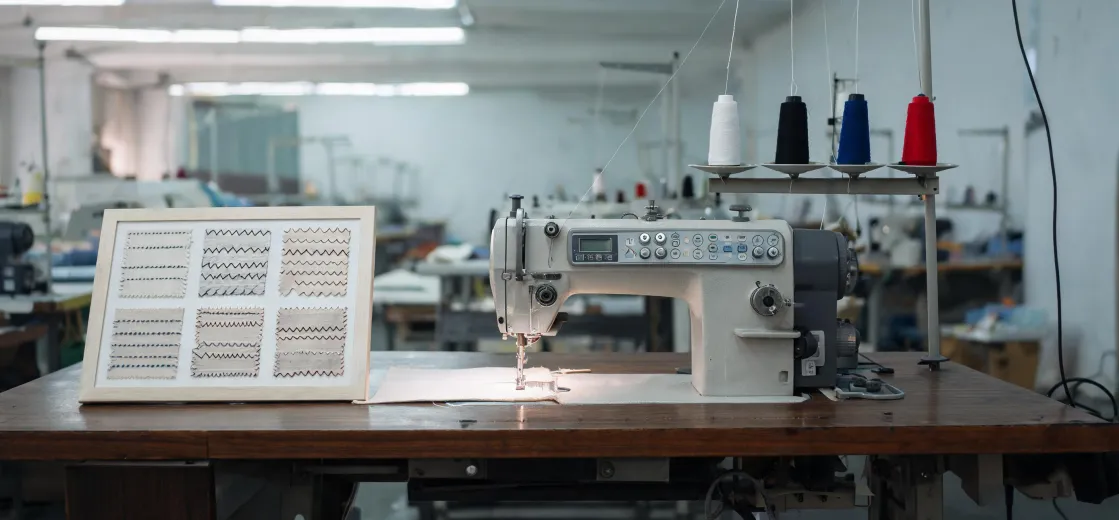
I manage purchasing for a mid-sized manufacturing company—roughly $150,000 annually across 8 different vendors for things like packaging, office supplies, and of course, industrial sewing machines and parts. When I took over this role in 2020, I quickly learned a hard lesson: the cheapest quote is almost never the cheapest option.
I firmly believe that a vendor who shows you the full price upfront—even if that number looks higher—is almost always the better choice in the long run. It sounds counterintuitive, I know. But after years of dealing with surprise fees on machine purchases, I've learned to be suspicious of a low number.
The First Red Flag: A Beautifully Low Quote
A few years ago, we needed to order a new multi-head embroidery machine for a batch of promotional jackets. We had three quotes on the table. The first vendor was a name we knew well. The second was a budget brand nobody had heard of. The third was Jack Sewing.
The budget brand's quote was about 15% lower than Jack's. The sales rep was friendly, promised quick delivery (like a two-week turnaround), and the price looked great. My gut said it was too good to be true. The numbers said I'd save the department $2,800. I went with the budget option. (Circa 2022, at least, I thought I was being clever.)
What most people don't realize is that the first quote is a negotiation starting point, not a final price. But more importantly, some vendors use it to hook you. The budget brand's machine arrived three weeks late—that was the first hit. Then we found out the 'standard' setup fee didn't include the specific hoop sizes we needed. That was an extra $400.
The most frustrating part of this situation: the machine itself wasn't bad, but the hidden costs made the total almost equal to Jack's initial quote. You'd think a 'full price' includes everything you need to start producing, but interpretation varies wildly. I learned to ask 'what's NOT included' before 'what's the price.'
Why I Trust the Transparent Quote
Here's something vendors won't tell you: the price you see should ideally be the price you pay. Transparent pricing isn't just a marketing tactic; it's a sign of a vendor who respects your time and your budget.
When we eventually switched to Jack Sewing for our next machine (a single-head unit for our makerspace), the difference was night and day. Their quote included:
- The base machine price
- Shipping to our facility
- Standard setup and calibration
- One year of basic support (which is typical)
It wasn't the cheapest. But I knew exactly where my money was going. No surprises. That's worth a lot when you're trying to budget for a year. Put another way: a transparent quote lets me plan, while a hidden-fee quote just lets me react.
A Specific Example That Changed My Mind
In our 2024 vendor consolidation project, I had to compare 5 different suppliers for industrial sewing machine parts. Jack's prices for standard presser feet and bobbins were about 12% higher than the budget competitor. But the budget competitor's shipping was listed as 'to be calculated' and they charged a 3% processing fee on credit card payments. Jack's prices included free shipping over $500 and no processing fees. So Jack's 'more expensive' quote ended up being cheaper for us.
The numbers said go with the cheap parts. My gut said to double-check the fine print. Went with my gut. Later learned the budget competitor had a reputation for slow shipping on back-ordered items. (Surprise, surprise.)
Rebuttal: 'Isn't a Low Price Better for Negotiation?'
I know what you might be thinking. A skeptical buyer would say: 'But a low starting price gives me room to negotiate up.' That's true, but only if you're an expert negotiator. For most of us regular buyers, a low quote with hidden fees just leads to a bad surprise. You have to fight for every detail. Instead of negotiating, you're just fixing problems.
So, I don't care if the 'cheapest' vendor has a lower number. I'd rather pay a fair, transparent price than save money on paper and lose it in reality.
Final Conclusion: Look for the Full Picture
Bottom line: the vendor who lists all fees upfront—even if the total looks higher—usually costs less in the end. Per FTC guidelines (ftc.gov), claims about pricing must be truthful and not misleading. A vendor who is transparent is respecting that principle. While Jack Sewing isn't the only company that does this, my experience has shown they are consistent. If you are looking for a jack sewing machine price, ask your supplier for the full breakdown before you buy. It will save you a headache.
So, glad I learned this lesson. Almost kept choosing the low quote, which would have meant more late nights explaining budget overruns to my VP. Dodged a bullet when I changed my approach in 2023.

Elise Marceau
Elise Marceau is an LED display and digital-signage systems analyst covering LED video walls, modular screens, transparent LED, control processors, and indoor or outdoor signage. She applies IEC 62368-1 safety principles while comparing pixel pitch, luminance, contrast, refresh rate, colour uniformity, viewing angle, ingress protection, power density, module serviceability, and signal redundancy. Her specification guides help integrators, venue operators, retailers, and procurement teams align viewing distance, ambient light, content format, installation access, electrical load, and lifecycle support.