Jack sewing article
10 Jack Sewing Machine Questions You Actually Need Answers To
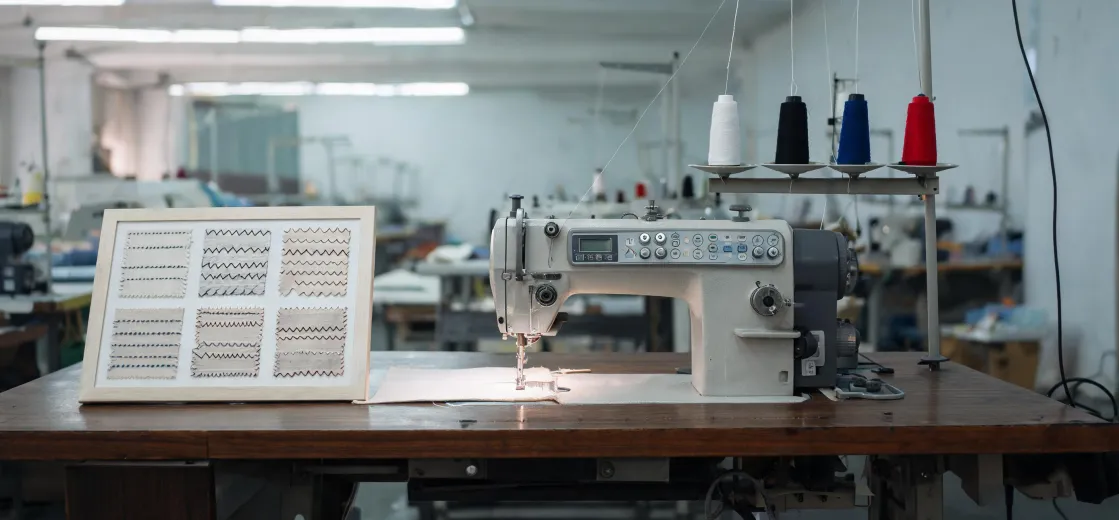
-
Is Jack a good sewing machine brand?
-
Can a Jack sewing machine handle denim and jeans?
-
What's the deal with stabilizer for embroidery machines?
-
Where can I find current Jack sewing machine prices?
-
What should I know about Jack multi-head embroidery machines?
-
How does Jack compare to Juki or Brother?
-
Do Jack sewing machines need special needles or parts?
-
Is Jack good for small home businesses?
-
What's the best Jack model for a beginner in industrial sewing?
-
Any final advice before buying a Jack machine?
If you're looking into Jack sewing machines—whether it's for heavy denim, multi-head embroidery, or just trying to figure out if the brand is any good—you've probably run into a lot of conflicting info. I've been handling industrial machine orders for about 6 years now, and I've personally made (and documented) enough mistakes to fill a small notebook. This FAQ covers the stuff I wish someone had told me upfront.
Is Jack a good sewing machine brand?
Yeah, basically. Jack is a Chinese brand that's carved out a solid spot in the industrial market. They're not trying to compete with Juki or Brother on prestige—they compete on value. For the price, you get reliable, workhorse machines that are widely used in garment factories globally. The surprise for me was how consistent their quality is across different models. (I should add: they're not luxury machines, but they're built for production volume.)
Can a Jack sewing machine handle denim and jeans?
Yes, but you need the right model. From the outside, it looks like any industrial machine can handle denim. The reality is that thick fabrics like jeans require a machine with a walking foot or a compound feed system to prevent skipped stitches and fabric puckering. I once ordered a standard lockstitch machine for a denim order—thought it'd be fine. $1,400 worth of jeans, all with skipped seams. We caught it after 50 pieces. Looking back, I should have specified the walking foot model from the start. Jack's heavy-duty models (like the 8700 series) handle denim well, but don't assume all their machines are built for it.
What's the deal with stabilizer for embroidery machines?
Here's something vendors won't tell you: the stabilizer matters more than the machine itself for embroidery quality. People assume the machine does all the work. What they don't see is that the stabilizer is what prevents fabric from shifting and distorting during stitching. I learned this the hard way on a multi-head embroidery order where every single piece came out wavy. The most frustrating part: the machine was fine. It was the cheap tear-away stabilizer that was the issue. For Jack embroidery machines, stick to cut-away stabilizer for stretchy fabrics and tear-away for stable woven ones. (Mental note: always test a sample before running a full batch.)
Where can I find current Jack sewing machine prices?
Prices vary a lot by region. I've seen quotes for the same Jack model range from $850 in Egypt to $1,300 in Uzbekistan (circa late 2024). For reference, a popular industrial model like the Jack 8700-7 (automatic thread trimmer) typically runs $800–$1,200 USD depending on the dealer and location. Here's what you need to know: the lowest price you find on Alibaba probably doesn't include shipping, customs, or after-sales support. I've had buyers regret saving $200 on the machine price but losing it on shipping and then having no local technician. Prices as of early 2025; verify current rates with local distributors.
What should I know about Jack multi-head embroidery machines?
Jack's multi-head machines (6-head, 8-head, etc.) are popular in small to mid-size embroidery shops. The biggest mistake I see: buyers focus on head count (how many needles per head) but ignore the field size. I once had a client order a 6-head machine with a 300x300mm field for cap embroidery. Turned out they needed a larger field for jacket backs. The change cost them $890 in redo plus a 1-week delay. Always check the stitching area matches your most common product types. Jack's machines are decent—not as refined as Ricoma or Tajima, but at 40-60% of the price, they're a solid entry point.
How does Jack compare to Juki or Brother?
Straight up: Jack is not better than Juki or Brother in terms of build quality or longevity. But here's the thing—for a lot of applications, you don't need that level of premium. I've seen a Jack machine run 12-hour shifts for 3 years straight with proper maintenance. The parts are widely available (Jack has good distribution networks), and repairs are generally simpler. The real trade-off: resale value. A Juki holds its value longer. If you're planning to upgrade in 2-3 years, Juki makes sense. If you need a reliable production machine now, Jack is fine. (Should mention: never say 'our machines are better than Juki/Brother/Singer'—that's just asking for legal trouble.)
Do Jack sewing machines need special needles or parts?
Nope. That's actually one of the advantages. Most Jack industrial machines use standard needles (DBx1, DPx5, etc.) and standard bobbins. Parts compatibility is generally good—many parts are interchangeable with other brands' standard models. I've sourced replacement feed dogs, presser feet, and bobbin cases locally without issue. The catch: some newer Jack models use proprietary electronic components. Check if the dealer stocks replacement circuit boards if you're buying a computerized model. (Note to self: always ask about parts availability before buying a machine.)
Is Jack good for small home businesses?
Depends on what you're doing. Jack's primary market is industrial production—they don't really make home sewing machines. If you're running a small business from home but doing production volumes (hundreds of pieces), their industrial machines can work. If you're doing a few pieces here and there, you're probably better off with a domestic machine from Janome or Brother. Jack's machines are floor-standing industrial units—they take up space, require 220V power in most configurations, and are loud. Not ideal for an apartment. For a home workshop? Absolutely, if you have the space and power setup.
What's the best Jack model for a beginner in industrial sewing?
If I could redo my first industrial purchase, I'd start with the Jack 8700-7 (single needle, automatic trimmer). It's their most popular model for a reason: reliable, easy to find parts for, and forgiving for learning. The automatic thread trimmer saves a ton of time once you get used to it. Avoid starting with their specialized machines (like the double needle or bartack models). Learn the basics on a standard machine, then branch out. Take it from someone who bought a buttonhole machine as a second purchase and spent a week figuring it out—start simple.
Any final advice before buying a Jack machine?
Three things. First, buy from a local dealer if you can, not just the cheapest online source. The markup might be 10-15%, but having someone who can service the machine is worth it. Second, always ask about the warranty—Jack's standard is 1-2 years depending on the region, but some dealers offer extended. Third, if you're importing, factor in customs, shipping, and potential taxes. I've seen people get quoted $800 for a machine and end up paying $1,100 after fees. Oh, and get a sample stitched before paying. Always.

Elise Marceau
Elise Marceau is an LED display and digital-signage systems analyst covering LED video walls, modular screens, transparent LED, control processors, and indoor or outdoor signage. She applies IEC 62368-1 safety principles while comparing pixel pitch, luminance, contrast, refresh rate, colour uniformity, viewing angle, ingress protection, power density, module serviceability, and signal redundancy. Her specification guides help integrators, venue operators, retailers, and procurement teams align viewing distance, ambient light, content format, installation access, electrical load, and lifecycle support.