Jack sewing article
Why 'Jack Sewing Machine Made in Which Country' Is the Wrong Question (And What to Ask Instead)
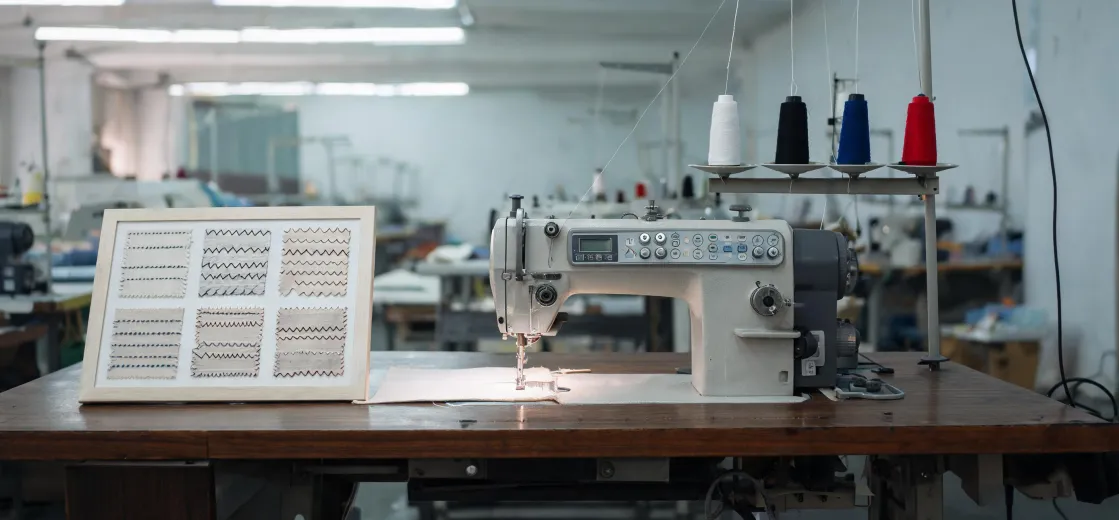
Start With the Right Question
When I took over purchasing for our production facility in 2021, my first big assignment was buying industrial embroidery machines for a new production line. I'm the office administrator who manages equipment ordering—roughly $300,000 annually across 12 vendors. I report to both operations and finance, which means I answer to the people who run the machines and the people who pay for them.
I did what anyone would do. I spent two weeks reading every "jack sewing machine review" I could find. I Googled "jack sewing machine made in which country" late into the night. I built a spreadsheet with 14 models, cross-referenced YouTube videos, and compared spec sheets line by line.
Two weeks later, I had plenty of information and zero clarity. Because I'd been asking the wrong questions from day one.
Where Your Machine Is Made Matters Less Than You Think
Let me answer the search query directly, since I know that's why many of you are here. Jack sewing machines are made in China. The company—Jack Sewing Machine Co., Ltd.—is headquartered in Taizhou, Zhejiang Province, and has grown into one of the world's largest industrial sewing machine manufacturers since it was founded in 1995. According to the company's official profile, its products are sold in over 150 countries.
Those facts feel reassuring. They're also a distraction.
Look, I'm not saying country of origin means nothing. It tells you something about manufacturing scale, supply chain maturity, and labor costs. But for a piece of equipment your production floor depends on for 8–10 hours a day, the origin matters far less than three questions: Who is the local distributor, and what's their actual service record? How quickly can spare parts reach you for the specific model you're considering? And what does the warranty process look like when something actually breaks?
Questions like "where is it made" and "what's the review score" are comfortable. They feel like research. But they're shortcuts that skip the hard part: understanding whether the machine fits your production reality.
The Review Problem Is Real
Most "jack sewing machine review" content is written by people who have never run an industrial sewing machine in continuous production. They talk about stitch quality and speed—which are nice—and features—which are mostly irrelevant if the machine doesn't fit your workflow. They don't analyze duty cycles, parts availability, or compatibility with specialty materials. Those are the things that determine whether a machine makes you money or loses it.
And when you get into specialized categories, the gap gets wider.
A beads embroidery machine and a yarn embroidery machine are engineering problems on different levels. A beads embroidery machine is built to feed beads and sequins through the embroidery process at speed. Bead size range, feeding mechanism reliability, and density parameters are the specs that matter. A yarn embroidery machine handles thick decorative yarns and needs reinforced needle bars, modified tension systems, and heavier fabric feeding.
If you assume a "beads embroidery machine" is basically like every other embroidery machine, or that two yarn embroidery machine models are interchangeable, you're setting up production for failure. The spec sheet line that says "bead size range 2–3mm" versus "2–6mm" is not a detail. It's the entire purchasing decision.
What a Wrong Decision Costs
I learned this the expensive way.
In 2022, we had a large order for beaded evening wear. The production manager asked me to source a beads embroidery machine. I found one that had good reviews, a reasonable price, and a delivery timeline that worked. The machine handled beads up to 3mm in its standard configuration. Our client's design required 4mm beads at high density.
The detail was in section 14 of a 40-page PDF spec sheet. I didn't read section 14. Nobody on our side did. The result: a $28,000 order that became a $31,800 problem, after engineering consultations and aftermarket modifications. Worse than the money was the six-week production delay. We missed a deadline, the client called my VP, and I had to explain that the machine was indeed a beads embroidery machine—just not compatible with the beads our product required.
That conversation isn't in any review I've ever read.
The home machine trap is this same mistake at a larger scale. Our team once suggested using a premium home embroidery machine like the Innov-is Stellaire XE1 for small commercial batches. It's a genuinely impressive machine with one of the largest embroidery fields in its category. I won't say anything negative about it, because it's excellent for what it is: a high-end machine designed for hobbyist use, meaning a few hours per week with the owner doing the troubleshooting.
An industrial machine, by contrast, is built to run all day, every day, with rapid service and replacement parts. The gap isn't a matter of opinion. It's a matter of engineering duty cycles. Buying a home machine to save $15,000 upfront, then losing that amount in downtime and missed deadlines within a year—that's the definition of penny wise, pound foolish.
I should also admit: time pressure makes all of this harder. When a machine dies mid-order and production is idle, the urge is to grab whatever is available and fast. But quick decisions and good decisions aren't the same thing.
What Actually Works
Here's the process that finally fixed this for us. It's not glamorous, but it works.
First, write down your actual production requirements before searching for any machine. I'm not 100% sure why so many people skip this, but I know I did. Document daily operating hours, expected throughput, material types, and the specific technical requirements of your products—including bead sizes if you need a beads embroidery machine, or yarn weights and types if you're looking at a yarn embroidery machine.
Second, match the machine specification to those requirements, not the other way around.
Third, verify the local support infrastructure. Call the distributor. Ask for actual service response times. Ask whether spare parts for the specific model are in local stock—not just whether they can be ordered.
Only then, at the very end, read the reviews and compare brands. At that point, a review becomes useful, because you're not searching for a machine anymore. You're validating that a specific model meets the requirements you already wrote down.
For our team, this cut the equipment research cycle from two weeks to under three days. More importantly, every machine we've bought using this process worked on day one. That's not luck. That's the difference between buying for your operation and buying for someone else's review.
About the Brand Question
If you're considering Jack, I think that's a reasonable place to land. The company's scale and global distribution mean they're not a fly-by-night operation. Their industrial sewing machines and embroidery machines are genuinely competitive options.
But the review that should matter to you is the one you write yourself, after calling the nearest distributor and asking hard questions about parts, service, and warranty support. That's the "jack sewing machine review" I wish I had three years ago. And you can write it in a single afternoon.

Elise Marceau
Elise Marceau is an LED display and digital-signage systems analyst covering LED video walls, modular screens, transparent LED, control processors, and indoor or outdoor signage. She applies IEC 62368-1 safety principles while comparing pixel pitch, luminance, contrast, refresh rate, colour uniformity, viewing angle, ingress protection, power density, module serviceability, and signal redundancy. Her specification guides help integrators, venue operators, retailers, and procurement teams align viewing distance, ambient light, content format, installation access, electrical load, and lifecycle support.