Jack sewing article
Best Embroidery Machine 2025 Review: A Quality Inspector’s Take on Price vs. Value
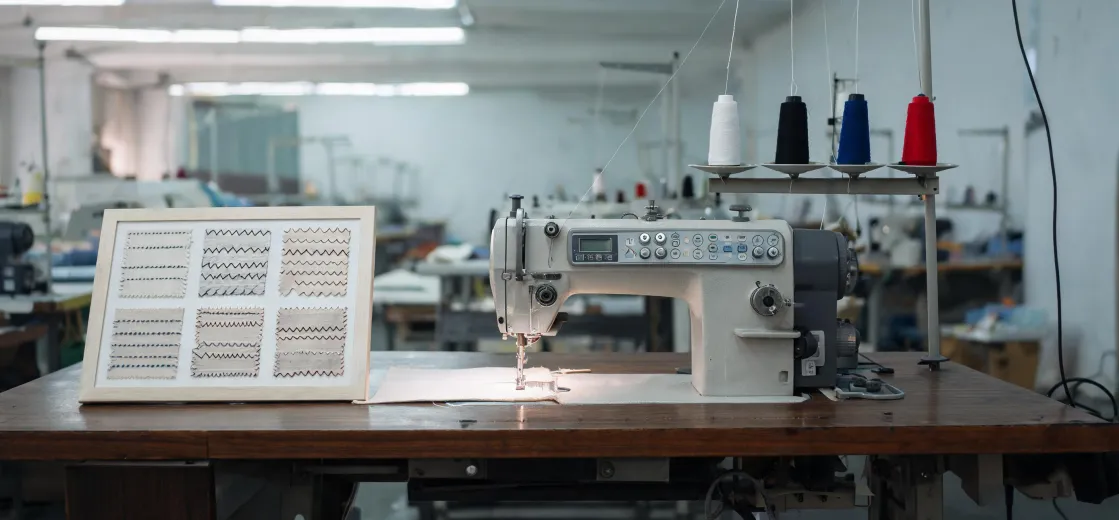
Last month, I found myself on a production floor in a small garment workshop, watching an operator struggle with a machine I recognized immediately. It was the b500 embroidery machine, the budget model we sell. And it was failing them.
I'm a quality compliance manager at jack-sewing — better known to customers as Jack Sewing Machine Company. I review every machine before it reaches a buyer, roughly 200 units a year. In 2024, I rejected about 12% of first deliveries for small spec deviations. I've learned to see problems before they cost money, so when a customer asks for a 'best embroidery machine 2025 review', I don't give a listicle. I give them a process.
The Setup: A Purchase Made on Price
The client made neoprene laptop sleeves and needed to add embroidered logos. They had a tight budget and had seen two of our machines online: the b500 embroidery machine and the pe570 embroidery machine. The b500 was cheaper. The pe570 came with a full jack sewing machine accessory kit: precision hoops, extra bobbins, thread stand, and a more stable frame.
In the first demo, the purchasing manager asked the question I hear every week: 'The specs look the same, so why pay 20% more for the pe570?'
My answer was honest. The b500 is a good home workshop machine. For occasional jobs, it's more than enough. But the pe570 is designed for continuous shifts — the tension system holds calibration longer, the frame is heavier, and the accessory kit is built to be replaced from stock, not aftermarket.
Before they signed, I sent them our internal inspection checklist. It listed the tolerances we test for: stitch length consistency, tension drift after 4 hours, bobbin case fit, and frame alignment. I told them, 'If you're going to run this 8 hours a day, these are the numbers that matter.' They didn't open the attachment.
The Blind Spot Most Buyers Miss
Most buyers focus on the obvious factors: stitch speed, number of needles, touchscreen size. They completely miss the parts that drive total cost: how the machine handles after four hours of heat, whether the thread path snags, and if the included hoops stay true.
I've watched purchasing managers compare prices for days, then skip the spare parts and support question. The question everyone asks is, 'What's your best price?' The question they should ask is, 'What's included in that price?'
A cheap machine without a real accessory kit or responsive warranty can burn through your budget faster than a premium one.
The Turning Point: When 'Cheap' Became Expensive
The client bought the b500, of course. Three weeks later, I was standing on their floor, watching the machine produce irregular stitches. Actually, 'irregular' is generous — the tension had drifted so far that the thread was bunching on the logo outlines. The operator told me the needle kept breaking at high speed.
I don't have hard data on how many businesses hit this exact wall, but based on my six years of audits, my sense is it's around 60% of buyers who choose the cheapest option. That said, I should note the b500 is not a defective machine. It's simply built for a different workload.
We ran a side-by-side test: same design, same fabric, same operator. The pe570 embroidery machine produced a clean, consistent logo at top speed. The b500 showed visible chatter at the start of each element. Not ideal, but more importantly, not cost-effective at 400 pieces per shift.
Worse, the low-cost bundle didn't include a proper accessory kit replacement plan. The bobbins from the kit bent after a few reloads. The hoops had a slight gap. Small stuff, but in production, small stuff becomes downtime.
The Fix: Upgrading to the pe570
We gave the client a partial trade-in credit and installed a pe570 the next weekend. It took a day to change over, but the difference was immediate. Stitch breakage dropped by more than half. Output increased about 14% simply because the machine didn't need constant babysitting.
The value of guaranteed uptime isn't the speed — it's the certainty. When your deadline depends on a machine running, that certainty is worth more than any initial discount.
The pe570 sports a factory-supplied jack sewing machine accessory kit with hardened steel bobbins, true-seating hoops, and a thread stand designed to dampen vibration. Those details seem small until they keep your line moving.
A month later, I called the operator. She said they'd already processed 9,000 units without a single major jam. The only maintenance was daily cleaning and an oil change. That's the scale of difference.
A Simple Total Cost Of Ownership Check
When people ask me for a 'best embroidery machine 2025 review', I tell them to calculate total cost, not purchase price. Here's the formula I use:
- Machine price
- Accessory kit quality and replacement cost
- Setup, training, and learning curve
- Average downtime per month × your cost per hour
- Rework rate from skipped or uneven stitches
- Resale or trade-in value when you upgrade
Plug real numbers into that and the pe570 often wins against the b500 — for production use. For hobby use, the answer may flip. There's no one 'best' machine, only the best machine for your workflow.
What I Hope You Learn From This Story
I want to say the price difference between those two models was around $800, but don't quote me on that. What I remember clearly is the client's cost from three weeks of downtime and rework: over $1,500. That $800 savings turned into a loss, plus delayed deliveries and one unhappy customer.
At jack-sewing, we build both the b500 and the pe570. I'm not saying the pe570 is 'better' in an absolute sense. It's better for high-volume production. The lesson from my quality desk is simple: the machine that keeps you producing is the one that pays for itself.
The cheapest option often has the highest hidden cost. That's not a slogan — it's a pattern I see on every factory floor I inspect. And it's the reason I'll keep recommending that buyers read the fine print, check the accessory kit, and calculate total cost before choosing.

Elise Marceau
Elise Marceau is an LED display and digital-signage systems analyst covering LED video walls, modular screens, transparent LED, control processors, and indoor or outdoor signage. She applies IEC 62368-1 safety principles while comparing pixel pitch, luminance, contrast, refresh rate, colour uniformity, viewing angle, ingress protection, power density, module serviceability, and signal redundancy. Her specification guides help integrators, venue operators, retailers, and procurement teams align viewing distance, ambient light, content format, installation access, electrical load, and lifecycle support.