Jack sewing article
We Almost Bought the Wrong Embroidery Machine: A Lesson in Total Cost
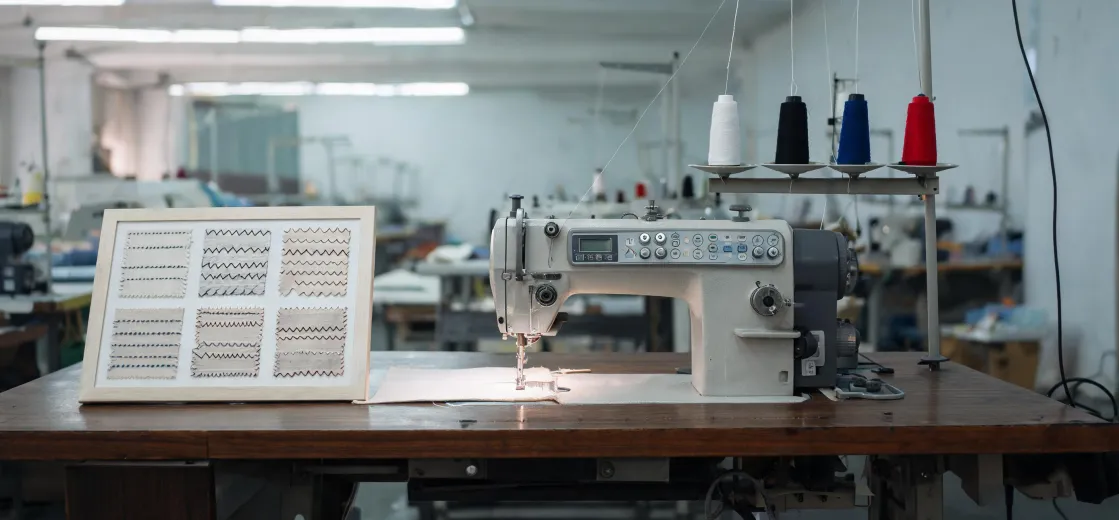
I'm the office administrator for a 42-person custom apparel company. I manage all equipment purchasing—roughly $150,000 annually across 12 vendors. I report to both operations and finance, which means I'm the person who gets the uncomfortable phone call when a new machine doesn't pay for itself.
That's why the embroidery machine purchase in late 2024 became such a wake-up call for me. What I thought was going to be a week-long research project turned into a two-month education on why "value" and "price" are not the same thing.
The Request That Started It All
It was a Tuesday morning in June 2024 when our production manager stuck his head into my office. "We need embroidery by Q4," he said. "Client keeps asking if we can do custom logo work. We're losing bids to a shop across town."
I remember thinking: okay, standard equipment purchase. Find a machine, compare prices, get approval. I'd done this a dozen times—we bought a new vinyl cutter in 2022, a used screen printer in 2023, and a heat press just a few months earlier. Each time it was the same routine: research specs, negotiate, buy. Simple.
I was wrong about that, too.
Starting Where Everyone Starts: The Consumer Brands
Like anyone with a keyboard, I started with Google. "Best embroidery machine for business 2024." The results were a mix of hobbyist reviews and affiliate sites, and the brands that kept popping up were the ones everyone recognizes: Singer, Brother, Husqvarna Viking.
The Singer EM9305 caught my attention immediately. The embroidery machine price was around $6,000 as of July 2024, which fit the budget comfortably. Reviewers praised its stitch quality and ease of use. It had a nice hoop size, built-in design library, and a USB port for importing files. On paper, it looked exactly right for a growing apparel company.
I also spent an evening browsing www.husqvarnaviking.com to compare embroidery machine options. Beautiful machines, premium prices—the kind where you have to request a quote and brace yourself. I mentally filed those under "maybe when the budget doubles."
By the third week of July, I was just about ready to submit a purchase request for the Singer. The finance paperwork was open on my screen. The vendor had confirmed stock. Our CEO had pre-approved the line item. It was one click away.
Then our production manager asked a question that stopped everything.
One Question, Complete Pause
"How many pieces will that thing do in an hour?"
I didn't have an answer. And not because I hadn't read the specs—I had read them, twice. It was because I didn't realize throughput was a spec I should be looking for. I'd compared hoop sizes, stitch counts, thread tension settings. I'd looked at design transfer methods and workspace ergonomics. I hadn't compared production capacity per hour. That's the thing about being an office administrator: you can know a lot about procurement and still know almost nothing about the actual production work your company does.
So I went back to research. This time, I searched for "industrial embroidery machine," and the landscape changed completely.
That's when I found jack-sewing.
I'll be honest—I'd never heard of the brand before. The jack sewing machine logo didn't ring any bells, and the distributors' websites were clearly built for business buyers, not hobbyists. But the more I looked at the jack sewing machine models, the more I realized these were serious production tools. Multi-head configurations. Continuous duty cycles. Built for eight-hour shifts.
Spec Comparison, With a New Lens
I started lining up the options side by side. On the consumer side, the Singer EM9305. On the industrial side, a selection of jack-sewing models. Somewhere in between, the proemb embroidery machine—a brand I discovered through an industry forum where a shop owner in Ohio was recommending it for small batch runs.
The differences were stark:
- Heads: The Singer has one head. The jack-sewing multi-head models we looked at have 4, 6, or even more heads, meaning multiple pieces can be embroidered simultaneously.
- Duty cycle: Consumer machines assume intermittent use. Industrial machines are designed for continuous daily production.
- Speed: The jack-sewing models list stitch speeds significantly higher than the consumer machines. That translates directly into per-piece production time.
- Maintenance: Industrial-grade frames and tension systems handle sustained use without the adjustment creep you get on lighter machines.
I didn't go alone. Our production manager came with me to a regional distributor's showroom in late August 2024, and we spent an afternoon watching both a jack-sewing multi-head and a proemb single-head unit run sample pieces. Watching one machine produce six finished hats in the time a single-head machine took to do one? That's a powerful argument.
I don't have hard data on industry-wide defect rates for consumer versus industrial machines. But based on our own production records and a long conversation with a local embroidery shop owner who runs both types, my sense is that a consumer machine doing commercial volume starts generating significant repair costs and downtime within the first six months. Anecdotal, I know. But more informed than the SEO articles I started with.
The Math That Made the Decision
Here's where I'm supposed to say "the industrial machine was way more expensive." It was. The jack-sewing multi-head we eventually chose was roughly 2.5 times the price of the Singer EM9305—and that didn't include installation and training. The proemb single-head backup added another chunk.
But then I did the math. Actually doing it changed everything.
Given our projected embroidery volume—about 400-600 custom pieces a month—the per-piece cost of the consumer machine was actually higher. Three times slower production meant more operator hours. Frequent re-tensioning slowed long runs even further. And there was no ability to batch multiple pieces in one cycle. The industrial machine pays that cost back in labor savings alone, before you even count the ability to accept larger contracts.
People assume the lower quote means lower cost. What they don't see is the cost hiding behind the sticker price: extra labor hours, missed deadlines, lost bids for bigger contracts. The consumer machine would've been around $6,000. The industrial investment was about $15,000. The difference in total cost over two years, based on our production projections at the time? The industrial option was cheaper by several thousand dollars once throughput and labor were factored in.
That's not opinion. That's arithmetic.
In mid-October 2024, we placed the order. I verified the jack-sewing machines through an authorized distributor, checked the jack sewing machine logo and serial numbers on the equipment, and confirmed the warranty terms line by line before signing. The proemb embroidery machine was delivered on the same schedule.
Delivery Day and the First Three Weeks
The machines arrived in November—a massive crate for the multi-head, a smaller one for the proemb. Installation took two days. Training took another week. And I won't pretend it was smooth.
Our operators had never touched industrial embroidery equipment. The first twenty-four hours produced more thread jams than finished products. Hoop alignment drove everyone crazy. We ruined about fifteen hats learning how to properly position templates. Looking back, I should have budgeted for a full week of dedicated training with a technician who had experience on that specific equipment brand. We had to book one on short notice, which cost more, obviously.
But by the second week, the rhythm started to click. By the first week of December, we were producing custom hats faster than we could sell them—which is the good problem to have.
Our production manager kept a production log starting December 2, 2024. In the first month, we produced roughly 620 custom pieces. That compared to our best previous month of custom work (done by a local embroidery shop we subcontracted) of about 180 pieces. For context: we had never done custom embroidery in-house before these machines arrived.
What I'd Tell Another Buyer
My experience is based on a single equipment purchase cycle: about 15-20 machine options evaluated over 10 weeks from July to September 2024, all for a mid-sized custom apparel operation. If you're buying an embroidery machine for a home studio, a craft business, or a hobby corner, you should probably ignore most of this. The Singer EM9305 and the Husqvarna Viking machines are excellent products. That's not a marketing throwaway—they genuinely are well-built machines. They just weren't built for thirty hours a week of commercial workload.
Here's the lesson that stuck with me: the sticker price is the beginning of the cost conversation, not the end.
If you're making a similar decision, here's what I'd suggest:
1. Ask your production person the question before you research. I spent three weeks comparing features nobody actually cared about. If I'd asked our production manager "what does a good machine need to do on a daily basis?" on day one, we would've gotten to the industrial category three weeks earlier.
2. Calculate per-piece cost, not machine cost. Divide the machine price by the realistic number of pieces you'll produce per month, and then factor in operator labor. That number reveals which machine is actually "cheaper" for your use case. Machines that cost twice as much can be half the price per piece when throughput differs.
3. Verify the seller, especially with brands you're not familiar with. The jack sewing machine logo, serial numbers, warranty terms, and distributor authorization all matter. We checked all of those for jack-sewing and proemb; it took a day, and it was worth the paperwork. In an industry where counterfeit machines are real, this is the kind of due diligence that saves you from a five-figure mistake.
4. Budget for training beyond what the machine costs. If I'd set aside an extra $500-1,000 and five full days for on-site training from the start, the first week would have been far less painful. "The machine arrives and you start sewing" was a fantasy I brought into this. The reality is every new production tool has a learning curve, no matter how well-designed.
So did we make the right call? The production numbers say yes. The finance team says yes. The clients who stopped asking competitors for custom work definitely say yes. Ask me again in 2026. Equipment decisions need a few seasons to prove themselves.
But I'll leave you with this: I've managed vendor relationships and purchase orders for over five years now, processed 60-80 orders annually for three locations and 400+ employees across various projects. I know what a good buying decision feels like. This one isn't just about the machine—it's about understanding what actually matters when you stop looking at prices and start looking at costs.
The cheapest machine isn't the cheapest machine.
Pricing and specifications referenced in this article reflect research conducted between July and October 2024. Verify current pricing at brand websites or authorized distributors, as offers and model availability may have changed.

Elise Marceau
Elise Marceau is an LED display and digital-signage systems analyst covering LED video walls, modular screens, transparent LED, control processors, and indoor or outdoor signage. She applies IEC 62368-1 safety principles while comparing pixel pitch, luminance, contrast, refresh rate, colour uniformity, viewing angle, ingress protection, power density, module serviceability, and signal redundancy. Her specification guides help integrators, venue operators, retailers, and procurement teams align viewing distance, ambient light, content format, installation access, electrical load, and lifecycle support.