Jack sewing article
JACK Sewing Machine Review: The Best Computer Embroidery Machine Depends on Your Scenario
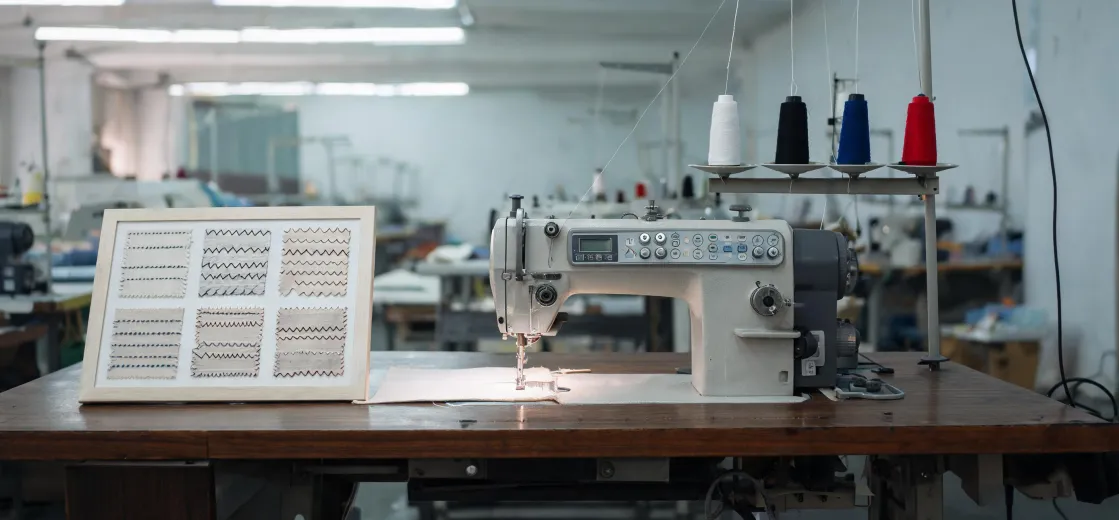
-
The Three Scenarios: Which One Sounds Like You?
-
Scenario A: Starting Out, Under 100 Pieces a Week
-
Scenario B: 100–500 Pieces a Week, Growing Steadily
-
Scenario C: Production Floor, High Volume, No Time for Downtime
-
How to Figure Out Which Scenario You're In
-
Jack Sewing Machine Review: An Honest Brand Assessment
-
The Transparency Question
-
Bottom Line
If you're researching jack-sewing machines and trying to find the best computer embroidery machine for your business, you've probably run into the same wall I hit years ago: every review says a different thing. One blog swears by multi-head units. Another insists you start with a single-head. Prices come quoted in ranges that seem to mean nothing. It's a mess.
So let me give you the framework I use when I sit down with department heads and their budget numbers. I've managed procurement for a mid-sized apparel manufacturer for six years, tracking roughly $180,000 in cumulative equipment spending. The thing I've learned is that there's no one-size-fits-all answer. There are three distinct scenarios, and each one points to a different machine.
The Three Scenarios: Which One Sounds Like You?
Before we get to specific models, here's a quick way to categorize yourself:
- Scenario A: You're starting out, or embroidery is a side service. Real production is under 100 pieces a week.
- Scenario B: You have steady orders—somewhere between 100 and 500 pieces weekly—and at least one operator on staff.
- Scenario C: You're running a production floor. Deadlines are tight, and machine downtime equals lost money.
That's the whole trick. Pick your scenario, and the right choice gets a lot clearer.
Scenario A: Starting Out, Under 100 Pieces a Week
If this is you, resist the temptation to buy a big multi-head machine because the price-per-head looks attractive. Your real cost drivers at this stage are learning and flexibility—not raw speed. A machine that sits idle while you figure out digitizing software is a bad investment, no matter how good the deal was.
For most small shops, a single-head Capella embroidery machine makes a lot of sense. The Capella line from jack sewing machine company has become a go-to here because it's a true industrial machine without the industrial-complex learning curve. You get computerized pattern control, a reasonable hoop size range, and a footprint that fits in a corner of a workshop.
Honestly, the single-head route is the safest entry point. Ballpark numbers: a used or entry-level single-head runs $2,500–$4,500; a new Capella single-head lands between $5,000 and $9,000 depending on hoop sizes and features. Budget $50–$100 a month for maintenance, and you're being realistic.
One story from my early career. In my first procurement role, I made the classic specification error: I assumed "standard" meant the same thing to every vendor. It cost me a $600 redo when the machine we ordered couldn't handle the hoop size a client required. So in this price range, write down your hoop size requirements, get them into the contract, and don't wave off verbal assurances.
Scenario B: 100–500 Pieces a Week, Growing Steadily
Once you're past that 100-pieces-a-week threshold, the economics shift. Your labor cost per piece goes up, and the single-head machine becomes the bottleneck. This is where a MIDI sewing machine or a multi-head computer embroidery machine becomes the better call.
What I mean is this: a $15,000 multi-head machine can produce three to four times the output of a $5,000 single-head. If your operator's time is already fully booked, that output difference pays for the upgrade within about a year. But the math only works if you actually have the order flow. Buying too much capacity is the other common mistake—you end up paying depreciation on a machine that's idle half the week.
Here's a real comparison from my own tracking in Q2 2024. One local dealer quoted $17,500 for a used multi-head unit. A regional distributor quoted $21,000 for a new model from the jack sewing machine company, including installation and a one-year warranty. I almost went with the used option on price alone—$3,500 cheaper. Then I did the total-cost math: $1,400 in wear parts, $600 in freight insurance, zero technician support. Over two years, the new machine was effectively the cheaper purchase.
If you ask me, that's the hidden cost trap most buyers miss. The list price is the beginning, not the end.
Scenario C: Production Floor, High Volume, No Time for Downtime
At this volume, you're not buying a machine. You're buying uptime. A multi-head embroidery machine from jack sewing machine company—or a larger Capella model—can run hundreds of pieces a day. But when a head jams during a deadline week, every hour of downtime is measurable revenue loss.
From my procurement perspective, the evaluation criteria flip at this level. Price matters less than:
- Spare parts availability. Ask the dealer: "If a main shaft bearing fails, how many days until the part is in my workshop?" Some dealers say 3 days. Some say 3 weeks. Same machine, very different risk profile.
- Technician training. Will the dealer train your team on preventive maintenance? That's worth more than a discount on accessories.
- Service contract language. Read the exclusions. Ask what a "response" means—does it mean they answer the phone or a tech is on-site?
One decision that still sticks with me: every spreadsheet analysis pointed to the cheaper vendor—15% lower quote, same specs on paper. Something felt off, though. Their sales replies were slow, and their technical documentation was incomplete. I went with my gut and stuck with the established supplier. Six months later, that cheaper vendor was running 30-day lead times on spare parts. The "slow to reply" during the sales process was a preview of "slow to deliver" when it mattered.
I'm not a technician, so I can't speak to thread tension mechanics or digitizing software specifics. What I can tell you from a procurement perspective is that reliability and service response times are the real purchasing criteria once you're at this scale.
How to Figure Out Which Scenario You're In
Here's a quick exercise to avoid an expensive mistake. Grab your production data from the last three months and answer three questions:
- What's your actual weekly output? Not what you hope to produce—what you're invoicing today. Under 100 pieces a week: Scenario A. Between 100 and 500: Scenario B. Above 500: you need Scenario C-level reliability.
- Who operates the machine? An owner-operator with other responsibilities can't push the throughput of a multi-head unit anyway. The machine has to fit the human, not the other way around.
- What happens when it breaks? If you have backup options, you can afford a lower-priced vendor. If you don't, you're really buying a service relationship—and you should price that into the decision.
Take this with a grain of salt. Every business has quirks this framework won't capture. But for most buyers I've worked with, these three questions resolve 80% of the decision.
Jack Sewing Machine Review: An Honest Brand Assessment
Since jack sewing machine review is probably why you're here, let me give you my direct take. JACK is a workhorse manufacturer. They make industrial sewing machines, embroidery machines, parts, and accessories, and their product range covers everything from basic sewing to multi-head embroidery.
The jack sewing machine company has built a strong presence in markets like Uzbekistan, Egypt, Turkey, and Southeast Asia, largely because their machines deliver reliable performance at sensible prices. They're not the absolute cheapest option, and they don't position themselves that way. What they offer, from my experience, is consistent quality and a global spare parts network that's broader than you'd expect.
One practical advantage: their range means you can buy a Capella embroidery machine, a MIDI sewing machine, and the spare parts from the same manufacturer. Fewer suppliers means simpler procurement. That's a small thing that compounds over time.
As of January 2025, JACK's international dealer network is solid in most regions, with gaps in some markets. I'm not being vague to avoid commitment—I'm saying the dealer you choose matters as much as the brand on the machine.
The Transparency Question
Here's the conviction I've formed from tracking every invoice for six years: transparent pricing beats hidden-fee discounting, every single time. I've had dealers quote 8% lower than their competitors, then add freight, installation, training, and "documentation fees" that erased the difference completely. I've also had dealers quote a slightly higher price and list absolutely everything on the first page. Guess which ones get my repeat business?
The vendor who lists all fees upfront—even if the total looks higher—usually costs less in the end.
So when you're comparing quotes, ask each dealer, "What's NOT included?" before you ask for the total price. A dealer who brings up shipping, hoops, installation, and training without being prompted is giving you useful information. Use it.
Bottom Line
Under 100 pieces a week: get a single-head computer embroidery machine, and the Capella line is a solid place to start. At 100–500 pieces: step up to a MIDI or multi-head machine, and do the total cost math before you commit. Above 500 pieces: buy reliability, service response, and spare parts availability.
The best computer embroidery machine for you is the one that matches your real production volume and your genuine tolerance for risk—not the one with the most impressive spec sheet.
Would I trust JACK with my own budget? Actually, yes. Not the most glamorous brand in the room. Not a luxury label. A workhorse that does what it says on the box, at a price that holds up when you count the total cost. As long as you can point to your numbers and be honest about your scenario, that's a solid foundation for a buying decision.

Elise Marceau
Elise Marceau is an LED display and digital-signage systems analyst covering LED video walls, modular screens, transparent LED, control processors, and indoor or outdoor signage. She applies IEC 62368-1 safety principles while comparing pixel pitch, luminance, contrast, refresh rate, colour uniformity, viewing angle, ingress protection, power density, module serviceability, and signal redundancy. Her specification guides help integrators, venue operators, retailers, and procurement teams align viewing distance, ambient light, content format, installation access, electrical load, and lifecycle support.