Jack sewing article
Picking the Right Industrial Sewing Machine: It Depends on What You’re Actually Making
-
So You Need a Sewing Machine for Your Business
-
Scenario 1: The Small Fashion Studio or Custom Shop (Single-Head or Specialized Machines)
-
Scenario 2: Scaling Up for Production Runs (Multi-Head Machines)
-
Scenario 3: The 'We Do Everything' General Workshop (Don't Do This)
-
How to Know Which Scenario You're In
So You Need a Sewing Machine for Your Business
If you're reading this, you're probably in the middle of that classic buying dilemma. You've searched 'jack-sewing' maybe, or looked up the jack sewing machine price egypt because your supplier said they could get it. You might be wondering if a multi-head machine from JACK is overkill for what you do, or if a single-head is enough to scale.
Honestly, I'm not sure why the industry makes this so confusing. Walking into a showroom or browsing online catalogs, everything sounds like it can do everything. But after reviewing production setups and spec sheets for a few years, I've learned one thing: there's no 'best' machine for everyone. It depends entirely on what you're making, and how you plan to make it.
Here’s the breakdown of the three main buying scenarios I see, and which machine (or combination) actually fits.
Scenario 1: The Small Fashion Studio or Custom Shop (Single-Head or Specialized Machines)
This is the most common starting point. You might be making custom patches, small-batch apparel, or doing alteration work. You need versatility, not volume.
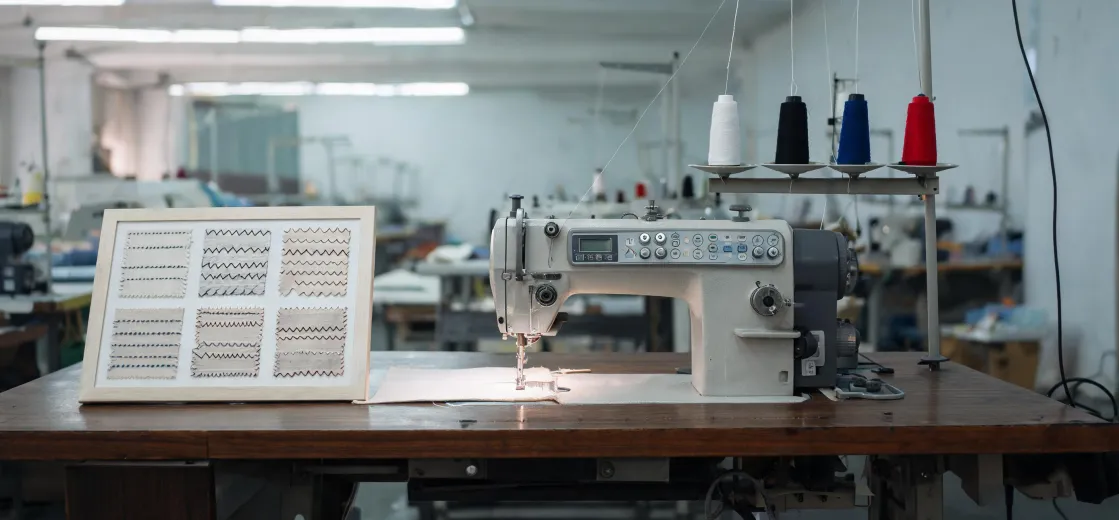
The fit: For embroidery, a solid single-head embroidery machine (like the JACK PE series or SE models) is a no-brainer. It’s affordable, doesn't need a huge space, and can handle a variety of hoop sizes. For general sewing, a reliable industrial sewing machine (like a lockstitch or overlock model) is your bread and butter. Don't get distracted by a multi-head machine for this scale—it'll just sit idle and tie up capital.
But here's a trap: don't assume one machine can do everything. I see buyers trying to use an industrial sewing machine for embroidery (ugh, the needle breakage issues) or vice versa. The vendor who says 'this machine can do both' is often selling a compromise. If you need a specific foot for side hemming, look for an industrial sewing machine for sided foot—it's a dedicated tool.
Scenario 2: Scaling Up for Production Runs (Multi-Head Machines)
When you are doing runs of 500+ items, or you have multiple SKUs needing the same design, the game changes. A single-head machine becomes a bottleneck.
The fit: A multi-head embroidery machine (12-head or 15-head is common) is the standard here. You can run the same design on multiple garments simultaneously, massively increasing output. The jack-sewing brand often comes up in these discussions because they offer a wide range of multi-head models at competitive global pricing.
But here's the nuance: a multi-head machine is not a better single-head machine. It's a production tool. The setup time is higher, the maintenance is more complex, and changing designs between heads is not instant. If your orders are small and varied, a multi-head machine will frustrate you (unfortunately). I've worked with facilities that bought one too early and regretted it.
A quick cost check (ballpark figures as of early 2025 in the US market):
- Used single-head industrial machine: $1,500 - $3,000
- New multi-head (6-head): $15,000 - $25,000
- Parts like servis sewing machine components: can vary wildly, so always check compatibility.
Source: Industry average pricing from dealer listings in Q1 2025.
Scenario 3: The 'We Do Everything' General Workshop (Don't Do This)
This is the trap scenario. You think buying one 'universal' machine that does industrial sewing and embroidery is efficient. It isn't.
The fit? There isn't one. I've never fully understood the appeal of the combo machines. The vendor who says 'this one can handle your fashion line and your custom luggage' is usually overpromising. The truth is, the tolerances and speeds for a standard lockstitch (for clothing) are different from a heavy-duty machine for bags or denim handles.
In this scenario, you're better off buying two dedicated machines. One for the bulk of your work (like an industrial lockstitch), and one specific for the side-foot operation you need. The top-grossing resellers are often those who know their limits (like 'we don't repair Bernina, but we can service Juki and JACK'). That's the expertise boundary in action—knowing your niche.
The moment you try to be a one-stop-shop for everything, your quality control gets messy. It's like buying a 10-in-1 kitchen gadget—it does most things poorly. Better to have a killer lockstitch and a killer single-head embroidery machine than one machine that is mediocre at both.
How to Know Which Scenario You're In
It comes down to three questions. Be honest:
- What's the average order quantity per SKU? If it's under 50, you're likely Scenario 1. Over 500, Scenario 2.
- How many different types of products? If you make bags, shirts, and patches, you're likely hybrid—Scenario 1 for the complex parts, Scenario 2 for the volume runs.
- What's your main bottleneck? If it's speed (you can't keep up with orders), go multi-head. If it's variety (you can't do the specific stitch pattern), go single-head or specialized.
There. No fluff. No 'it depends' cop-out. You now have a framework. Go talk to your dealer about an embroidery machine purchase that matches your actual workflow, not their best-selling model.

Elise Marceau
Elise Marceau is an LED display and digital-signage systems analyst covering LED video walls, modular screens, transparent LED, control processors, and indoor or outdoor signage. She applies IEC 62368-1 safety principles while comparing pixel pitch, luminance, contrast, refresh rate, colour uniformity, viewing angle, ingress protection, power density, module serviceability, and signal redundancy. Her specification guides help integrators, venue operators, retailers, and procurement teams align viewing distance, ambient light, content format, installation access, electrical load, and lifecycle support.