Jack sewing article
Jack Sewing Machines FAQ: What I Learned After $3,200 in Mistakes (A Small Business Owner's Guide)
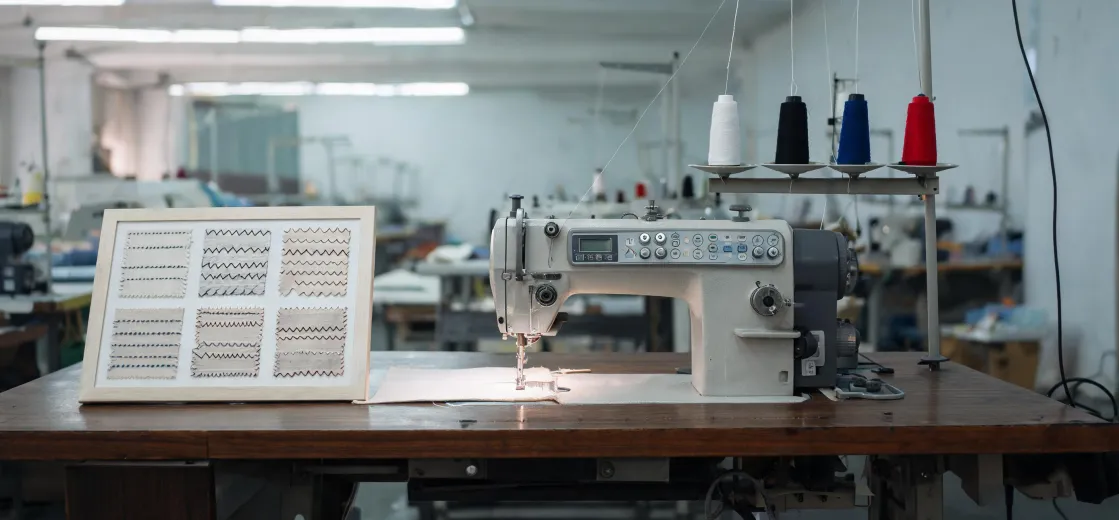
-
1. Why should I choose Jack sewing machines over other brands?
-
2. Is the Jack industrial sewing machine really better than home sewing machines?
-
3. What's the best hat embroidery machine for a small business?
-
4. Multi-head vs single-head embroidery machine: which should I buy?
-
5. How do I know which sewing machine output (speed) I need?
-
6. What about Jack sewing machine parts and accessories—are they easy to find?
-
7. (The question you didn't know to ask) Do I need a thread stand for my Jack embroidery machine?
I'm a production manager handling sewing machine orders for 5 years. I've personally made (and documented) 7 significant mistakes, totaling roughly $3,200 in wasted budget. Now I maintain our team's checklist to prevent others from repeating my errors.
Below are the questions I wish someone had answered before I ordered my first Jack machine. I'll be honest about what works, what doesn't, and where I blew it.
1. Why should I choose Jack sewing machines over other brands?
Short answer: value for money. Jack machines give you industrial-grade build quality at a price point that won't kill your startup budget. But—and this is where my first mistake happened—they're not for everyone.
If you're running a high-volume factory with 100+ machines and need 24/7 uptime with instant tech support, you're probably better off with Juki or Brother. I learned this the hard way when I tried to push a Jack single-needle machine beyond its recommended duty cycle. The motor overheated, production stopped for 2 days, and I lost a $1,200 order.
For small shops, home businesses, or production lines doing 8–10 hours daily, Jack is a no-brainer. Just don't expect it to run like a tank without regular maintenance.
2. Is the Jack industrial sewing machine really better than home sewing machines?
Way better. Home machines are built for occasional use—maybe a few hours a week. An industrial Jack machine can run 8–12 hours a day, handles thicker materials, and stitches way faster. But it's not a drop-in replacement.
When I switched from a home Singer to a Jack 1501, I didn't realize I'd need industrial table stands, different needles, and a new power plug. That ignorance cost me an extra $400 in setup fees and a 3-day delay. Plus, industrial machines are louder and take up more space. If you're sewing in an apartment, stick with a home machine.
3. What's the best hat embroidery machine for a small business?
For hats specifically, you want a machine with a cylinder bed and at least 4 needles. The Jack single-head embroidery machines (like the PE900 or SE2000 series) can handle caps with the right hoop accessory. But here's the catch: most multi-head machines are overkill for a small business just starting out.
I bought a 6-head machine in Q1 2023 because I thought "more heads = more profit." Reality check: I had one client with a cap order once a month. The machine sat idle 90% of the time, and maintenance on 6 heads costs 6x more. If you're doing under 50 caps a week, get a single-head machine. Upgrade only when you're turning away orders.
The Jack single-head with cylinder arm (like the Jack 1501E) works great for hats. Just make sure you get the cap hoop from an accessory supplier—I wasted $150 on the wrong size my first time.
4. Multi-head vs single-head embroidery machine: which should I buy?
Let me save you the mistake I made. Multi-head machines (e.g., 4-head or 6-head) are for production shops running 100+ pieces of the same design per day. Single-head is for custom, small batch, or sample work.
The decision should be based on your output needs, not your ambition. I fell into the trap of thinking "if I have more heads, I'll get more clients." Actually, I got more downtime and higher thread waste. A single-head Jack machine can produce 50–80 pieces per day if you're efficient. If that's not enough, then consider multi-head—but only after you have the orders to fill.
Also, multi-head machines are way harder to maintain. You need to align all heads perfectly, and tension issues multiply. If you're new to embroidery, start with single-head. You'll thank me later.
5. How do I know which sewing machine output (speed) I need?
Jack industrial machines typically run at 4,000–5,000 stitches per minute (SPM). That's fast enough for most applications. But maximum speed isn't the same as usable speed.
Everything I'd read said "buy the fastest machine you can afford." In practice, for 80% of my jobs, I run my Jack machine at 3,000 SPM because higher speeds cause skipped stitches on lightweight fabrics. The real output depends on your material, thread quality, and operator skill. I once tried to push 4,500 SPM on denim and ended up with 15% reject rate. Slowing down to 3,200 SPM fixed it.
A better metric is stitches per hour you can realistically achieve, not the spec sheet number. My rule: divide the advertised speed by 1.5 to get a practical output. So a 4,500 SPM machine really gives you about 3,000 SPM in real-world production.
6. What about Jack sewing machine parts and accessories—are they easy to find?
Yes, and this is where Jack shines. Their parts are widely available globally because the brand has a huge aftermarket. I can get replacement feed dogs, needles, and bobbins in 2–3 days in Egypt, where my shop is based. That's not true for every brand.
But here's the sneaky problem: counterfeit parts. I bought "genuine" Jack parts from a third-party seller and they lasted half as long. The genuine Jack parts have a specific hologram sticker. I lost $200 on fake parts before learning to order directly from Jack's authorized distributors. Always verify the seller, especially for high-wear parts like hook assemblies.
7. (The question you didn't know to ask) Do I need a thread stand for my Jack embroidery machine?
You'd think the thread spool pin on the machine is enough. It's not. For embroidery machines, especially multi-color designs, a separate thread stand is a game-changer.
My first hat embroidery project had thread tension issues every 10 minutes. I blamed the machine, wasted hours, and even considered returning it. Then a veteran embroiderer told me about thread stands. The short distance from spool to needle on the machine causes tension fluctuation. A stand lets the thread unwind smoothly. Cost me $40 from a local supplier—fixed 90% of my thread breakage problems. If you're buying an embroidery machine, budget an extra $50–80 for a thread stand and cone thread. I wish someone had told me that before I wasted 3 days troubleshooting.
That's it. I hope my mistakes save you time and money. Remember, there's no perfect machine—just the right one for your specific situation. Jack is a solid choice for most small and medium shops, but don't ignore the limitations. Ask me anything in the comments—I'll probably have a cautionary tale for you.

Elise Marceau
Elise Marceau is an LED display and digital-signage systems analyst covering LED video walls, modular screens, transparent LED, control processors, and indoor or outdoor signage. She applies IEC 62368-1 safety principles while comparing pixel pitch, luminance, contrast, refresh rate, colour uniformity, viewing angle, ingress protection, power density, module serviceability, and signal redundancy. Her specification guides help integrators, venue operators, retailers, and procurement teams align viewing distance, ambient light, content format, installation access, electrical load, and lifecycle support.