Jack sewing article
Jack Sewing Machine Price in Algeria, Made in Which Country, Bridgerton Sewing, and Singer 8832 Scenarios
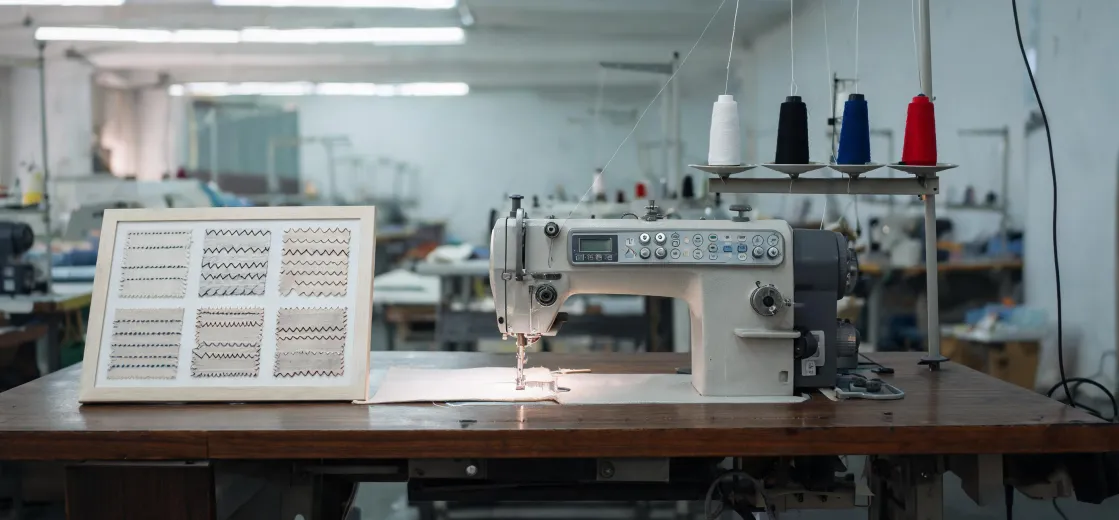
No Single Answer: Start With Your Scenario
If you're searching for jack-sewing, a Jack sewing machine price in Algeria, or asking Jack sewing machine made in which country, you're probably comparing apples to oranges. I coordinate emergency equipment orders for apparel workshops, and I've handled 200+ rush jobs in nine years. The first question I ask is never 'what's the price?' It's 'what exactly are you trying to produce, and by when?'
Here's the bottom line: there is no universal best machine or best price. There are at least three common scenarios, and each one points to a different decision. If you've ever bought a machine based on a low quote and then paid way more later, you know why this matters.
Quick classification:
- Scenario A: You're an Algerian buyer sourcing a Jack industrial sewing machine for a production floor. You need landed cost, not just a dealer quote.
- Scenario B: You're using a Singer 8832 sewing machine for Bridgerton sewing machine projects, small-batch tailoring, or cosplay. You're wondering if you need an industrial machine.
- Scenario C: You run a commercial embroidery or garment workshop and need an industriel sewing machine that survives rush orders and three-shift schedules.
Scenario A: Jack Sewing Machine Price in Algeria
If you're in Algeria and comparing Jack sewing machine prices, the sticker price is only the beginning. I've learned to ask 'what's NOT included' before 'what's the price.' That habit came from a failed import in 2023. A client found a cheaper dealer, saved maybe 8% on the machine, then lost almost two weeks because customs brokerage and inland transport were not part of the quote. The production line sat idle. The savings disappeared fast.
For Algeria specifically, your real cost usually includes:
- Machine price from the dealer or exporter
- International freight and insurance
- Customs duties and taxes (which vary by HS code and current regulations)
- Port fees, clearance agent fees, and inland delivery
- Installation, training, and spare parts availability
I'm not 100% sure what your exact duty rate will be, because it depends on the machine type and how it's classified. Don't hold me to this, but a ballpark landed-cost model is more useful than a single FOB number. Ask any supplier for a line-item landed-cost breakdown. If they can't or won't provide one, that's a red flag.
Where are Jack sewing machines made? According to Jack Technology's public company information, Jack Sewing Machine Co., Ltd. is headquartered in Taizhou, Zhejiang, China, and the brand is generally known as a Chinese manufacturer. Some models and components may involve global supply chains, but the company origin is China. So when you see 'Jack sewing machine made in which country,' the short answer is China.
Transparent pricing beats a low quote with hidden fees. The vendor who lists all fees upfront—even if the total looks higher—usually costs less in the end.
For rush orders in Algeria, I usually see two paths. Path one: buy from a local dealer with stock. You pay more per unit, but you get faster delivery and local support. Path two: import directly. You may save on unit price, but you need a customs plan, spare-parts plan, and buffer time. If your deadline is tight, the local dealer is often the no-brainer choice. If you have 6-10 weeks and volume, direct import can make sense—but only with a complete landed-cost sheet.
Scenario B: Bridgerton Sewing Machine Projects and the Singer 8832
Search interest in 'Bridgerton sewing machine' usually comes from people making Regency-style gowns, corsets, coats, and detailed costumes. The Singer 8832 sewing machine is a popular option in that world because it's accessible, has decent power for a home-style machine, and can handle many mid-weight fabrics. It is not, however, an industrial machine. That's not an insult—it's a category difference.
If you're sewing a few Bridgerton-inspired pieces per month, a Singer 8832 can be enough. You'll want the right needles, presser feet, and thread. You'll also want to test on the actual fabric, not just a scrap of cotton. The 8832 can be a game-changer for hobbyists and small custom orders. But if you're taking rush orders for paying clients, the equation changes.
Here's where my gut and the spreadsheet disagreed once. The numbers said a home-style machine was fine for a 40-piece rush order. My gut said the machine would overheat and the stitches would get inconsistent. We went with an industrial lockstitch instead. Turned out the first sample with the home machine had skipped stitches on the facing. We would have missed the deadline if we hadn't switched. The industrial machine paid for itself in that one job.
For Bridgerton-style work, decide based on volume and fabric:
- 1-5 pieces per month, light to mid-weight fabrics: Singer 8832 can work. Focus on technique and finishing.
- 5-20 pieces per month, heavy fabrics or deadline pressure: Consider a semi-industrial or entry industrial machine. The Singer 8832 may struggle with consistency.
- 20+ pieces, commercial deadlines, or thick layers: You need an industrial sewing machine. This is where a Jack industrial model or similar industrial lockstitch belongs.
Don't buy an industrial machine just because it sounds professional. An industrial machine is fast, strong, and usually single-purpose. It can be less forgiving for delicate costume details unless you set it up correctly. If you're mostly doing Bridgerton-inspired hobby sewing, a Singer 8832 plus good pressing tools will likely serve you better than a used industrial machine you don't know how to maintain.
Scenario C: Industrial Sewing Machines for Rush Production
When a client calls at 4 p.m. needing 300 units finished by Friday, you don't care about marketing claims. You care about uptime, parts availability, and whether the machine can run continuously without tension drift. That's the world of the industriel sewing machine (often spelled that way in French-influenced markets).
In my role coordinating emergency orders, I've tested six different supplier options. The cheapest quote rarely wins. What actually works is a machine with:
- Local or regional spare-parts support
- Clear stitch specifications, such as ISO 4915 stitch type 301 for lockstitch or 504/514 for overlock
- A dealer who answers technical questions before the sale, not just after
- A realistic lead time, not a fantasy promise
ISO 4915:1991 is a useful reference because it standardizes stitch types. It helps you compare machines without relying on vague terms like 'heavy-duty.' If a supplier can't tell you which stitch classes a machine is designed for, that's usually a sign they're selling boxes, not production capacity.
For Jack specifically, the brand is often considered a value-oriented industrial sewing machine option. I can't tell you it's better than every other brand, and I won't. What I can tell you is that availability, dealer support, and parts logistics matter more than a spec sheet in a rush. A Jack machine with a responsive local dealer can outperform a premium machine with no support. A premium machine with great support can be worth the extra cost if your deadlines are brutal.
If your Algeria project is deadline-critical, here's the practical sequence I use:
- Define the exact operation: lockstitch, overlock, coverstitch, or embroidery.
- Ask for a landed-cost quote with duties, clearance, and delivery separated.
- Confirm spare parts and service response time in writing.
- Run a timed sample on your actual fabric before committing.
- Keep a backup plan—another machine, another dealer, or overtime capacity.
Missing a deadline can cost way more than the machine. I've seen a $12,000 order saved by paying $800 extra for a faster option. I've also seen a $50,000 penalty clause get triggered because a cheap part took three weeks to arrive (ugh). The difference usually isn't the brand name. It's the support system around it.
How to Tell Which Scenario You're In
Still on the fence? Answer these questions honestly:
- Are you buying for production or personal/small-batch use? Production points to industrial. Personal/Bridgerton-style small batches often point to a Singer 8832 or semi-industrial.
- Is the machine for Algeria? If yes, demand a landed-cost breakdown. The price that matters is the one after customs, delivery, and installation.
- Can you afford downtime? If no, local support and spare parts beat a lower sticker price every time.
- What's your rush-order frequency? Occasional rush jobs can be handled with rentals or overtime. Weekly rush jobs justify an industrial machine and a service contract.
Take it from someone who has triaged too many last-minute disasters: the right choice is rarely the cheapest quote or the most famous logo. It's the setup that matches your volume, your timeline, and your risk tolerance. For Jack sewing machine price in Algeria, get the full landed cost. For Jack sewing machine made in which country, the answer is China. For Bridgerton sewing machine projects, be honest about whether the Singer 8832 is enough. And for industrial sewing machines, buy the support system, not just the machine.
If you need a same-day answer for a rush order, start with the landed cost and the spare-parts plan. Everything else is secondary.

Elise Marceau
Elise Marceau is an LED display and digital-signage systems analyst covering LED video walls, modular screens, transparent LED, control processors, and indoor or outdoor signage. She applies IEC 62368-1 safety principles while comparing pixel pitch, luminance, contrast, refresh rate, colour uniformity, viewing angle, ingress protection, power density, module serviceability, and signal redundancy. Her specification guides help integrators, venue operators, retailers, and procurement teams align viewing distance, ambient light, content format, installation access, electrical load, and lifecycle support.