Jack sewing article
Jack Sewing Machine Models: 7 Questions I Answer Every Week (And the Mistakes That Taught Me to Ask)
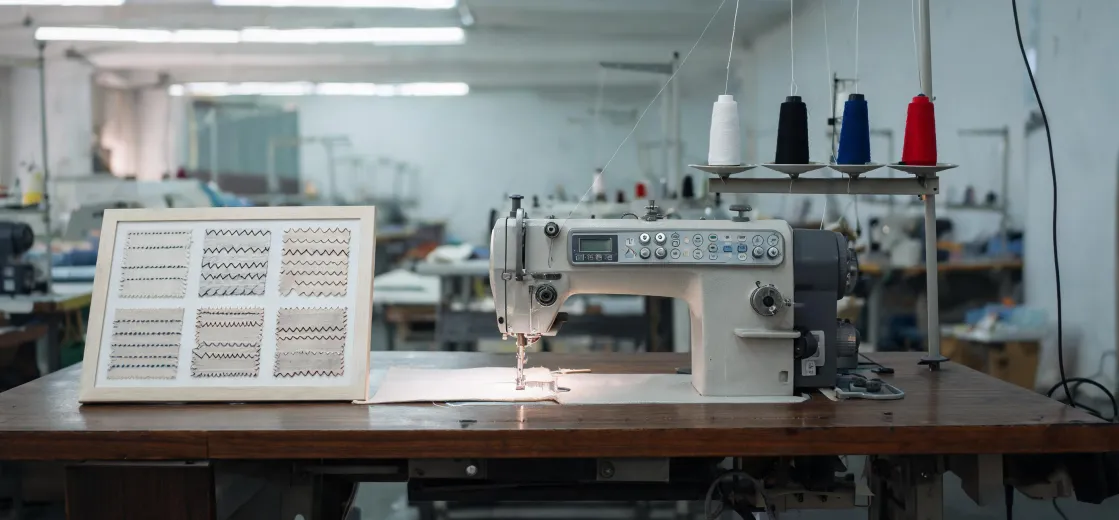
-
1. Which Jack sewing machine models should you actually compare?
-
2. Is the 1501 embroidery machine the right model for your shop?
-
3. You're comparing a Jack machine with Husqvarna Viking or BabyLock—now what?
-
4. Single-head or multi-head embroidery machine?
-
5. Why does “jack sewing sally's heart” show up here?
-
6. What's the first question I ask an international buyer?
-
7. What parts should you order at the same time as the machine?
Since March 2017, I've handled equipment orders for jack-sewing. That means I take the calls after something arrives with the wrong voltage, the wrong needle system, or the right part number but the wrong compatibility. I've personally made—and documented—23 significant ordering mistakes, totaling roughly $40,000 in wasted budget. (Should mention that's the money side. The embarrassment was free.)
I now maintain our team's pre-shipment checklist. Almost every rule on it grew out of a question like the ones below. These are the questions I answer weekly about Jack sewing machine models, the 1501 embroidery machine, and buying from another country. No brochure language. Just what I'd tell you on a call.
- Which Jack sewing machine models should you actually compare?
- Is the 1501 embroidery machine the right model for your shop?
- You're comparing a Jack machine with Husqvarna Viking or BabyLock—now what?
- Single-head or multi-head embroidery machine?
- Why does “jack sewing sally's heart” show up here?
- What's the first question I ask international buyers?
- What parts should you order at the same time as the machine?
1. Which Jack sewing machine models should you actually compare?
People think the first decision is between model A and model B. Actually, the first decision is between machine categories. An industrial sewing machine and an embroidery machine are different tools. A fast lockstitch machine will not embroider a logo, and an embroidery machine won't replace a heavy-duty sewing machine when you're seaming bags all day.
In my first year, I made the classic specification error: I assumed “sewing machine” meant the same thing to every buyer. It doesn't. Someone needed a bag-production line with embroidered logos. The machine I helped order sewed the bag part perfectly. It couldn't do the logo part. The order ended in a restocking fee, a $710 freight bill, and a customer who now checks everything twice. That mistake is the reason this is question one on our checklist.
What I mean is: first define the physical job. Then compare Jack sewing machine models by hook type, stitch speed, maximum stitch length, included accessories, and spare-parts availability. A model number without a workflow is just letters and numbers.
2. Is the 1501 embroidery machine the right model for your shop?
The 1501 embroidery machine is one of the most searched terms in our product line, and it makes sense. It's often the first machine a growing shop looks at after outgrowing a hobby-level unit. It sits in a practical middle ground: more capacity and durability than a home machine, but simpler to maintain than a multi-head unit.
But here's the warning I add to every quote: model numbers are not standardized across brands. I've lost count of the buyers who compared two different “1501” machines as if the number meant the same specification. It doesn't. If another seller quotes a 1501 embroidery machine, ask exactly what's included: number of needles, hoop size, driving system, supported file formats, frames, and after-sales support. If the seller can't answer those, you're not comparing machines. You're comparing search results.
For a one-operator shop doing small batch work, a single-head model is a sensible starting point. For higher daily volume, read question four before you decide.
3. You're comparing a Jack machine with Husqvarna Viking or BabyLock—now what?
Let me start with what you won't hear here: I'm not going to tell you that Husqvarna Viking is bad, or that a BabyLock is overpriced, because that's usually a lazy sales trick. Buyers who compare brands carefully aren't stupid. They're doing exactly what they should be doing.
People often land on this page after searching something like “www.husqvarnaviking.com embroidery machine” or “babylock bnal alliance embroidery machine,” then find themselves reading a Jack page. That's not an accident. The question under those searches is usually: which machine will actually serve my business?
The distinction that matters is workload, not brand loyalty. Husqvarna Viking and BabyLock both make capable machines, and I genuinely don't want you to buy a Jack if your real need is a home sewing or home embroidery machine. But if you're planning to run a machine for hours every day, look for equipment designed for that duty cycle. The problem isn't “brand A vs brand B.” The problem is putting a machine designed for occasional creative use into a production schedule it was never built to handle.
4. Single-head or multi-head embroidery machine?
This decision keeps buyers up at night, and I get it. I've watched a customer go back and forth for two weeks between a single-head and a small multi-head. Single-head offered flexibility. Multi-head offered output. Both were right, and that's why the decision hurt.
Here's the framework I use. Start with your peak demand, not your average month. If you get most of your orders in a six-week season, a single head will bury you at exactly the wrong time. If you're doing custom one-off work with constant design changes, a multi-head means more hooping, more thread changes, and more idle heads. Multi-head pays for itself when the same design runs across many pieces every day.
When volume is genuinely uncertain, single-head. That's not a weak answer. It's the one that lets you learn embroidery production, build quality habits, and upgrade when the orders are visible—not when they're promised. Starting smaller and delivering clean work builds a better reputation than starting bigger and tripping over your own machine.
5. Why does “jack sewing sally's heart” show up here?
Yes, this exact phrase shows up in search data, and I'm not going to pretend it's obvious. I can't know what every person intended when they typed it. But the question behind most of those searches is usually about a specific decorative pattern or heart design—something like “Sally's Heart”—and whether a Jack machine can stitch it.
The honest answer: the machine is rarely the real constraint. The pattern file needs to be compatible with your machine's format and fit inside your hoop. The fabric needs the right stabilizer. The needle and thread need to match the material. A poor-quality file with the wrong backing will produce a wobbly heart on a $20,000 machine just as easily as on a $500 one.
This is where “quality is brand image” stops being a slogan. Your customer won't inspect the model name on your machine. They'll look at the embroidery on the product. If the heart has gaps, pulled corners, or broken thread runs, they won't think “difficult design.” They'll think “not professional.”
Same logic applies to colors. Printers use Pantone, and a customer will send a Pantone number expecting a perfect thread match. But embroidery thread is not ink. The Pantone Color Bridge gives an approximate CMYK conversion for print, not a thread-code conversion. There's no universal embroidery equivalent. Get a physical thread card, hold it against the actual fabric, and do a test stitch-out before production. That test saves more brand reputation than any spec sheet.
6. What's the first question I ask an international buyer?
Voltage and phase. Not because I think you're inexperienced, but because “standard power” means different things in different buildings, and the mistake is brutally expensive after the crate arrives.
In September 2022, I handled an order for several machines going to Egypt. We asked the importer to confirm power requirements. They replied that everything was standard. The problem? Our factory standard and their installation standard were not the same thing. When the machines reached the workshop, the power supply at the installation point didn't match the motor configuration. Sorting it out cost roughly $1,900 and weeks of delay.
The question can't be “what voltage do you use?” It has to be “what voltage and phase are available at the final installation point?” Those are different answers sometimes. Same for frequency: a 50 Hz motor isn't automatically fine on a 60 Hz supply.
As of January 2025, every international quote I send includes this line in bold: confirm voltage, phase, and frequency at the final machine location before production starts. It's the least exciting question on the order form, and the most important one.
7. What parts should you order at the same time as the machine?
Start with the parts you'll need within the first year: extra bobbins, the correct needle system for your machine, and the wear items your dealer recommends for your specific model. If you're ordering an embroidery machine, that usually includes spare needles, bobbin cases, and the small consumables that stop production when they wear out.
Here's where people trip. Asking for “parts for a Jack sewing machine” isn't enough. Models in the same product family can use different needle systems, different bobbin cases, and different tension assemblies. Send the serial number and the plate details from the machine frame. If the seller can't produce an exploded diagram or confirm the part by your machine's code, slow down.
Cheap lookalike parts are another trap. A tension part that's slightly off spec can produce hours of frustration and a row of rejected products. Saving $14 on a part isn't a win when your customer sees uneven stitching and decides your shop isn't reliable. Quality is remembered long after the invoice is forgotten.
I want to say our team has caught 47 potential ordering errors in the past 18 months using the checklist these questions built, but you don't have to trust the number. Trust the pattern: the mistakes I made were all avoidable with one extra question. Ask about category, configuration, power, and parts before you pay. A mistake caught before shipping costs nothing. After shipping, it costs real money—and I've already paid enough of it for both of us.

Elise Marceau
Elise Marceau is an LED display and digital-signage systems analyst covering LED video walls, modular screens, transparent LED, control processors, and indoor or outdoor signage. She applies IEC 62368-1 safety principles while comparing pixel pitch, luminance, contrast, refresh rate, colour uniformity, viewing angle, ingress protection, power density, module serviceability, and signal redundancy. Her specification guides help integrators, venue operators, retailers, and procurement teams align viewing distance, ambient light, content format, installation access, electrical load, and lifecycle support.