Jack sewing article
Jack Sewing Machine: Made in Which Country, Official Website, Output, and Buyer FAQ
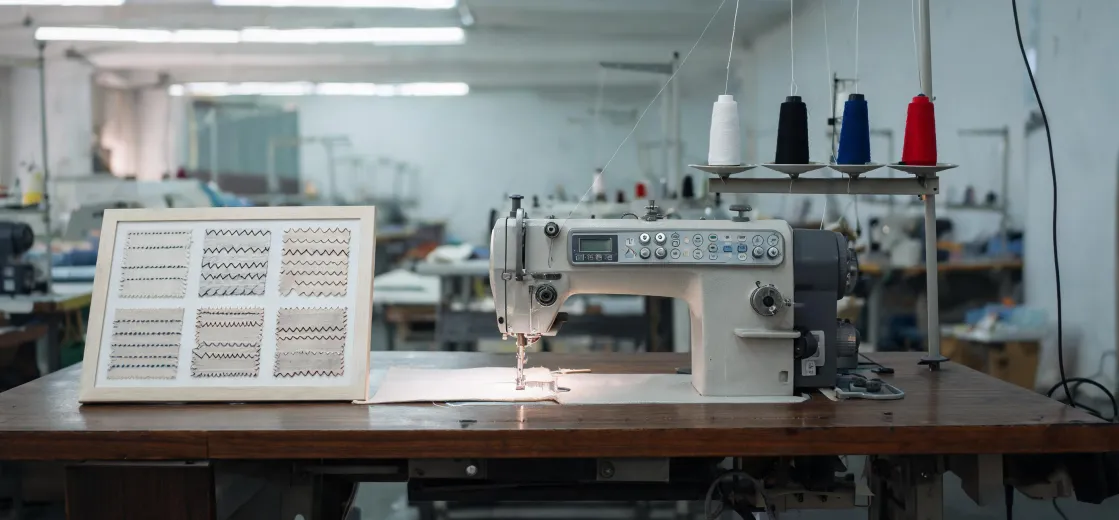
-
Where are Jack sewing machines made?
-
How do I find the Jack sewing machine official website?
-
Is a Jack sewing machine good enough for daily production?
-
What does “sewing machine output” really mean on a Jack spec sheet?
-
What should you expect from an affordable embroidery machine?
-
Should I hire a Singer sewing machine repairman to fix a Jack industrial machine?
-
What hidden costs should I include when budgeting for a Jack machine?
If you’ve searched for jack-sewing, “jack sewing machine made in which country,” or “jack sewing machine official website,” you’re probably not looking for another product catalog. You want to know if the machine is worth the money. Fair enough.
I’m a procurement manager at a 60-person garment company. For six years, I’ve managed our sewing equipment budget—roughly $180,000 a year—and tracked every order, repair, and spare part invoice in a cost system. This article isn’t a sales pitch. It’s the FAQ I wish had existed before we put Jack machines on our production floor.
Where are Jack sewing machines made?
Jack sewing machines are made in China. The company is headquartered in Taizhou, Zhejiang Province, an industrial sewing machine manufacturing cluster. I’m not basing that on marketing pages. Every Jack unit received at our factory has a nameplate with “Made in China,” and the customs documentation matches.
Now I’ll give you the boundary to that answer: I don’t have hard data on defect rates across every Jack model. What I can tell you from six years of purchase orders is that the country of origin matters less than the model you choose and the distributor who supports it. A Chinese-made machine can be a reliable production tool or a constant headache, depending on the spec and after-sales support.
How do I find the Jack sewing machine official website?
I’m not going to type one domain and call it the only official site, because regional distributors sometimes run separate pages. What I recommend instead is a three-step check. First, look at the website printed on Jack’s official manuals or in their dealer videos. Second, check that the site publishes model specifications and distributor contacts, not just a form. Third, email or call that contact and ask them to confirm they are an authorized Jack dealer.
If you click the first sponsored result after searching “jack sewing machine official website,” stop. Sponsored positions can be sold to resellers. In our industry, I know companies that wired money to a site that looked official and received nothing. Cross-check the email domain and ask for a physical address before payment.
Is a Jack sewing machine good enough for daily production?
For our product mix, yes—when we choose the right model. We run Jack lockstitch machines for standard woven garment assembly, and they perform reliably on shift work. But that answer comes from a cost controller’s spreadsheet, not brand loyalty. We chose Jack because the spare parts supply was predictable. Downtime is more expensive than any machine price difference.
I also respect a supplier who tells you which machine not to buy. One dealer told us to avoid a popular Jack model for a heavy fabric order; he recommended a different machine even though the order value was smaller that day. That honesty made us a repeat customer. The generalist who promised one machine could handle everything cost us more in repairs than the specialist’s advice ever did.
I’d rather work with a specialist who knows the limits of a machine than a generalist who says one model handles everything.
What does “sewing machine output” really mean on a Jack spec sheet?
Most spec sheets list output as maximum stitches per minute (SPM), and Jack industrial machines often show numbers like 5,500 SPM. That number is a mechanical ceiling, not your daily reality. Once you add bundle handling, thread changes, fabric positioning, and quality checks, the real output is usually much lower.
In our own time studies, one experienced operator running medium-weight woven fabric produced around 60–70 percent of the rated SPM over a full shift. Actually, I should add a caveat: that sampling comes from our machines and our fabric mix. If you run heavy canvas, your number will differ. When comparing models, ask for three numbers: rated SPM, actual pieces per hour on your fabric, and defect rate per thousand garments. The third number is the one that controls your cost per piece.
What should you expect from an affordable embroidery machine?
The word affordable makes me nervous. Earlier in my career, I chose the lowest quote on a small commercial embroidery unit. The machine price was cheap. The true cost wasn’t. We paid for extra frames, software, an adapter, and eventually a technician who had to be brought in because no local repair shop knew the machine. It sat idle for three months while we still dealt with the lost production.
When I search “embroidery machine affordable,” I now filter for total cost per production hour, not the initial invoice. Jack’s single-head and multi-head embroidery machines are industrial equipment, not hobby toys. They cost more upfront, but they’re designed for long shifts and industrial spare parts. For a business, an affordable embroidery machine is one that runs predictably—not one with the lowest sticker price.
Should I hire a Singer sewing machine repairman to fix a Jack industrial machine?
This search phrase confuses people, but I understand why it shows up. When a machine fails, many local repair listings say “Singer sewing machine repairman.” Singer has a strong home-machine presence, and people assume the same technician can service an industrial Jack.
Singer repair technicians are not automatically the wrong choice; some have industrial experience. But ask three questions before booking anyone: Do you service industrial lockstitch or overlock machines? Do you stock parts for Chinese-made industrial machines? Is travel and diagnostic time included in the quote? A technician who works on home machines may still be excellent at what they do, but an industrial servo motor and timing mechanism are a different skill set.
When one of our Jack machines breaks, I want someone who can troubleshoot industrial electronics and mechanical timing, not mainly household tension. The right industrial specialist usually costs less over the life of the repair than the wrong local repairman.
What hidden costs should I include when budgeting for a Jack machine?
When I audited our 2023 spending, I found that machine purchase price accounted for only about two-thirds of the real equipment cost. The rest was freight, duties, broker fees, installation, calibration, operator training, and spare parts. If you compare a local dealer quote with a direct import quote, build a TCO spreadsheet.
On one direct import order, the machine price looked 18 percent lower than the local quote. After all the extras, the actual saving was about 6 percent. And if a spare part had failed during production, the overnight shipping would have wiped out that saving completely. Direct importing still makes sense under the right conditions, but buy for total cost, not for the marketing win.
One final context check: my answers come from a 60-person woven-garment factory. If you’re a home sewist, a tailoring shop, or a denim factory, your output and repair costs will look different. That’s not a sales disclaimer—it’s the difference between reading a spec sheet and running one.

Elise Marceau
Elise Marceau is an LED display and digital-signage systems analyst covering LED video walls, modular screens, transparent LED, control processors, and indoor or outdoor signage. She applies IEC 62368-1 safety principles while comparing pixel pitch, luminance, contrast, refresh rate, colour uniformity, viewing angle, ingress protection, power density, module serviceability, and signal redundancy. Her specification guides help integrators, venue operators, retailers, and procurement teams align viewing distance, ambient light, content format, installation access, electrical load, and lifecycle support.