Jack sewing article
Jack Sewing Machine Brand Review: TCO, Algeria Price, PE545 & FDZ Embroidery, and Bag-Making Machines
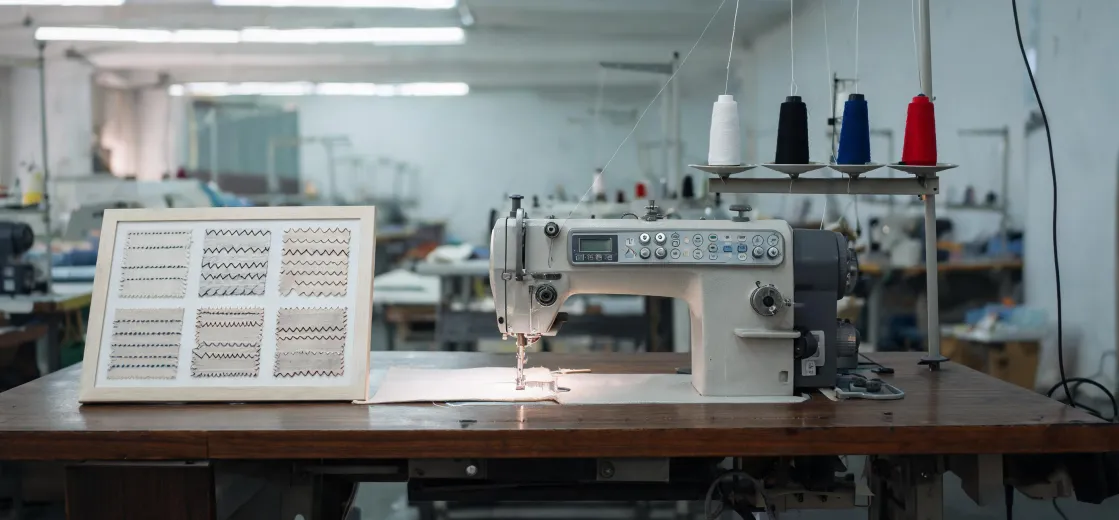
-
1. Is Jack Sewing a good brand, or should I look elsewhere?
-
2. How do I calculate TCO for a Jack sewing machine?
-
3. What should I know about Jack sewing machine price in Algeria?
-
4. What is the PE545 embroidery machine good for?
-
5. Is the FDZ embroidery machine different from the PE545?
-
6. What industrial sewing machine do I need for bag making?
-
7. What hidden costs should I ask about before buying Jack equipment?
-
8. What would make me walk away from a Jack machine quote?
I’m a procurement manager at a 40-person cut-and-sew shop. I’ve managed our equipment budget—about $120,000 a year—for six years, negotiated with 20+ vendors, and documented every machine order in our cost tracking system. I don’t sell sewing machines. I buy them, run TCO numbers on them, and live with the results. This is my Jack sewing machine brand review and FAQ, built from quotes and service records, not from a sales sheet.
Short version: Jack Sewing—often searched as jack-sewing—can be a practical option, but the machine price is only one line in the spreadsheet. Here’s what I’d ask before signing.
1. Is Jack Sewing a good brand, or should I look elsewhere?
For many small and mid-size shops, Jack Sewing is a fairly practical option. In my experience, the brand’s strength is range: industrial lockstitch, overlock, feed-off-the-arm, and embroidery units, plus parts and accessories. That matters when you don’t want five suppliers for one production line.
Is it a premium brand? No. Is it always the right choice? No. The decision depends on your local dealer, spare-parts lead time, and whether the model matches your material. I bought one Jack unit in 2023 for a bag line and it ran well, but only after we fixed the initial tension setup. Here’s the thing: a brand review without local support is just a spec sheet. If your dealer stocks parts and answers the phone, Jack is probably worth a quote. If not, the savings may not survive the first breakdown.
2. How do I calculate TCO for a Jack sewing machine?
Start with the invoice price, then add freight, customs, VAT, installation, table/motor, training, spare parts, and downtime risk. In Q2 2024, I compared two quotes for a bag-making setup. One machine was $1,200 less expensive. The other included a servomotor, local setup, and a startup parts kit. By the time I added freight and $450 in extra electrical work, the cheaper quote was within $80 of the other. That’s before downtime.
TCO isn’t a trick to justify spending more. It’s a way to avoid fake savings. I now calculate TCO before I compare any vendor. Specs first, freight second, spare parts third. In that order. If a quote can’t be itemized, treat it as incomplete.
3. What should I know about Jack sewing machine price in Algeria?
I can’t give you a reliable Jack sewing machine price in Algeria without a current quote, and you should be skeptical of anyone who does. Prices move with exchange rates, customs clearance, importer stock, and model configuration. A basic industrial lockstitch and a multi-head embroidery machine are not in the same pricing universe.
When I reviewed Algeria inquiries for another buyer in late 2024, the useful quotes included DZD totals with these lines: machine, table, motor, shipping to port, customs, inland delivery, VAT, and installation. The bad quotes were FOB numbers that looked low and then doubled after clearance. The upside of chasing a lower sticker price was maybe a few hundred dollars. The risk was a three-week customs delay and a machine sitting in a warehouse. That upside wasn’t worth it. Ask for a landed-cost quote, not a teaser price.
4. What is the PE545 embroidery machine good for?
The PE545 embroidery machine is usually discussed as a single-head unit. In plain terms, it’s for shops that need logo work, names, small batches, and sampling rather than mass production. If you’re making 500 identical caps a day, a single-head PE545 is probably not your production engine. If you’re adding embroidery to existing garment work, it can be a fairly low-risk entry point.
Before buying a PE545, ask about hoop sizes, max speed, thread trimming, and whether the dealer supports the software and maintenance. The machine price is only part of it. I’ve seen buyers spend more time fighting file formats than sewing. To be fair, a single-head machine can pay for itself on small orders. But keep your expectations realistic: it’s a production tool, not magic.
5. Is the FDZ embroidery machine different from the PE545?
They often get compared because both can be sold as embroidery machines, but model names don’t tell you everything. FDZ embroidery machine listings may be configured for different head counts, field sizes, or production targets depending on the supplier. I treat FDZ as a category question: what configuration are you actually buying?
Ask for a spec sheet with head count, needle count, embroidery area, speed, power requirements, and supported file types. Then compare it to your order profile. If you need multi-head output, don’t buy a single-head just because the FDZ listing looked cheaper. I still kick myself for not getting voltage and air requirements in writing on an earlier machine. The small spec gap cost us a week. For embroidery, the hidden costs are usually setup, training, and spare needles/hoops—not the machine itself.
6. What industrial sewing machine do I need for bag making?
For industrial sewing machine for bag making, the answer depends on material. Light nylon and lining? A walking-foot or compound-feed lockstitch may be enough. Heavy webbing, canvas, and multi-layer seams? You need a heavy-duty compound feed or a post-bed machine, plus the right needle and motor. A standard garment lockstitch will struggle and skip stitches.
I’d ask these questions: max thickness, stitch length, thread size, and whether you need reverse, edge guide, or binding attachments. On a 2024 bag project, we tested three machines on actual scrap material before buying. The one that looked best on paper was not the best on 1680D polyester. Never expected the accessories bundle to matter more than the headline speed. Table, servo motor, presser feet, and local service mattered more than the spec sheet peak speed.
7. What hidden costs should I ask about before buying Jack equipment?
Look, most hidden costs are avoidable if you ask upfront. My list: freight and lifting, customs and brokerage, voltage/phase conversion, installation, operator training, software licenses, spare parts kit, and warranty terms that exclude labor. Also ask about response time for service calls and whether parts ship from local stock or overseas.
I use a simple rule: if the quote doesn’t say who pays for it, assume you do. In 2023, I audited our spending and found that 62% of budget overruns came from freight and emergency parts, not from machine price. We started requiring landed-cost quotes and cut overruns by about 30%. That number is from our own cost tracking system, not a market study. Your mileage may vary, but the categories are usually the same.
8. What would make me walk away from a Jack machine quote?
Three things: no local parts support, no clear warranty process, and no ability to test the machine on my material. If a dealer can’t provide a CE or ISO 10821 safety document for an industrial unit, I get nervous. If they can’t tell me the HS code and landed cost for Algeria or another import market, I assume the quote is incomplete.
I’m not saying Jack is always the best or always the wrong call. I’m saying the brand review should end with a TCO number, not a sticker price. Get the quote itemized, test the model, and confirm who supports it after delivery. If those boxes check out, Jack is probably worth including in your shortlist. If they don’t, the cheapest machine can become the most expensive one you own.

Elise Marceau
Elise Marceau is an LED display and digital-signage systems analyst covering LED video walls, modular screens, transparent LED, control processors, and indoor or outdoor signage. She applies IEC 62368-1 safety principles while comparing pixel pitch, luminance, contrast, refresh rate, colour uniformity, viewing angle, ingress protection, power density, module serviceability, and signal redundancy. Her specification guides help integrators, venue operators, retailers, and procurement teams align viewing distance, ambient light, content format, installation access, electrical load, and lifecycle support.