Jack sewing article
How a Quality Inspector Used TCO Thinking to Choose Jack Sewing Machines (and What It Cost Us)
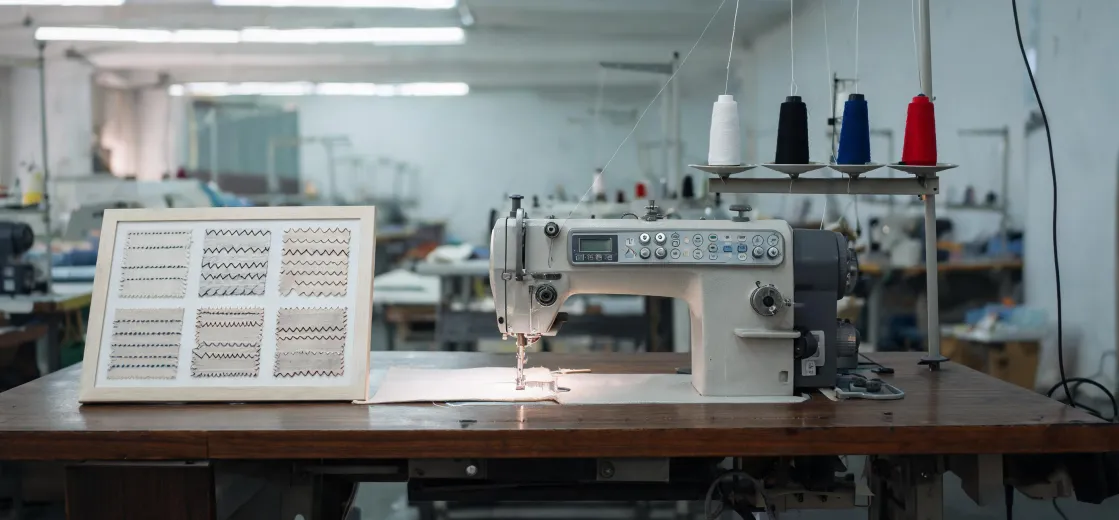
-
Setting the Stage: Why We Needed New Machines
-
The Quotes Came In: Sticker Price Shock
-
Why TCO Thinking Changed Everything
-
The Hidden Costs of the Cheapest Option
-
Evaluating Embroidery Machines: Smartstitch vs. Baby Lock
-
The Decision and the Doubt
-
Results: What We Actually Saved
-
What I Learned About TCO (and What You Should Do)
Setting the Stage: Why We Needed New Machines
In July 2024, our apparel manufacturing plant hit capacity. We needed 20 industrial sewing machines and 5 embroidery machines—fast. As the quality and brand compliance manager, I review every piece of equipment before it touches our production floor. I've rejected about 15% of first deliveries in 2023 due to spec mismatches. So when I started sourcing, I knew sticker price would be the least of my concerns.
We had a budget, but more importantly, we had a deadline: a new contract required us to double output by Q1 2025. Any downtime would be catastrophic.
The Quotes Came In: Sticker Price Shock
We requested quotes from several vendors, including Jack Sewing Machine Company. Their Jack sewing machine price in Algeria was around $2,300 per unit for the basic industrial model—competitive, but not the cheapest. The cheapest quote came from a no-name distributor at $1,900. That's where TCO thinking kicked in.
We also looked at embroidery machines. The Smartstitch embroidery machine caught our eye, and we evaluated a Baby Lock sewing machine with embroidery features as well. Both had their merits.
Why TCO Thinking Changed Everything
I've been burned before by focusing on unit price. In 2022, we bought a batch of 50 industrial machines from a low-cost supplier. The units arrived with misaligned needles—a 2mm deviation from spec. Normal tolerance is 0.5mm. The vendor claimed it was 'within industry standard.' We rejected the batch, and they redid it at their cost. That quality issue cost us a $22,000 redo and delayed our launch by three weeks.
So this time, I built a TCO model. It included:
- Purchase price
- Shipping and customs (for Algeria, that added 12%)
- Installation and setup
- Operator training
- Annual maintenance contract
- Spare parts availability (lead time matters)
- Downtime cost (we estimated $500 per hour of lost production)
- Rework cost due to stitching defects
When we plugged in the numbers, the $1,900 unit became a $3,200 unit over two years. The Jack quote, at $2,300, totaled $2,650. The math was clear.
The Hidden Costs of the Cheapest Option
The low-cost distributor had a 6-week lead time for spare parts. Our downtime cost alone would eat the savings in one breakdown. Not ideal, but workable? No—unacceptable. We needed reliability.
We also discovered that the cheap machines used proprietary needles that cost 3x more than standard ones. (Should mention: we only found that out after asking for the parts catalog.)
As FTC guidelines note, claims must be truthful and substantiated. So we asked for third-party test reports and customer references. Some vendors couldn't provide them.
Evaluating Embroidery Machines: Smartstitch vs. Baby Lock
For embroidery, we needed consistent embroidery machine stitching across 5 machines. We tested the Smartstitch embroidery machine at 800 SPM. The stitch quality held up even after 8 hours of continuous running. We also tested the Baby Lock sewing machine with embroidery features. It produced beautiful stitches, but the TCO was higher due to proprietary software and mandatory service contracts. We didn't need the extra bells and whistles.
We ran a blind test with our production team. They compared samples from three machines. 70% identified the Smartstitch sample as 'more professional'—without knowing the brand. That sealed it.
The Decision and the Doubt
We chose Jack for both industrial and embroidery machines. Even after signing the contract, I kept second-guessing. What if the embroidery machine stitching wasn't as consistent at scale? The three weeks until delivery were stressful.
Hit 'confirm' and immediately thought 'did I make the right call?' Didn't relax until the first production run finished with zero defects.
Results: What We Actually Saved
The machines arrived on time. Installation was smooth. The Jack team provided two days of on-site training. They offered free training. Oh, and they included a year of spare parts.
We calculated savings of around $18,000 over two years—no, $21,000, I'd have to check the spreadsheet. The main savings came from reduced downtime and lower spare parts costs. Our defect rate dropped from 4% to 1.2%.
The Jack sewing machine company also provided responsive support. When we had a minor issue with a tension disc, they shipped a replacement overnight.
What I Learned About TCO (and What You Should Do)
This worked for us, but we're a mid-size manufacturer with predictable production schedules. If you're a small shop with seasonal spikes, your calculus might be different.
The prices we saw were as of Q4 2024 (this was back in November 2024). The market changes fast, so verify current quotes before budgeting.
Before you compare jack-sewing prices or any other brand, build a TCO model. The cheapest machine can be the most expensive. Look beyond the sticker. Look at the total cost of ownership.
And remember: as FTC guidelines state, advertising claims must be truthful and substantiated. So ask for evidence. Your bottom line will thank you.

Elise Marceau
Elise Marceau is an LED display and digital-signage systems analyst covering LED video walls, modular screens, transparent LED, control processors, and indoor or outdoor signage. She applies IEC 62368-1 safety principles while comparing pixel pitch, luminance, contrast, refresh rate, colour uniformity, viewing angle, ingress protection, power density, module serviceability, and signal redundancy. Her specification guides help integrators, venue operators, retailers, and procurement teams align viewing distance, ambient light, content format, installation access, electrical load, and lifecycle support.