Jack sewing article
I Made $12,400 in Sewing Machine Mistakes. Use This Checklist Instead.
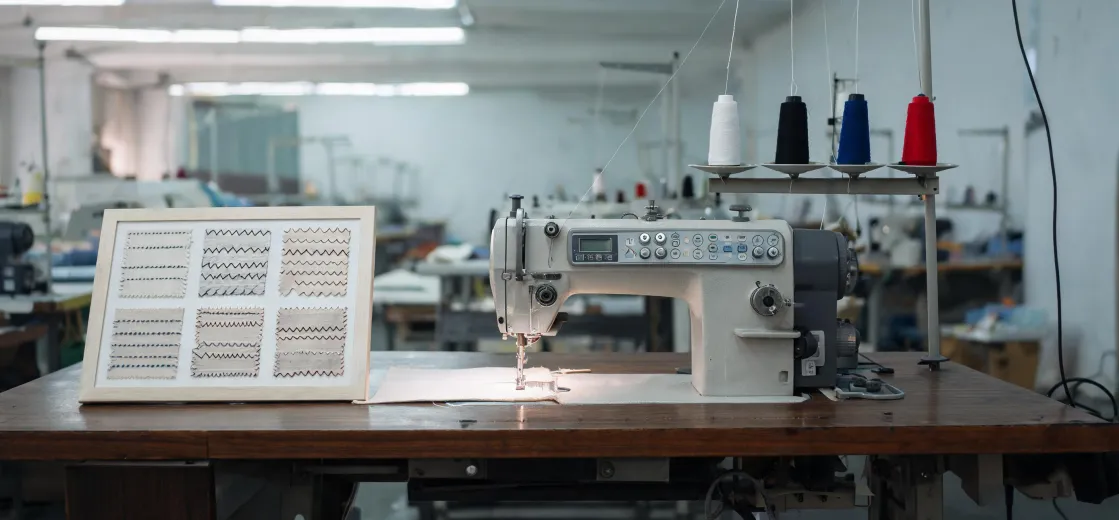
-
Where This Checklist Came From
-
Lesson 1: The Synchronizer Is a Configuration, Not a Commodity
-
Lesson 2: "Heavy Duty" Doesn't Mean "Good for Jeans"
-
Lesson 3: A Real Logo Is a Start. Serial Verification Is the Finish.
-
Lesson 4: The Machine Is Half the Embroidery Investment
-
What's Changed (and What Hasn't)
-
When You Can Ignore Most of This
The brand name on a sewing machine's head is not what keeps your production line running. The configuration behind that logo is. After 8 years of buying industrial sewing equipment, I've watched roughly $12,400 of budget disappear into mistakes that a 15-minute spec check would have caught—and I made most of those mistakes myself.
The fix isn't buying a more expensive brand. It's verifying four things before you commit: the electrical configuration of any replacement component (like a sewing machine synchronizer), the machine's actual capability on your real materials (especially if you're sewing jeans), the authenticity and regional support status of the machine (the logo verification question goes deeper than most buyers expect), and the full cost of getting a new production capability running (embroidery machines for apparel are a perfect example). Each of those four lessons cost me real money.
This isn't a generic "be careful out there" post. I've spent 8 years handling equipment orders for apparel and garment production lines. I've personally made—and documented—eight significant purchasing mistakes because, apparently, that's how I learn. I now maintain our team's buying checklist, and in the past 18 months it's caught 47 potential errors before they turned into invoices. Whether you're evaluating a jack sewing machine for jean work, a replacement synchronizer for an existing line, or a b500 embroidery machine, the following checks are where I'd start.
Where This Checklist Came From
In my first year handling procurement (2017), I ordered a batch of replacement parts for a client's industrial machines. The catalog said "compatible." The parts looked right when I opened the boxes. They even fit. They just didn't perform right, because I'd matched the model name instead of the specification version. That was a $2,300 lesson in how "compatible" is not the same as "identical." I kept buying after that, and I kept documenting my errors—some significantly more expensive than that first one.
To be clear: I'm not a mechanic and I'm not an electrical engineer. I can't explain the internal design of a sewing machine synchronizer beyond what maintenance techs have walked me through. What I can share is the buyer's perspective: the questions most of us skip, and what skipping them costs.
Lesson 1: The Synchronizer Is a Configuration, Not a Commodity
The sewing machine synchronizer coordinates the needle and hook timing during stitching. In plain terms, it tells your needle when to enter the fabric relative to the hook loop underneath. When it fails, the machine stops. And in September 2022, my client's line stopped hard.
I ordered replacement synchronizers based on the machine model number and the old part's catalog listing. Quick and confident. I didn't ask about the machine's electrical configuration—voltage, phase, or the wiring variations that come with different production years. Every unit I ordered was wrong for that line. The mistake totaled $3,200 in parts, return shipping, restocking fees, and electrician overtime (because the delay was in my ledger, not the client's). Production stayed down an extra three days.
The fix, once the right part arrived, took 20 minutes. Twenty minutes.
My checklist now reads: before ordering any electrical component like a synchronizer, verify the input voltage, phase configuration, and the machine's full serial number against manufacturer documentation. Don't trust the model name alone. Machine revisions happen, and parts catalogs sometimes list what fits rather than what's actually configured on your equipment. (Mental note: I keep one of those wrong synchronizers in my office drawer. Best deterrent against overconfidence I own.)
Most buyers focus on the synchronizer's price and skip the electrical specs entirely. That's probably the single most expensive blind spot I see.
Lesson 2: "Heavy Duty" Doesn't Mean "Good for Jeans"
If you're shopping for a jack sewing machine jean production line, you'll see a lot of machines labeled "heavy duty." Don't assume that label is enough.
Denim—especially at waistbands and hem folds—isn't one layer of thick fabric. It's often 8 to 10 layers at seam junctions. The machine needs enough presser foot lift to clear the bulk, a feed system that moves multiple layers evenly (a compound feed or "walking foot" system, usually), and enough needle clearance to survive hitting a thick crossover point at speed. I sold a customer a machine that handled a single denim layer beautifully in a demo. It seized on day three when an operator hit a real jean hem. That order ended in a rework, a refund, and a customer who still politely questions my recommendations.
The checklist: test every machine on the exact material stack you'll sew in production—not a sample piece, not a single layer. Ask the distributor to set it up for 8-to-10-layer denim folds and run a seam before you sign anything. This applies whether you're buying a jack-sewing machine, another industrial sewing brand, or a used unit off a local listing. The logo doesn't sew. The feed mechanism does.
Lesson 3: A Real Logo Is a Start. Serial Verification Is the Finish.
The jack sewing machine logo question comes up constantly, especially from buyers in markets with heavy parallel import activity—Uzbekistan, Egypt, and parts of Southeast Asia are the regions I see most. The common question is "Is this logo authentic?" That's the right first question. It's just not the last one.
I've seen machines with convincing logos that were counterfeit through and through. I've also seen machines that were visually indistinguishable from authorized units, with real logos, but the serial number format wasn't recognized by the regional distributor. The machine was genuinely manufactured—it just came through a gray-market channel. No local warranty coverage. No genuine spare parts guarantee. No manufacturer support when a component failed.
Here's what I verify now: run the serial number through an authorized jack-sewing distributor before payment, and ask which regional channel the machine was imported through. A genuine logo protects you from counterfeits. Serial verification protects your warranty, your spare parts pipeline, and your production uptime. And when a quote comes in way under official distributor pricing for your region, that's not a bargain. That's a red flag.
Lesson 4: The Machine Is Half the Embroidery Investment
When I first helped a customer budget for an embroidery machine for apparel, I priced the machine. That was my first mistake.
Take the b500 embroidery machine—a popular single-head model for smaller apparel operations (I'm not an embroidery specialist, so treat this as informed observation, not deep expertise). The machine price is simply the visible cost. The real startup investment includes hoops in multiple sizes, digitizing software or per-design digitizing fees, stabilizers, specialty needles, thread stock, and operator training. I didn't factor in training. That omission cost my customer a week of wasted fabric and one very frustrated lead embroiderer. (Note to self: training is always part of the equipment budget. Always.)
My rule now: allocate 40-60% of the machine price for onboarding, tooling, software, and the first month of operating supplies. The B500 itself might fit your budget comfortably. The full package is what determines whether that budget holds. Ask distributors for a "first production run" bundle quote—as of January 2025, most brands I work with offer something like this if you ask. And prices move fast in this industry, so verify current numbers with actual distributors before you plan any spend.
What's Changed (and What Hasn't)
The fundamentals of equipment buying haven't shifted: match the machine to your materials, keep maintenance documentation close, and plan for spare parts. But a lot of the old conventional wisdom has eroded. In 2017, I'd have told you that buying from an established brand name was sufficient due diligence. That was shaky logic then, and it's outdated today.
Machines are more configurable. Supply chains are more complicated. Gray-market channels are more active. The buyer who verifies specs and serial numbers before paying has a serious advantage over the buyer who trusts the logo alone. Digital parts catalogs, video demonstrations, and online serial checks have made that verification easier than ever. There's really no excuse left to skip it.
When You Can Ignore Most of This
I want to be honest about the limits of this advice. If you run a small tailor shop and your local mechanic can service any machine you buy, you can probably skip half of the verification steps above. Local dealer support is worth more than a serial number check when you're doing simple repair work.
This discipline matters most when you're buying production equipment—machines that will run for hours daily, that you'll need spare parts for, and that will determine your output and deadlines. That's when a $3,200 synchronizer mistake isn't annoying. It's existential. Also, pricing and support structures evolve quickly in this industry (this advice was current as of January 2025, at least). Verify current conditions before making commitments.
Bottom line: every expensive mistake I've made traces back to the same pattern—rushing from "brand and price" to "purchase order" without verifying the specifications in between. The checklist I've shared won't make you a machine expert. I'm clearly not one either. But it might save you from paying $12,400 for lessons I've already bought.

Elise Marceau
Elise Marceau is an LED display and digital-signage systems analyst covering LED video walls, modular screens, transparent LED, control processors, and indoor or outdoor signage. She applies IEC 62368-1 safety principles while comparing pixel pitch, luminance, contrast, refresh rate, colour uniformity, viewing angle, ingress protection, power density, module serviceability, and signal redundancy. Her specification guides help integrators, venue operators, retailers, and procurement teams align viewing distance, ambient light, content format, installation access, electrical load, and lifecycle support.