Jack sewing article
Best Embroidery Machine for Logos: A Quality Inspector's Guide to Jack Sewing Machines
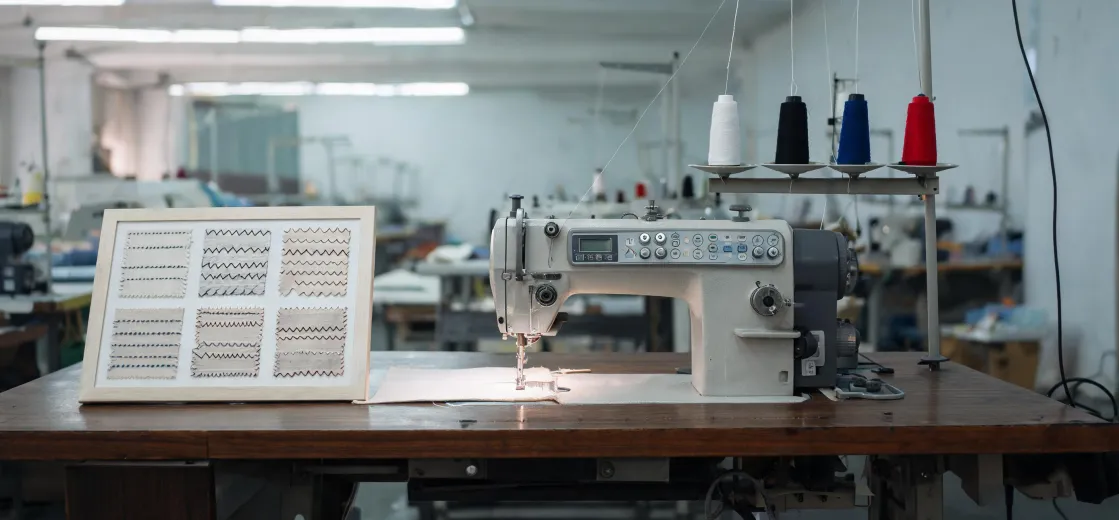
The short answer: choose repeatability
If you are searching for the best embroidery machine for logos, start with registration and stitch consistency, not speed or marketing features. I say this after spending four years reviewing embroidered output as a quality lead. In 2024, I rejected 6% of first samples for registration errors, thread tension shifts, and color mismatch. Those are the failures that quietly kill a logo business.
The best embroidery machine for logos is the one that produces the same clean result on the 100th piece as it did on the first. That applies whether you are evaluating jack-sewing industrial models, a single-head embroidery unit, or a Capella embroidery machine.
Why my view may be different from the sales brochure
I run quality control at a small-to-mid-size custom embroidery shop. We make logo caps, workwear, and corporate gifts for local and regional orders. I review roughly 200 unique orders a year (maybe 180, I would have to check) and sign off before shipping. In Q1 2024 alone, I rejected 6% of first-article batches. That number sounds manageable until you count the re-hooping, refunded shipping, and unhappy customers.
When I first started managing equipment, I assumed the most expensive machine was automatically the best for logo work. Three years later, I know that is wrong. A solid mid-price machine with a rigid frame and a responsive dealer can beat a premium brand with no local parts stock. The lesson came from a $900 mistake on a rush order where the wrong hoop flexed and every letter shifted by half a millimeter.
What I actually check before recommending a machine
1. Stitch consistency on small lettering
Logo work lives in small text and dense fills. A machine can produce beautiful satin-stitch flowers and still fail on a 7mm letter. Watch the machine run the same text at production speed, then look at the back. If the bobbin thread pops through or the letter edges look wavy, the machine will not improve with experience.
I only accepted this after ignoring the advice once. I skipped the small-text test because the demo design was a large eagle. The first production run came back with a letter R that looked like a blob. That was an expensive way to learn that decorative demo designs hide consistency problems.
2. Registration and hoop rigidity
Registration means the needle returns to exactly the same position for each color pass. If the hoop flexes or the frame vibrates, the last color misses the first. In my experience, the included hoop system is where manufacturers save money. One machine we evaluated had plastic hoops that bowed under tension; the upgraded metal hoops were a paid add-on. Surprise, surprise.
Test registration by stitching a three-color logo with thin borders. Un-hoop, re-hoop, and stitch it again. The difference between the two runs should be nearly invisible. If you can see yellow bleeding out from under black, the framing system is too flexible.
3. Color fidelity for brand logos
Color mismatch is the second-biggest rejection cause in our shop. Brand logos are often specified in Pantone, but embroidery thread is not printed ink. According to Pantone's Color Bridge guidance, digital color values are starting points, not guarantees, because thread sheen and twist change the perceived color. On flat printed material, a Delta E under 2 is a common threshold for acceptable color difference. Do not promise that for embroidery; instead, ask for a physical thread book and a test stitch on the actual fabric.
4. Dealer service and spare parts lead time
This is where the jack sewing machine usa search can mislead you. A machine is only valuable if it can be repaired. Ask the dealer how long it takes to get a circuit board, a hook assembly, or a tension unit. I have seen four equipment failures in the past year; all four delayed production because of parts access, not because of the breakdown itself.
When I review jack sewing machines or any other brand, I look at the frame before I look at the touchscreen. I remember one decision where I had three days to choose a machine before a large order. Normally I would run a week of side-by-side tests. There was no time, so I narrowed the list to dealers who could show a written repair commitment. It was not an ideal process, but the machine worked because the service commitment was real. When a dealer charges a small premium for guaranteed support, I say pay it. The most expensive machine is the one sitting broken for six weeks.
How to treat the Capella embroidery machine (or any other shortlist candidate)
If a Capella embroidery machine is on your list, test it the same way you would test any other candidate. Bring a design with a small letter, a dense fill, and three overlapping colors. Stitch it, un-hoop, re-hoop, stitch it again. Then ask for the same design on the backing you will use in production. If the dealer hesitates, that is a signal.
In an embroidery machine workshop, two questions matter more than the brand name: can the machine deliver this quality every time, and can someone fix it quickly when it breaks? Everything else is noise.
Where this advice stops applying
I can only speak to custom logo production in a small-to-mid-size workshop. If you are running a multi-head production floor with long runs, speed, synchronization, and spare head availability will matter more than my criteria. If you are a single-user craft shop stitching one logo per week, a professional single-head machine may be overkill. The best embroidery machine for logos in my shop could be the wrong fit for your workload.
I also do not have hard data on long-term reliability across every brand. What I can say anecdotally is that every major failure I have seen was connected to skipped maintenance or an unavailable dealer, not to the engine. Looking back, I should have ordered a second hoop kit at purchase. It seemed like an upsell then; it was not. Those are the details that make a machine profitable or painful.

Elise Marceau
Elise Marceau is an LED display and digital-signage systems analyst covering LED video walls, modular screens, transparent LED, control processors, and indoor or outdoor signage. She applies IEC 62368-1 safety principles while comparing pixel pitch, luminance, contrast, refresh rate, colour uniformity, viewing angle, ingress protection, power density, module serviceability, and signal redundancy. Her specification guides help integrators, venue operators, retailers, and procurement teams align viewing distance, ambient light, content format, installation access, electrical load, and lifecycle support.