Jack sewing article
How to Buy an Industrial Sewing Machine (When You Needed It Yesterday)
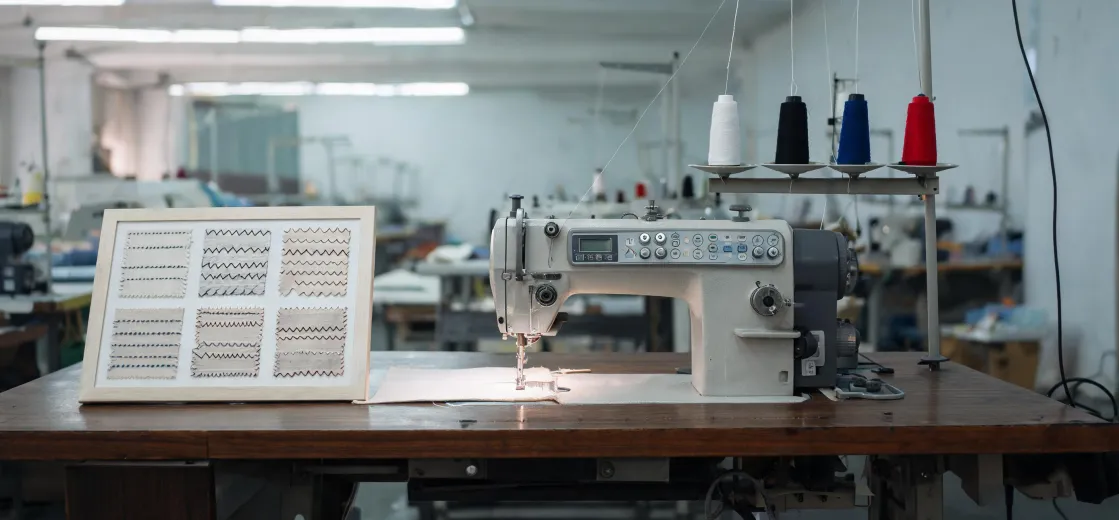
Who This Is For
If you're running a small shop, a custom apparel business, or an industrial production line and you need a jack sewing machine delivered this week, not next month — this guide is for you.
Maybe your old machine finally gave out mid-order. Maybe you landed a contract you weren't expecting. Or maybe you're setting up shop and underestimated the timeline.
I've been coordinating emergency equipment orders for industrial clients since 2020. In my role as a rush order specialist at a 24/7 industrial equipment supplier, I've handled everything from a single-head embroidery machine needed for a trade show (48-hour turnaround) to a full industrial leather sewing machine raised bed setup required for a custom upholstery job (72 hours, and this is a machine that normally ships in 10-14 business days). Here's the checklist I use to get it done.
This guide covers 3 steps. The third one is the one most people skip — and it's where things fall apart.
Step 1: Lock Down What You Actually Need (Before You Call Anyone)
Sounds obvious, right? But in my experience, about 40% of the emergency orders I process start with a vague request. Like, "I need an industrial sewing machine." That could mean five different things depending on who you ask.
Before you pick up the phone, know the answer to these three questions:
- What material are you sewing? Denim? Leather? Canvas? Heavy synthetics? This dictates the machine class. A jack sewing machine like the GC-1501 is a lockstitch workhorse for heavy fabrics. But if you're doing leather, you probably need a walking foot or a compound feed industrial leather sewing machine raised bed setup.
- What's the stitch type? Lockstitch? Chain stitch? Overlock? Embroidery? Again, totally different machines.
- Do you need a multi-head or single-head embroidery machine? If you're cranking out 200 caps a day, you need a multi-head. If you're doing custom one-offs for a boutique clientele, a single-head is probably fine.
(As of January 2025, a standard single-head embroidery machine purchase runs $2,500-$6,000 depending on features and hoop sizes. Multi-heads start around $12,000. Quote from current Jack Sewing distributor listings, but verify your local pricing.)
Checkpoint: If you can't describe the machine in one sentence, you're not ready to buy.
Step 2: Skip the General Distributors — Go Directly to Specialized Dealers
This is the biggest time-saver. Most general industrial equipment suppliers don't stock machines. They order from a catalog. That adds 1-2 weeks to your timeline minimum.
Instead, call a dealer that specializes in industrial sewing equipment. In my experience, specialized dealers typically have:
- Popular models in stock. Machines like the Juki Jack sewing machine (the 1501 series) are common enough that dealers keep them on hand.
- Refurbished units available now. If new isn't possible, a refurbished machine can ship same-day. In Q3 2024, we had a client who needed a multi-head embroidery machine for a trade show in 3 days. We found a certified refurbished unit, paid $800 in rush shipping (on top of the $14,000 base cost), and it arrived 2 days before setup. The alternative was losing a $40,000 contract.
- Internal techs who can do a pre-shipment check. This matters for emergency orders — you can't afford to receive a machine that doesn't work.
Checkpoint: Ask the dealer, "Do you have this machine in your warehouse right now?" If they hesitate, they don't. Move on.
Step 3: Verify the Compatibility (This Is Where People Screw Up)
Here's the step most people skip. They find a machine, confirm stock, pay the rush fee, and assume it'll work. Then it arrives — and it's the wrong voltage. Or the wrong bed size. Or it doesn't have the correct presser foot for their material.
I learned this lesson the hard way in 2022. We ordered a digitizing embroidery machine for a client who needed to produce custom patches. We verified the model, the stock, the shipping — but we assumed it came with the right digitizing software loaded. It didn't. The machine and the software were sold separately. The client had to pay another $1,200 for the software and wait 2 more days for the license key. Lost time, lost money.
So before you confirm the order, verify these details (yes, out loud, with a person):
- Power requirements: 110V vs 220V. Single phase vs three phase. I've seen this stop a production line cold.
- Bed size and configuration: For a industrial leather sewing machine raised bed, make sure the bed is actually raised enough for your work. Standard free-arm is around 8 inches. Raised bed models can go from 12 inches and up depending on the brand.
- Compatible attachments: Do you need a specific foot? A specific needle system? A binder attachment? Get this in writing.
- Included software: For an embroidery machine purchase, confirm whether digitizing software is included or an add-on. Most entry-level machines come with basic software. Multi-heads often don't.
Checkpoint: Send the dealer a one-paragraph summary of your setup. Ask them to confirm everything works together — and watch for corrective responses.
Final Checklist (Before You Pay)
Here's what I run through with every emergency order before I release payment. It's saved us more than once.
- [ ] Confirm stock — physically in a warehouse, not coming from a manufacturer in 2 weeks.
- [ ] Get a photo of the actual unit — not a stock photo from the catalog. For used or refurbished, this is non-negotiable.
- [ ] Verify power compatibility — 110V vs 220V. Don't assume.
- [ ] Check the bed size — especially if you're getting a raised bed machine. Measure twice, order once.
- [ ] Ask about setup time — does it come ready to run? Or does it need initial tuning? A new machine might need 2-4 hours of setup. A refurbished unit from a good dealer should be ready out of the crate.
- [ ] Clarify the warranty on rush orders — some dealers offer reduced warranty on expedited shipping. Know what you're getting.
- [ ] Get a contact number — for a human who can answer questions when the machine arrives. Having a direct line to a technician can save you days of troubleshooting.
One More Thing: About Recommendations
I'm recommending this approach for the kind of emergency scenarios I see most often: a small or mid-size business that needs a machine fast and has a clear idea of what they're making.
If you're a large-scale industrial operation with standardized equipment across multiple production lines, or if you're just starting out and haven't tested any machines yet (like, you've never sewn on an industrial model before), this fast-track process probably isn't for you. In those cases, taking an extra week to visit a showroom and test a few models is the cheaper, smarter move.
And if you're buying a digitizing embroidery machine for the first time — budget an extra $1,000-$2,000 for software, training, or a support plan. Trust me on this one. The machine is only half the investment.

Elise Marceau
Elise Marceau is an LED display and digital-signage systems analyst covering LED video walls, modular screens, transparent LED, control processors, and indoor or outdoor signage. She applies IEC 62368-1 safety principles while comparing pixel pitch, luminance, contrast, refresh rate, colour uniformity, viewing angle, ingress protection, power density, module serviceability, and signal redundancy. Her specification guides help integrators, venue operators, retailers, and procurement teams align viewing distance, ambient light, content format, installation access, electrical load, and lifecycle support.