Jack sewing article
Emergency Sourcing of Jack Sewing Machines, DTF and Radiance Equipment: A 7-Step Checklist for Algeria and Egypt Buyers
-
Step 1: Lock Down Voltage and Plug Type First, Not Price
-
Step 2: Pick the Model by the Job, Not by the Price Tag
-
Step 3: Ask for Total Landed Cost, Not FOB
-
Step 4: Force a Specific Delivery Date, Not "Standard Lead Time"
-
Step 5: Verify It's Genuine Jack, Not Refurbished or Compatible
-
Step 6: Build the Full Accessory Checklist
-
Step 7: Confirm After-Sales and Parts Channel Before You Pay
-
Common Mistakes
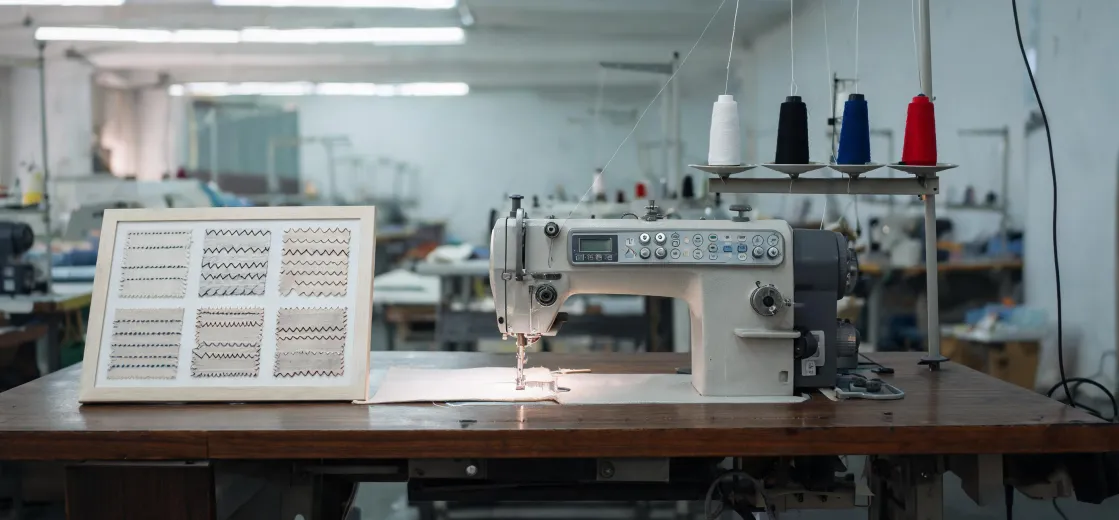
I've coordinated 60+ emergency equipment purchases — most of them for factories in Algeria and Egypt. The scenarios repeat themselves: a client lands a last-minute seasonal order and the workshop's main machine dies; or the container that was supposed to clear Alexandria's port three weeks ago is still sitting in customs, and the production schedule is already bleeding. If you Googled "industrial sewing machine price Egypt" or "Jack sewing machine price Algeria" because you're on a deadline, the 7 steps below are the actual sequence I run before any emergency order goes out. Every step has a hard checkpoint. Follow them in order.
Step 1: Lock Down Voltage and Plug Type First, Not Price
Most buyers jump straight to pricing. Do this first instead.
Algeria and Egypt both run on 220–240V / 50Hz. Sounds obvious, but it isn't. A batch of Jack units I saw last year came in through a Turkish transshipment with 380V three-phase wiring on the motor. They sat dead on the factory floor for four days waiting on an electrician.
Confirm three things before you commit:
- The nameplate voltage and phase count
- Whether plug adapters or a voltage stabilizer are included in the box
- Whether the motor is a direct-drive servo model that can handle wide voltage ranges
Skip this and you're looking at downtime, an extra transformer purchase, and more downtime.
Step 2: Pick the Model by the Job, Not by the Price Tag
Half the buyers asking about Jack sewing machine price Algeria haven't figured out which model actually does their work. Let's fix that first.
Jack's lineup splits into a few buckets:
- Single-needle lockstitch (F4, F5 series) — the workhorse for standard garment stitching. Landed cost in Egypt or Algeria usually lands between $350–$550 FOB before tax and freight.
- Overlock / serger (E4 series) — for necklines, cuffs, hems. Price sits 30–50% above a comparable lockstitch.
- Radiance multi-head embroidery machines — a 6-head unit typically falls in the $8,000–$15,000 range FOB, depending on head count and embroidery field size.
- DTF setups — and here's the part I need you to read twice: a DTF embroidery machine is not the same as an embroidery machine. DTF is film transfer printing. If that's what you need, your checklist should have a DTF printer, a heat press, and consumables on it — not a sewing machine.
I watched a client blow an entire budget on a "radiance embroidery machine" when what he actually needed was a DTF film setup for his shirt printing line. No returns on that. He paid twice.
Step 3: Ask for Total Landed Cost, Not FOB
FOB is half the story.
Shipping a full machine from China or Turkey to Algeria (Port of Algiers) or Egypt (Alexandria / Port Said) usually adds $400–$900 on top of base cost for freight and insurance alone. Egypt's import duty on industrial sewing machines — classified under HS 8452 — varies significantly depending on classification and end-use designation. Algeria's rates run higher and the paperwork takes longer.
Realistically, the same model can differ by $300–$500 in final landed cost depending on which agent handles customs at the destination port. Sometimes it's simply a port agent charging more.
Ask your vendor for four numbers, in writing:
- FOB unit price (currency + Incoterm)
- Estimated freight + insurance to the named port
- Duty rate + VAT at import
- Estimated customs clearance fee at destination
Step 4: Force a Specific Delivery Date, Not "Standard Lead Time"
Let's be honest — too many people get burned on the phrase "standard lead time."
In April 2023, we rushed 8 Jack overlock units for a spring/summer order. The vendor promised "arrival within 30 days." We built the production schedule around it. It actually took 46 days — the units sat in Alexandria's yard waiting on clearance. Two shipments missed their delivery windows, and the client hit us with close to $12,000 in penalty clauses.
Since then, my approach changed. I ask for three dates, all in the contract:
- Estimated container loading date
- Estimated arrival at destination port
- Estimated factory delivery date after customs release
Verbal commitments don't count.
Step 5: Verify It's Genuine Jack, Not Refurbished or Compatible
This is one of the easiest traps for buyers who don't know the market.
There are operations out there rebuilding old chassis with new motors and slapping a Jack label on them. There's also a large gray market of "compatible" parts mixed into genuine parts inventory, often at half price — and half the lifespan.
Check these:
- Can the serial number be traced through Jack's official channel or an authorized dealer?
- Are the motor, rotary hook, and feed dog genuine? Open the machine head and look.
- Does the warranty cover the full machine, or only the motor?
If the vendor can't produce provenance, walk away. Don't think about it.
Step 6: Build the Full Accessory Checklist
In rush orders, it's not the main machine that gets missed. It's the accessories.
This one bit me. Back in 2019, on a rush order, we grabbed an embroidery machine for a client but the hoop sizes were wrong. Eleven days waiting on replacements. The entire batch was delayed.
Your accessory list should cover:
- Consumables: at least one spare set of rotary hooks, presser feet, and needle plates
- Embroidery hoops: sizes that cover your most common order specs
- DTF setup: if applicable, confirm press wattage and bed size match your workshop wiring
- Thread: order embroidery thread and cotton thread in the same shipment — the machine arriving without thread is not a startup
Step 7: Confirm After-Sales and Parts Channel Before You Pay
Jack has dealers in Egypt and Algeria, but coverage varies by region. Cairo and Alexandria have reasonable coverage. Remote provinces can take one to two weeks for a service call.
Get these in the contract:
- Is there an authorized service point locally, and what's the stated response time?
- Where do common parts ship from, and how many days to arrival?
- Who's responsible — the dealer or the manufacturer?
Buying a machine with no local service backing is a gamble. I watched a client save $300 by going through an unauthorized channel. Then the motor burned out, and the replacement part took 22 days.
Common Mistakes
These are the ones I see on nearly every emergency purchase:
- Comparing bare machine price instead of landed cost. A $100 FOB difference can flip into a $500 gap after freight and clearance.
- Treating "in stock" as "ready to run." Sitting in a warehouse and sitting on your factory floor are two very different states.
- Confusing a DTF setup with an embroidery machine. Two different systems, two different budgets, two separate purchase lines.
- Ignoring voltage and plug standards. Algeria and Egypt don't use identical socket types — and phase counts vary by unit. Check per machine.
- Not asking what the warranty actually covers. Full-machine warranty and motor-only warranty are very different documents. Confirm before signing.
That's the checklist. Nothing fancy, but every one of these steps has cost someone real time and money when skipped.
Meera Kulkarni
Meera Kulkarni is a textile-printing equipment analyst covering DTF, DTG, dye-sublimation, and eco-solvent printers with their pretreatment, powdering, curing, pressing, and finishing workflows. She uses ISO 105-C06 laundering tests for applicable printed textiles while tracking colour difference, ink laydown, transfer temperature, dwell time, curing profile, washfastness, nozzle reliability, media tension, and production yield. Her process guides help decorators, apparel producers, and print shops select equipment, inks, films, fabrics, and operating windows for repeatable output.