Jack sewing article
Your AI Embroidery Machine Doesn’t Care About Your Budget. You Should.
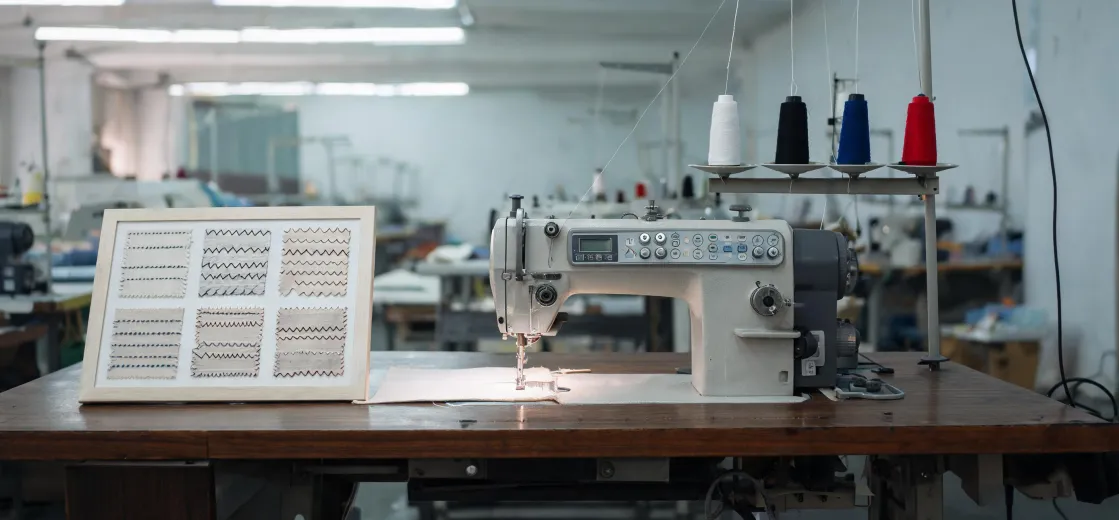
That Email You Just Got from the Makerspace Director
Subject line: *"We need an AI embroidery machine. Budget approved?"*
I knew this day was coming. Ever since the local community college started offering a "Digital Textile Arts" certificate, our makerspace director has been eyeing a multi-head, AI-driven embroidery machine. Something flashy. Something that can stitch a QR code and maybe write poetry about thread tension.
The problem? He priced the machine. I priced the total cost of owning it.
Two very different numbers. Like $8,000 different—over the first year alone.
This isn't a story about why AI embroidery machines are bad. They're not. This is a story about how unmanaged fragmentation—of parts, suppliers, and expectations—quietly eats your budget.
The Real Problem Isn't the Machine. It's the Everything Else.
Everyone thinks the budget drain is the initial purchase. $5,000. $12,000. Maybe $20,000 for a 4-head unit with all the bells. You find the money. You write the check. You're done.
You're not done.
When I audited our 2023 spending across two similar equipment upgrades, I found that 55% of the total cost showed up after the purchase order was signed. Not in the machine itself, but in the ecosystem around it.
Here's what nobody tells you about an AI embroidery machine for a makerspace:
- The consumables (bobbins, needles, specialty threads) aren't standard—they're proprietary. One vendor, one price.
- The software subscription for the AI features? Annual. Non-negotiable.
- The service contract? Only available through the manufacturer's regional tech—if you're in a major metro.
- The table legs. Yes, the table legs. The machine is heavy. The standard table is extra. The vibration-dampening kit? Also extra.
Everything I'd read about equipment ROI said to focus on throughput and feature sets. In practice, I found that the cost of keeping the machine running dwarfed any productivity gains for the first 18 months.
The Hidden Cost: Parts Tail, Not Parts Head
Here's the specific trap I see makerspaces fall into.
You buy the shiny AI embroidery machine. It has 16 heads, auto-threading, a color touchscreen, and a neural net that optimizes stitch patterns in real time. Gorgeous.
Then a needle breaks. Or a bobbin case goes out of alignment. Or a hook assembly wears after 200 hours of high-speed operation on denim.
And you discover the spare parts landscape is a desert.
The manufacturer sells parts—if you can find them on their site. The lead time on a simple industrial sewing machine hook might be 3 weeks. The cost? $45 for a part that should be $12. And shipping? $18 ground.
I assumed proprietary parts would be expensive but reliable. Didn't verify. Turned out "proprietary" just meant "single supplier." No competition. No urgency. No price transparency.
Compare that to a Jack sewing machine. Jack parts? They're everywhere. Needles, bobbin cases, hooks, feed dogs, thread stands, even industrial sewing machine table legs—you can source them from multiple distributors globally. The price? Transparent. The availability? Usually within a week.
That's not a small advantage. That's the difference between a makerspace running 6 classes a week and a makerspace with a dead machine waiting for a part from across the ocean.
The Cost of 'Cool' vs. The Cost of 'Runs'
I get why makerspace directors love AI embroidery machines. They're a demo piece. A recruiting tool. "Look what we can do!"
But someone has to be the adult with the spreadsheet.
When I built our equipment TCO calculator for this decision, I included six categories:
- Machine purchase price (the easy number)
- Setup and installation (including the table legs, often forgotten)
- Year 1 consumables (needles, bobbins, thread, oil)
- Spare parts reserve (minimum 10% of machine cost for unscheduled repairs)
- Software/annual licenses (the one that keeps charging)
- Training and support (either a flat fee or lost time)
For the shiny AI machine, the Year 1 total came out to $16,400. That's with a $9,500 purchase price.
For a comparable Jack industrial machine with multi-head capabilities and standard parts access? Total: $7,800.
The AI isn't free. It's just less visible.
—or rather, the cost of supporting it is spread across so many line items that you don't see the cumulative weight until you're three months in and your consumables line is already overspent.
How to Avoid the Sprawl Trap
I'm not saying skip the AI embroidery machine. I'm saying budget for its entire life in your makerspace.
Here's what I recommend to procurement teams in similar situations:
First, demand a parts map. Before you buy, ask the manufacturer: "Show me a complete list of consumables and wear items for the first 2,000 hours of operation. Include prices and lead times." If they can't or won't, that's a data point.
Second, benchmark against standard parts. Compare the proprietary consumables cost against a Jack sewing machine alternative. Might be 30–50% less over a year.
Third, test the support system. Email their parts department. Ask for a needle plate for an 8-head unit. See how fast they respond. That's the speed of your future repairs.
We didn't have a formal approval process for rush parts orders. Cost us when an unauthorized $90 expedited shipping fee showed up for a $15 part.
The third time we ordered the wrong bobbin type for an AI machine, I finally created a verification checklist. Should have done it after the first time.
The Bottom Line
The AI embroidery machine market is exciting. And it's expensive—just not in the way most people think.
If you run a makerspace and your director is pitching one, don't say no. Say "Let's run the TCO."
And while you're at it, check the price on Jack sewing machine parts. Not because Jack is always the answer. But because a known, reliable supply chain for jack sewing machine parts is worth more than any feature a demo video can show you.
Because a machine that's running on standard parts today is cheaper than a machine that's waiting for a proprietary part tomorrow.
Simple.

Elise Marceau
Elise Marceau is an LED display and digital-signage systems analyst covering LED video walls, modular screens, transparent LED, control processors, and indoor or outdoor signage. She applies IEC 62368-1 safety principles while comparing pixel pitch, luminance, contrast, refresh rate, colour uniformity, viewing angle, ingress protection, power density, module serviceability, and signal redundancy. Her specification guides help integrators, venue operators, retailers, and procurement teams align viewing distance, ambient light, content format, installation access, electrical load, and lifecycle support.