Jack sewing article
Why Your Industrial Sewing Machine Purchase Might Cost You More Than the Price Tag
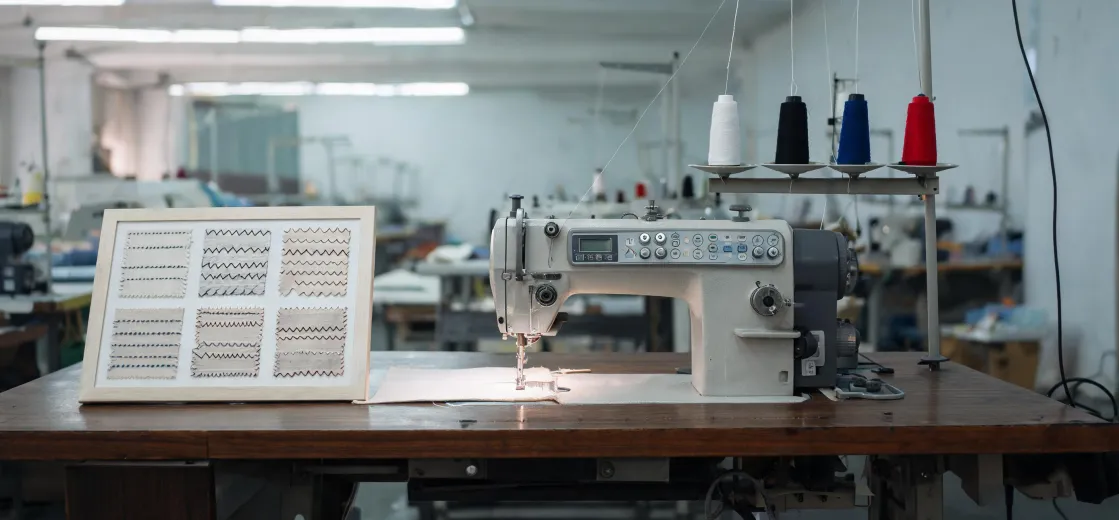
If you've ever had to approve a purchase order for an industrial sewing machine, you know the drill. Someone from production or the design team comes to you with a request. They've done their research, they say. They need this specific model, and the price from this specific supplier is the best they've found.
You look at the quote. The machine price looks right. You check the budget. It's there. You approve it. Three months later, that machine has cost your company 30% more than the quote said. And no one knows why.
I'm an office administrator for a 60-person apparel manufacturing company. I manage all our equipment ordering — roughly $200,000 annually across a dozen vendors. I report to both operations and finance. When I took over purchasing in 2020, I walked straight into this trap. More than once.
The Surface Problem: "That Price Can't Be Beat"
The conversation always starts the same way. The production manager finds a supplier offering a Juki jack sewing machine price that's 15% lower than the usual distributor. Or they've discovered a jack sewing machine brand they've never heard of, priced aggressively. They're excited. They've saved the company money.
Here's the thing: they're not wrong. The price is lower. But the price isn't the cost.
I went back and forth between approving a lower-priced machine from a new supplier and sticking with our established distributor for two weeks. The new supplier offered 20% savings. The established one offered reliability. Ultimately, I approved the cheaper option because the numbers were clear on paper. Looking back, I should have asked more questions. At the time, the pressure to cut costs was intense, and the savings looked like a win.
The Deeper Reason: What's Missing From the Quote
This was true 10 years ago when online procurement for industrial equipment was less transparent. Today, you'd think the process would be clearer. It's not. The reason isn't malice — it's specialization.
The machine you're buying — whether it's a se2000 embroidery machine or a walking foot sewing machine cp206rl — often requires:
- Installation and calibration: Some suppliers assume you'll handle this in-house. If you can't, that's $500-$2,000 extra.
- Training: A new machine, especially a multi-head embroidery machine, means new workflows. Operator training isn't always included.
- Parts and service agreements: The standard warranty covers defects. It doesn't cover the service call when a tension part breaks at 2 AM before a deadline.
- Shipping and logistics: A commercial sewing machine isn't a small parcel. Freight, customs, and insurance add up fast. One vendor couldn't provide proper invoicing for the shipping costs. Finance rejected the expense report. I ate $800 out of the department budget.
The 'lowest quoted price' thinking comes from an era when suppliers were local and straightforward. That's changed. Today's global supply chain means the quote is just the starting point for negotiation — or the trap.
The Cost of Ignoring This
So, what happens when you don't look deeper? I've seen it play out three ways.
First, the budget blowout. The machine arrives. It doesn't work out of the box because the voltage configuration wasn't specified correctly. The supplier says it's your problem because the spec sheet was signed. Now you're paying an electrician to rewire, plus the lost production time.
Processing 60-80 orders annually, I've learned that the real cost isn't always the biggest line item. A vendor who couldn't provide proper invoicing cost us $2,400 in rejected expenses over a single quarter. That unreliable supplier made me look bad to my VP when a critical part arrived late and we missed a client deadline.
Second, the compatibility trap. The embroidery machine market has grown fast. There are dozens of brands now. But not all machines work with all digitizing software or file formats. Your se2000 embroidery machine might be perfectly fine on its own, but if it doesn't integrate with your existing workflow, you're looking at another software purchase. Or a slow, manual process that defeats the purpose of automation.
Third, the relationship cost. This one's harder to measure but real. When you buy on price alone and things go wrong, who do you call? The supplier who sold you the machine at a slim margin may not have the support infrastructure. Meanwhile, the local distributor you bypassed is less inclined to help. I've had to scramble for after-hours support because the "cheaper" supplier was in a different time zone and didn't answer.
Switching to a more disciplined procurement process saved our accounting team roughly 6 hours monthly. That time was previously lost to reconciling unexpected charges and chasing invoices.
What Actually Works
After 5 years of managing these relationships, here's what I've landed on. It's not complicated.
Ask for a total cost breakdown. Before you approve any order, get a written quote that includes: machine price, shipping, insurance, installation, training, first-year maintenance, and any consumables needed to get started (needles, bobbins, thread stands). If the vendor can't provide it, that's a red flag.
Spec the machine for your workflow, not the specs sheet. The walking foot sewing machine cp206rl might have the right technical specs, but does your team know how to use it? Does it match the parts you already stock? If not, factor in the transition cost.
Test the support before you need it. Call the vendor's support line during off-hours. Ask a technical question about thread tension or hoop alignment. The way they respond tells you everything about what you'll get when a real problem arises.
I recommend this approach for companies buying their first industrial or embroidery machine, or upgrading their equipment line. But if you're dealing with a seasoned supplier you've worked with for years, you might already know most of this. If you're buying a single-head machine for a hobby or a very small shop, over-engineering the procurement process might not be worth your time.
Take it from someone who's been burned. The price you see is never the price you pay. And that's not necessarily a bad thing — as long as you know what you're getting into.

Elise Marceau
Elise Marceau is an LED display and digital-signage systems analyst covering LED video walls, modular screens, transparent LED, control processors, and indoor or outdoor signage. She applies IEC 62368-1 safety principles while comparing pixel pitch, luminance, contrast, refresh rate, colour uniformity, viewing angle, ingress protection, power density, module serviceability, and signal redundancy. Her specification guides help integrators, venue operators, retailers, and procurement teams align viewing distance, ambient light, content format, installation access, electrical load, and lifecycle support.