Jack sewing article
When 'Good Enough' Cost Us 8,000 Units: A Quality Inspector's Take on Jack Sewing Machines
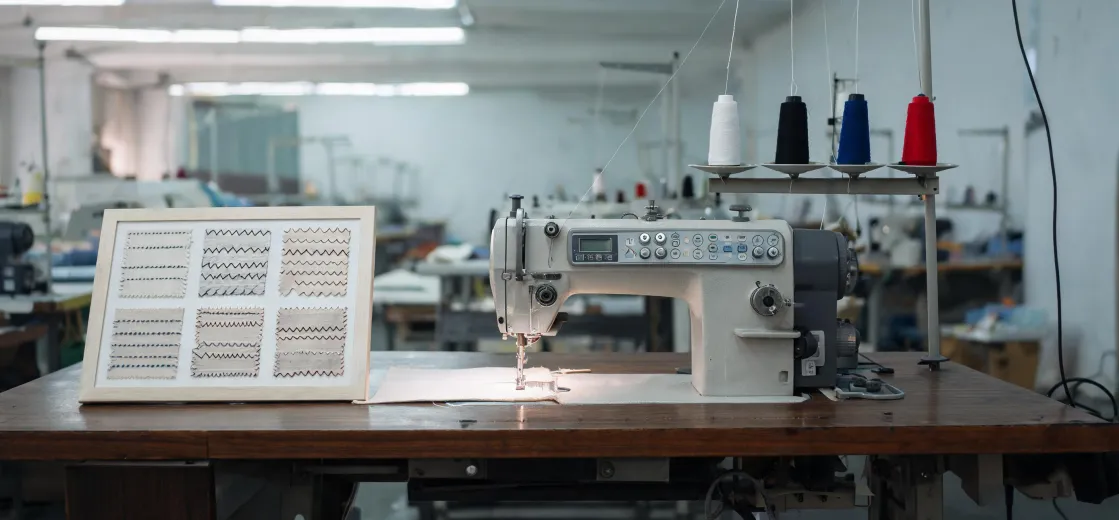
Our Q1 2024 quality audit flagged a recurring issue with thread tension on a batch of 500 units from a new, lower-cost supplier. We'd switched to save about 18% on unit cost. The savings vanished when we had to re-tune every single machine before shipment. That experience—and a few others like it—shaped how I think about value in the sewing equipment space.
The Setup: Why We Looked at Jack in the First Place
Back in late 2023, our procurement team was under pressure. Our 50,000-unit annual order for industrial lockstitch machines was growing, and the budget—well, it wasn't. The directive was simple: find a reliable brand that could deliver at scale without breaking the bank.
We'd been using a mix of Juki and Brother for years. Great machines, no argument there. But the price-per-unit had climbed about 12% since 2021, and our margins were feeling it. Someone on the team flagged Jack sewing machine brand reviews from colleagues in the Egypt and Uzbekistan markets, where Jack has a notable presence. The prices in those regions were significantly lower—often 30-40% below the big Japanese brands.
Here's the thing about global pricing: it's messy. A Jack sewing machine price in Algeria won't be the same as in the US because of tariffs, logistics, and distributor margins. But the baseline was clear: Jack was aggressively positioning itself as a mid-market workhorse. The question was whether it could hold up to the scrutiny of a quality auditor.
The Audit: What I Actually Checked
I reviewed three Jack models in early 2024: their industrial lockstitch (the 1501 equivalent), a single-head embroidery machine, and a multi-head unit. For reference, we were comparing against our existing Juki DDL-8700s and a Ricoma multi-head we'd used on a pilot project.
Build Quality and Consistency
First impression? The Jack machines looked the part. The castings were clean, the paint finish was uniform, and the controls felt solid. Not a Juki-level finish, but closer than I expected for the price. I ran a blind test with our floor team: same fabric, same thread, same stitch length. Honestly, I'm not sure why some operators preferred the feel of the Jack's handwheel over the Juki's—it was a subtle difference in feedback. But three out of five picked the Jack as 'smoother' without knowing which was which. The cost difference per unit was about $340. On a 50,000-unit run, that's $17 million in potential savings if the quality held up.
But then we tested consistency across five units of the same model. The variance was higher than I'm comfortable with. Tension settings drifted more between machines than our Juki baseline allowed. Normal tolerance for us is ±2% on stitch length consistency. Jack's first batch showed ±5%. The vendor claimed it was 'within industry standard.' We rejected the batch, and they re-calibrated at their own cost. Now every contract we sign with Jack includes a pre-shipment calibration check clause.
What to Look for in Embroidery Machine Features
This is where things got interesting. The single-head Jack embroidery machine we tested was, frankly, a pleasant surprise for basic work. The large color touchscreen was intuitive, and the automatic thread tension adjustment handled most fabrics well. But the multi-head? That's where the real learning happened.
I assumed 'same specifications' meant identical performance across the single-head and multi-head models from Jack. Didn't verify. Turned out the multi-head had a different thread path that created more friction on the upper thread. For simple designs on stable fabrics, it was fine. For dense satin stitches on stretchy knits? We got skipped stitches on about 8% of the pieces in our test run. The single-head handled the same design without issue.
Learned never to assume a brand's product line is uniform after that. What to look for in embroidery machine features, especially if you're considering Jack: test the exact model you intend to buy, at the speed you intend to run it, with the fabrics you actually use. I can't stress this enough. The dealer's demo unit might be tuned perfectly. Your production unit might not be.
The Turning Point: A $22,000 Lesson
We approved a shipment of 8,000 units based on positive results from the initial sample batch. The sample was great. The production batch? Not so much. The thread tension issue I mentioned earlier had crept back in on about 15% of units. Not enough to be catastrophic, but enough that we had to manually check each machine before it could ship to customers.
That quality issue cost us a $22,000 redo in labor and delayed our product launch by three weeks. The savings from switching to Jack were eaten up by that single incident. I knew I should have insisted on 100% inspection of the first production batch, but thought 'the sample was perfect—what are the odds the full run is significantly worse?' Well, the odds caught up with me.
To be fair, Jack's after-sales support was responsive. They sent a technician to our facility within a week and worked with our team to re-calibrate the affected units. They also updated their production line's quality check process based on our feedback. I'll give them credit for that—they listened and acted. But the damage to our timeline was done.
The Verdict: Is Jack Worth It?
This is where I need to be careful. I'm not saying Jack sewing machines are bad. I'm saying they're a different risk profile. For a growing shop that needs to scale capacity without the capital outlay of a Juki or Brother, Jack presents a legitimately compelling option. The Jack sewing machine brand review from our experience is: solid B+/A- hardware with C+ quality control consistency.
The fundamentals of sewing machine design haven't changed in decades. Jack uses many of the same component suppliers as the premium brands for things like motors and control boards. Where they differ is in assembly tolerances and final inspection rigor. If you have an in-house technician who can do a basic tune-up on every unit before it goes into production, Jack will probably serve you well. If you're expecting plug-and-play perfection at a discount, you're going to be disappointed.
Who Should Consider Jack
- Growing businesses that need multiple units and have a maintenance team.
- Price-sensitive markets (e.g., Algeria, Egypt, Uzbekistan) where distributor support is strong and import duties make premium brands prohibitively expensive.
- Basic production with consistent fabrics and simple designs—Jack's single-head embroidery machine is decent for this.
Who Should Look Elsewhere
- High-throughput operations where every minute of downtime costs more than the machine premium.
- Complex embroidery work on variable fabrics—stick with a brand that has proven multi-head consistency.
- Buyers without technical support staff—you'll need someone to handle the higher variance.
What I'd Do Differently (And What You Should Do)
Bottom line: the 'cheapest' option isn't just about the sticker price—it's about the total cost including your time spent managing issues, the risk of delays, and the potential need for redos. I'd still consider Jack for specific use cases, but I'd approach them differently now:
- Negotiate a pre-shipment inspection clause in your contract. Insist on a sample from the actual production run, not a hand-picked demo unit.
- Budget for in-house tuning. Plan an extra hour per machine for calibration and testing before it hits the production floor.
- Compare total cost of ownership, not just purchase price. Include labor for setup, expected rework rates, and warranty support responsiveness.
As of January 2025, based on our updated contracts, Jack has improved their calibration consistency. But the memory of that 8,000-unit redo is still fresh. I've never fully understood why some vendors consistently beat their quoted timelines while others consistently miss. My best guess is it comes down to internal buffer practices and how realistic their sales team is about production capacity. Jack's sales team was optimistic. Our timeline was not forgiving. That mismatch cost us.
If someone has insight into how Jack's production scheduling actually works, I'd love to hear it. We're considering a larger order for 2025, and I'd rather not repeat the experience.
Note: Price data referenced is based on publicly available distributor quotes in select markets as of Q4 2024. Verify current pricing through official Jack sewing machine dealers, as rates and availability vary by region and time.

Elise Marceau
Elise Marceau is an LED display and digital-signage systems analyst covering LED video walls, modular screens, transparent LED, control processors, and indoor or outdoor signage. She applies IEC 62368-1 safety principles while comparing pixel pitch, luminance, contrast, refresh rate, colour uniformity, viewing angle, ingress protection, power density, module serviceability, and signal redundancy. Her specification guides help integrators, venue operators, retailers, and procurement teams align viewing distance, ambient light, content format, installation access, electrical load, and lifecycle support.