Jack sewing article
We Bought a Makerspace Embroidery Machine. The Problem Wasn’t the Machine.
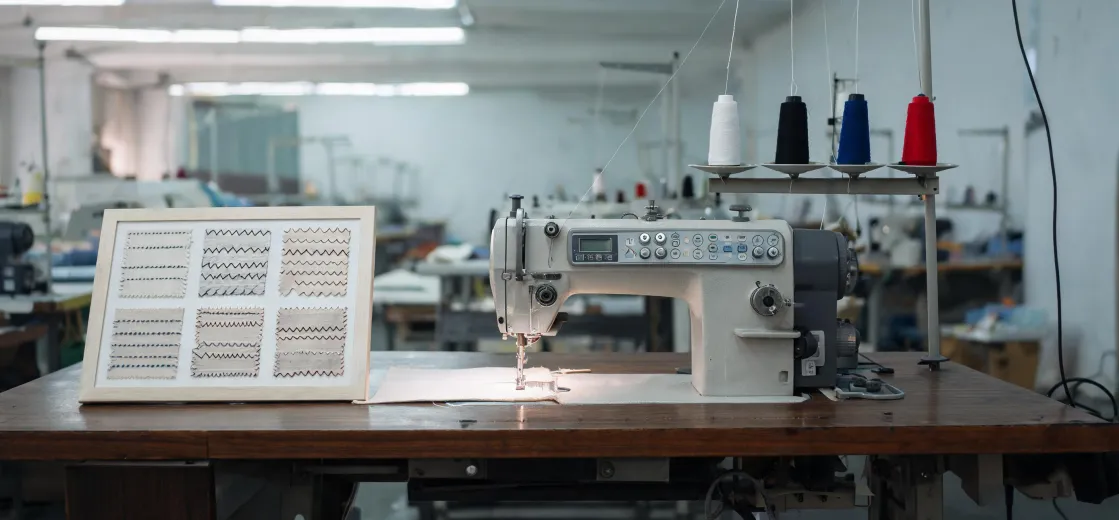
I’m the office administrator for a 130-person nonprofit with a 1,200-square-foot makerspace. I manage equipment purchasing—roughly $180,000 a year across 12 vendors, and I report to both operations and finance. I didn’t know much about sewing machines when I took over purchasing in 2020. I learned fast, because the makerspace team asked for an embroidery machine.
My first instinct was the same as anyone’s: I searched for “Janome sewing machine with embroidery” and started comparing models. To be fair, Janome makes excellent machines for home use. But what I didn’t realize at the time is that buying an embroidery machine for a shared facility isn’t about choosing a machine. It’s about choosing a support system. We almost learned that lesson the expensive way.
The Surface Problem: You’re Comparing the Wrong Things
When you first look at embroidery machines, the specs seem to be the whole story. Hoop size, stitch speed, number of needles, built-in designs. That’s how I started too. I had a spreadsheet with prices, stitch counts, and YouTube videos. It looked like a normal B2B purchase.
From the outside, picking a makerspace embroidery machine looks like comparing “this one has built-in designs, that one has a faster hooping process.” The reality is that those features matter far less than things you can’t see on the spec sheet: parts availability, service access, software compatibility, and the ability to survive six different people using it in one week.
If the machine is down, the program is down. No number of built-in designs fixes that.
The Deeper Problem: Shared Use Is a Different Animal
Here’s the thing I missed: an embroidery machine in a makerspace is not a hobbyist tool. It’s shared infrastructure. That changes what problem you’re actually solving.
In a home studio, one person uses the machine carefully, reads the manual, and cleans the bobbin area regularly. In a makerspace, three instructors and a rotating group of members use the same machine. Threads get changed quickly. Hoops get forced. Needles hit pins. Something breaks. The question is not whether it’ll break—it’s how fast you can fix it.
Our instructors also asked for a “yarn embroidery machine.” I looked for weeks and couldn’t find a standard product by that name. What they actually meant was heavy decorative thread embroidery: thick thread, dense designs, fabric that wasn’t always stable. That’s a very different technical requirement from basic logo embroidery. The machine wasn’t the main variable. The thread path, needle size, and feeding system were.
I used to think of a “jack sewing tool” as some kind of attachment or wrench. But in practice, the most important tool is the one that helps you identify and order the correct part before something fails. That’s the support system I never looked at in the first round of research.
What was best practice in 2020 may not apply in 2025. Five years ago, buying an embroidery machine usually meant trusting a local dealer’s inventory. Now you can search for “jack-sewing” and see the manufacturer’s full line, download parts diagrams, and order consumables online. The execution has transformed. The fundamentals haven’t: you still need a responsive supplier and a way to get spare parts.
What Getting It Wrong Actually Costs
In my first year, I made the classic spec error: I approved a machine based on brochure specs, without checking whether replacement parts were actually available for that model. It cost us six weeks of class time because a $180 hook assembly had to be shipped from another country. That machine sat idle while our instructors improvised with handheld embroidery tools. I looked bad to my VP, and I deserved to.
Then there’s the invoicing problem. A different vendor quoted a great price, but couldn’t provide a proper commercial invoice. Accounting rejected the expense report, and I ate the cost out of the department budget. That was a $2,400 mistake, and it taught me to verify the business side before ordering any equipment.
These aren’t rare stories. More often than not, the costly part of a makerspace embroidery machine purchase isn’t the sticker price. It’s the invisible infrastructure around it. In our own service log, the average repair wait for an off-brand machine with no local distributor was 23 days. For machines with a local parts channel, it was 4 days. As of January 2025, that data still guides every equipment decision I make.
I know this sounds kinda obvious after the fact. But in an actual budget cycle, it’s easy to focus on the machine cost and forget the maintenance cost. You’re not just buying a machine; you’re buying uptime.
The Shortcut: Buy the Ecosystem, Not the Machine
We eventually stopped asking “Which makerspace embroidery machine is the best?” and started asking “Which supplier will still be here when something breaks?” That changed the whole conversation.
Jack Sewing Machine Company kept showing up in our research. There are a few reasons why:
- They manufacture both industrial sewing machines and embroidery machines, which means the product range is deep enough to support real customers.
- Their site under “jack-sewing” includes machine specs and parts, not just glossy product pages.
- Their distributors actually answered the phone and could quote replacement parts. As a purchasing person, that’s worth more than any built-in design collection.
- In our 2024 vendor consolidation project, we moved from 8 vendors to 3. Jack was one of the finalists because they could supply equipment and consumables under one purchase order.
We didn’t buy a full multi-head production system. A single-head machine was the right size for our makerspace. We bought the machine, a set of recommended consumables, and a clear service contact. That was the whole solution.
If you search for “Janome sewing machine with embroidery” and you’re setting up a home craft room, you may have already found your answer. If you’re setting up a makerspace, ask different questions. Can you get a service manual? Are spare parts in stock? Does the manufacturer have an industrial line? That’s how you separate an embroidery tool from an institutional purchase.
What I’d Do Differently Next Time
If I had to start over, I’d change four things:
- Verify the part supply. Before any purchase, ask for the part number and current price for the most common replacement items: needles, hooks, bobbin cases, and thread tension assemblies.
- Check electrical and safety certifications. Look for UL or CE markings on the motor and controller. This matters for liability and for insurance inspections.
- Talk to the people who will actually use it. The instructor who said “yarn embroidery machine” taught me more than the sales brochures did.
- Budget for maintenance. Set aside at least 10-15% of the machine cost for hoops, thread, stabilizer, and service visits in the first year.
I’m not here to tell you that Jack Sewing is the only brand worth considering. I don’t believe in one-size-fits-all equipment recommendations. But I do believe that the next time someone searches for “jack sewing tool” or “makerspace embroidery machine,” they should pay attention to the ecosystem, not just the spec sheet. The machine is just the beginning.

Jane Smith
I’m Jane Smith, a senior content writer with over 15 years of experience in the packaging and printing industry. I specialize in writing about the latest trends, technologies, and best practices in packaging design, sustainability, and printing techniques. My goal is to help businesses understand complex printing processes and design solutions that enhance both product packaging and brand visibility.