Jack sewing article
The Quote That Looked Fine: What a Makerspace Embroidery Machine Really Costs
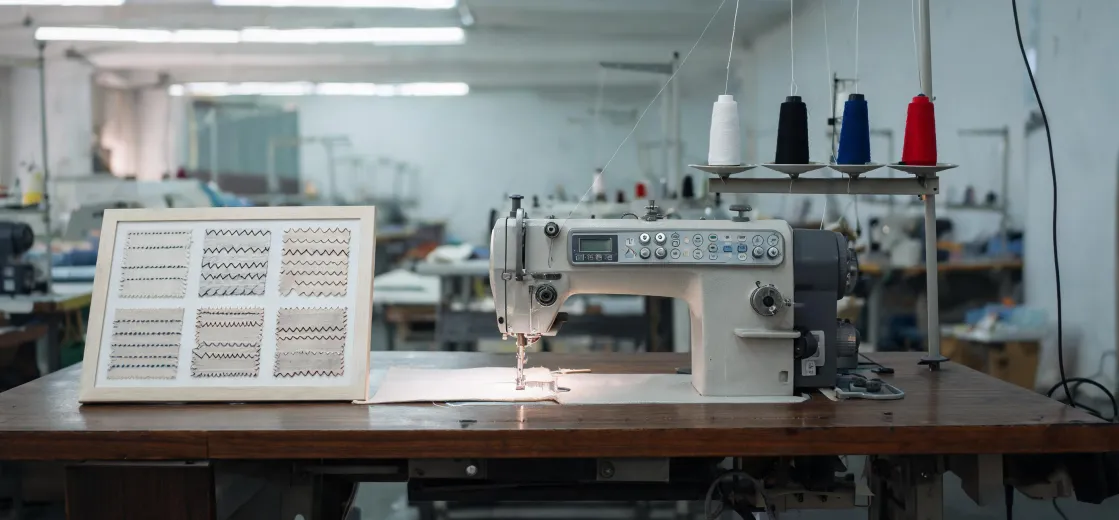
I'm the office administrator for a 180-person company. I manage about $120,000 in annual equipment and service orders across 14 vendors. I report to operations and finance. In 2024, I was asked to set up a small embroidery corner in our makerspace. Budget: $8,000. Timeline: eight weeks. How hard could it be?
Harder than expected. Not because the machines are bad. Because the quotes are almost never comparable. (This was back in 2024, before I learned to ask better questions.)
The Surface Problem: The Quote Looks Fine Until It Doesn't
My first quote for a single-head embroidery machine was $5,900. It looked reasonable. The vendor sent a PDF with a machine photo, a spec sheet, and a shipping estimate. I compared it to a Capella embroidery machine quote and a used industrial sewing machine quote. Same category. Different prices. I thought I was comparison shopping.
I was not. I was comparing scopes, not machines.
The spec sheet said 'cap embroidery capable.' Great. But capable with what? A cap driver embroidery machine attachment was not included. Neither were the right hoops. Neither was digitizing software. Neither was training for a makerspace full of part-time users. The quote was for a machine, not for a working embroidery station. That distinction cost us six weeks and about $3,400 in change orders.
Not ideal. But workable—after a lot of explaining to finance.
The Deeper Problem: You're Buying a System, Not a Box
Here's what I missed. A makerspace embroidery machine is not a production floor machine. It gets used by people who sew once a month, not eight hours a day. That changes the support, training, and consumables you need. A production shop might already own backing, thread, bobbins, and a mechanic. A makerspace usually owns none of that.
What I mean is that the 'cheapest' quote isn't just about the sticker price—it's about the total cost of ownership, which includes the cap driver, the hoops for different cap styles, the software to digitize logos, the training time for staff, the first-year maintenance, the spare parts, the freight, the customs, and the cost of downtime when the one person who knows the machine is on vacation. The sticker price is maybe half the story. Sometimes less.
When I compared our original quote and our final invoice side by side—same machine, different scope—I finally understood why experienced buyers don't ask 'what's the price?' first. They ask 'what's not included?'
The Cap Driver Confusion
A cap driver embroidery machine attachment is not a universal accessory. It has to match the machine model, the cap frame system, and the embroidery field. If you buy a machine that can embroider caps 'with optional attachment,' confirm the attachment is in stock, compatible, and included in the quote. Otherwise you're buying a flatbed machine and hoping.
We didn't. The attachment arrived three weeks late. The first batch of caps came out crooked (ugh). The vendor blamed the hooping. We blamed the quote.
The Software and Training Trap
Embroidery software is another quiet line item. Some machines come with basic software. Some don't. Some software is Windows-only. Some requires a dongle. Some charges per seat. For a makerspace, per-seat licensing matters because you might have five volunteer instructors. For a small business, it matters because your marketing person may need to add a logo to a jacket.
Training is similar. A two-hour handoff is not training. A makerspace needs documentation, a quick-reference guide, and a way to log who used the machine last. Without that, the machine becomes a $6,000 dust collector. Worse than expected.
The Parts and Logo Question
I started with jack-sewing parts lists and dealer pages, then moved to jack sewing machine reviews after a colleague mentioned the brand. What I learned: reviews are useful, but only if they're from actual owners with the same use case. A review from a factory floor tells you little about a makerspace. A review from a hobbyist tells you little about a small business. I looked for reviews that mentioned parts availability, cap driver performance, and dealer support.
I also learned to check the jack sewing machine logo and serial plate before buying parts. Counterfeit and gray-market accessories exist. If the logo looks off or the part number doesn't match the manual, walk away. That's not brand loyalty. That's just avoiding a return.
The Cost of Getting It Wrong
The upside of the cheaper quote was saving $1,200. The risk was a machine that couldn't run caps without a $900 driver and a week of downtime. I kept asking myself: is $1,200 worth potentially losing the trust of operations and the makerspace members? The expected value said maybe. The downside felt catastrophic.
We went with the cheaper quote anyway. Then we paid for the missing pieces. The final cost was $9,300—$1,300 over budget. Finance flagged it. I had to explain why the original quote was incomplete. That conversation took longer than the vendor negotiation.
The real cost wasn't the $1,300. It was the six weeks of delays, the frustrated members, and the fact that I looked like I didn't know how to read a quote. A lesson learned the hard way.
What I Do Now
I use a one-page scope sheet for every embroidery machine quote. Same categories. Same assumptions. Then I compare.
- Machine model and embroidery field size
- Cap driver embroidery machine attachment: included, compatible, in stock?
- Hoops: flat, cap, sleeve, magnetic—how many, which sizes?
- Software: seats, dongle, file formats, updates
- Training: hours, documentation, ongoing support
- Freight, customs, duties, installation
- First-year maintenance and spare parts kit
- Warranty terms and who pays return shipping
I also ask for an all-in quote with every fee listed upfront. I've learned to ask 'what's NOT included' before 'what's the price.' The vendor who lists all fees upfront—even if the total looks higher—usually costs less in the end.
For color-critical logo patches, I check the tolerance.
Industry standard color tolerance is Delta E < 2 for brand-critical colors. Delta E of 2-4 is noticeable to trained observers; above 4 is visible to most people. Reference: Pantone Color Matching System guidelines.
That doesn't replace a thread chart, but it gives you a number to discuss with the vendor.
And I keep a timestamp on every price. As of January 2025, the replacement cap driver for our model was quoted at $850. Freight from the same dealer was $310. Training was $500 for two sessions. Those numbers may change. Verify current pricing before you budget.
Transparent pricing isn't about getting the lowest number. It's about getting the real number. The first quote that looks higher may be the only one you can actually afford.
Rina Matsuda
Rina Matsuda is a garment-production machinery analyst covering industrial lockstitch, overlock, coverstitch, buttonhole, pattern-sewing, and multihead embroidery machines with feeding and thread-management systems. She applies ISO 10821 safety requirements while examining stitch length, stitch density, thread tension, seam balance, presser-foot pressure, needle system, sewing speed, trim cycle, hoop registration, changeover time, and defect rate. Her technical guides help apparel factories, embroidery businesses, and production engineers match machine configuration, automation level, material behavior, operator workflow, and line-capacity targets.