Jack sewing article
The 36-Hour Jack-Sewing Rescue: What a Bag Factory Taught Me About Machine Specs
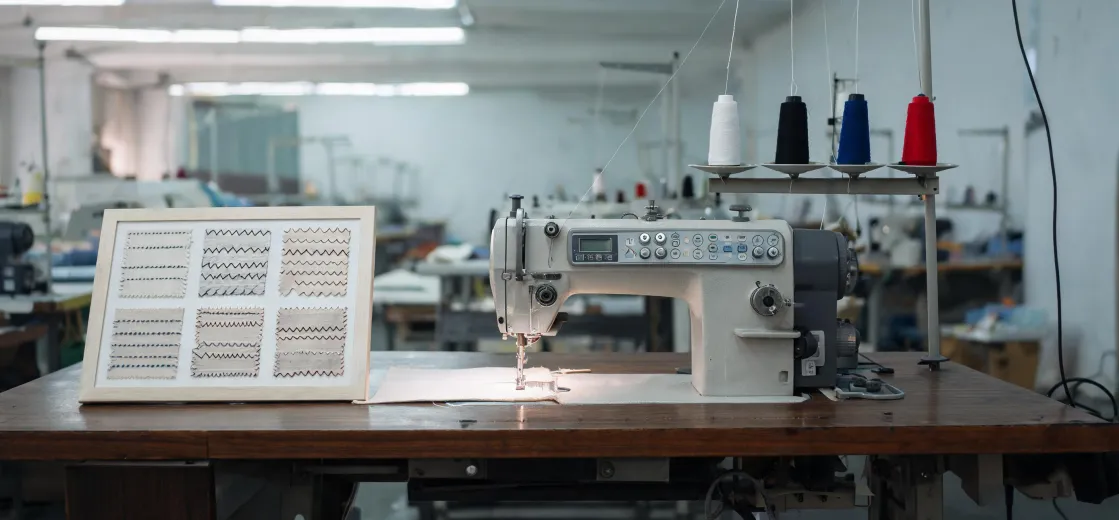
On a Tuesday in March 2024, at 6:40 p.m., I was closing down my laptop when the phone rang. The man on the other end introduced himself as Jasur, a factory manager in Tashkent. He didn't waste time on pleasantries: his bag-making line had just lost its main sewing head. Not a worn needle or a tension issue — the machine was dead. He had a container of laminated polypropylene bags due for export Thursday morning. That gave us 36 hours.
The normal turnaround for an industrial sewing machine for bag making is five to seven business days, even when the machine is sitting in a warehouse. Customs, trucking, unloading, setup. They all eat time. Thirty-six hours is not a normal turnaround. It's a triage situation. In my role coordinating urgent equipment orders across the jack-sewing distribution network, I've handled more than 40 rush orders in the last five years. Our team processes about that many in a busy quarter. The orders range from a $500 single-head machine to a $15,000 multi-head production setup. So I know the drill.
The Bag Machine That Wasn't a Bag Closer
The first thing I asked Jasur was 'What exactly are you sewing?' Because if you've ever ordered an industrial sewing machine for bag making, you know that there's a good chance a supplier will push you toward a portable bag closer. A handheld model. That works fine if you're closing the tops of filled bags. It's useless if you're sewing the bags themselves.
Jasur described nine-layer gusseted bottoms, heavy laminated fabric, and webbing straps. That's a flatbed walking-foot job with a compound feed. The machine has to pull the material evenly from both sides, or the layers shift and the seam puckers. It also needs a bigger hook than a standard garment machine, because the thread is heavier and you can't stop mid-seam to load a bobbin.
People also ask me about an embroidery sew machine when they want branded bags. A basic embroidery sew machine can put a logo on a tote bag, and a modern embroidery machine will do it faster. But neither one will sew a nine-layer strap onto a bulk bag. It's a different process. Different tool.
Matching the Old Machine to a Jack Model
The next part of the puzzle: Jasur asked for 'the same model as before.' His old machine had been rebuilt twice and the nameplate was long gone. No brand. No serial number. Just a machine that had spent ten years doing a job meant for a machine twice its price.
We keep a reference sheet of Jack sewing machine models because this happens everywhere. There are Jack sewing machine models for garment stitching, denim, leather, and bag making. The one that matched Jasur's setup was a heavy-duty compound-feed model with a walking foot, not the faster single-needle garment style. It took us an hour to match the old machine's feed timing and stitch range from photos and videos. That hour is why the order didn't go sideways.
Then the warehouse team flagged a problem.
The Missing Accessory Kit
The only machine close enough to Jasur's factory was sitting in a dealer's showroom in Almaty, 2,200 km away. It had the right model number. It had the right motor. What it didn't have was the right jack sewing machine accessory kit.
Let me explain. Every new Jack machine ships with a standard kit: bobbins, needles, a few screwdrivers, oil. That's fine for normal use. But bag making with laminated polypropylene needs more: Teflon-coated presser feet so the material drags less, heavy needles, a larger bobbin case, and sometimes a roller foot for webbing. The dealer's unit had the standard kit, not the bag-making package.
Our internal data from more than 200 rush jobs says the majority of expedited orders that fail do so because of a missing accessory, not a broken machine. This order was about to prove that rule.
I went back and forth for two hours on this one. Every spreadsheet said take the dealer machine. My gut said check the kit first. The dealer's machine was coming from Kazakhstan; the accessory package was in our regional warehouse in the opposite direction. We could either ship the machine as-is and fix the accessories later, or pay for a split dispatch: machine overnight from Almaty, accessories by airfreight from our warehouse. The split dispatch cost $460 on top of the machine's $3,200 base. Missing the deadline, Jasur told me later, would have triggered a $20,000 penalty clause.
Everything I'd read about emergency sourcing says the answer is always the fastest transport option. In practice, the fastest option without the right kit isn't fast at all. That's a lesson I keep having to learn.
I'll be honest. I still second-guess those two hours. Maybe if we'd made the call faster, we'd have saved the freight fee. But if we'd skipped the kit check, we'd have had a machine that was technically right and practically wrong. That's the kind of mistake that turns a rescue into a return.
At 4:55 a.m., the Crate Went Down
Thursday morning, our delivery driver dropped the crate at Jasur's loading dock with 65 minutes to spare. His mechanics were swapping the presser feet by 8 a.m. By noon, the first roll of bags came off the line.
There was no dramatic video call, no last-second heroics. Just a machine that fit the spec and an accessory kit that matched the fabric. Jasur called again a week later to ask whether a modern embroidery machine would make sense for logo work on the same bags. I said yes, but not yet. Buy a modern embroidery machine when you have a digitizing plan and an operator who's been trained. Don't buy one because you're still in rescue mode.
The Real Lesson: Verification Is Cheap
Here's what I keep coming back to. The machine wasn't the hero. The hero was the 15 minutes we spent confirming the feed timing, hook size, presser feet, and the accessories before we hit quote. That 15 minutes prevented a six-day round-trip return and a client eating a $20,000 penalty clause.
I didn't always believe this. In 2023, we rushed a machine to a textile client and skipped the final accessory check to save a day. The machine arrived, but the foot height was wrong for the fabric stack. We paid $800 to fly a technician in with the right parts. That $800 is not an expense I want to repeat. So after the Tashkent order, I added a 12-point checklist to our rush-order form. It covers fabric layers, thread weight, stitch length, presser feet, hook size, bobbin capacity, motor speed, voltage, table dimensions, training availability, spare parts, and the accessory kit. The checklist isn't paperwork. It's the cheapest insurance we have.
5 minutes of verification beats 5 days of correction.
If you're ever in a 36-hour situation, don't ask a supplier 'which machine is best?' Ask them to walk you through the spec sheet with your actual material sample. Ask about the accessory kit before you ask about the price. Ask which Jack sewing machine models they've actually set up for bag making, not just which models are in stock.
And if you're planning a plastic bag line, call before the old machine dies. Not because I want the business, but because a rushed decision is how you end up with a portable bag closer when you needed a walking-foot flatbed, or a jack sewing machine accessory kit that doesn't include the presser foot you actually need. Trust me on this one.
Jasur still has my number. He says next time he'll call two weeks earlier. I'll believe it when I see it.

Elise Marceau
Elise Marceau is an LED display and digital-signage systems analyst covering LED video walls, modular screens, transparent LED, control processors, and indoor or outdoor signage. She applies IEC 62368-1 safety principles while comparing pixel pitch, luminance, contrast, refresh rate, colour uniformity, viewing angle, ingress protection, power density, module serviceability, and signal redundancy. Her specification guides help integrators, venue operators, retailers, and procurement teams align viewing distance, ambient light, content format, installation access, electrical load, and lifecycle support.