Jack sewing article
Jack Sewing Machine USA: 7 FAQ Answers on Accessories, Embroidery Machines, and Hidden Costs
-
What is jack-sewing, and what do they actually sell?
-
Can you buy Jack machines in the USA?
-
What should a jack sewing machine accessory kit include?
-
How does the Brother PE570 compare to a Jack embroidery machine?
-
What's the best embroidery machine for home use?
-
What watt sewing machine motor do I need for a Jack industrial machine?
-
What's the real cost of buying a Jack industrial machine?
I handle purchasing for a 120-person apparel company. That means I've ordered everything from thread to industrial machines—including a few Jack models and a lot of spare parts. I've been in this role since 2020, and people ask me the same questions about Jack sewing machines over and over. These are the answers I usually give. No marketing fluff, just what I've learned the hard way.
What is jack-sewing, and what do they actually sell?
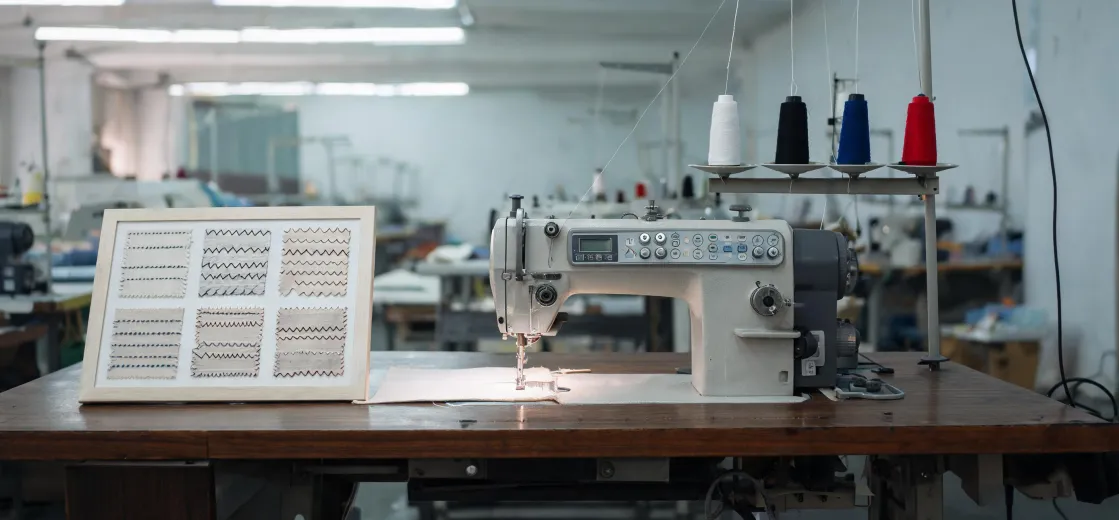
jack-sewing (the brand name shows up as "jack-sewing" or just "Jack" depending on the distributor) makes industrial sewing machines, embroidery machines, and sewing machine parts and accessories. Their industrial lineup includes lockstitch models like the 1501, which is one of the machines we run in our production room. They also offer single-head and multi-head embroidery machines for commercial work.
For us, the appeal is simple: one brand covers both our machines and most of our replacement parts. We don't want to juggle eight vendors when three will do. If you're looking for home-use sewing machines, Jack isn't really that category—they're primarily commercial and industrial. That distinction has saved me from ordering the wrong thing more than once.
Can you buy Jack machines in the USA?
Yes, you can. We're in Ohio and bought our Jack machines through a US-based distributor. Parts and accessory kits are also available online if you search for "jack sewing machine accessory kit." But before you order, check a few things:
- Does the distributor have a service network in your area, or are you on your own if something breaks?
- What's the warranty period, and who actually honors it—the distributor or the factory?
- How long does a typical parts order take to arrive?
A delivery delay in March 2023 changed how I think about backup parts. One critical shipment came in three weeks late, and we almost missed a deadline with a major client. Now I keep spare knives, needles, bobbins, and a few common parts on hand. It adds some upfront cost, but it's way cheaper than downtime.
What should a jack sewing machine accessory kit include?
When we ordered our first accessory kit, it came with a mix of presser feet, bobbins, needles, screwdrivers, and some specialized tools. Honestly, about half of it was useful for our workflow. The other half went into a drawer and never came out.
If I were building a starter kit today, I'd focus on these items:
- Spare bobbin cases—these get lost and bent more than you'd expect
- Extra needles in the sizes we use daily (multiple packs, not just one)
- A proper seam ripper and a pair of fine tweezers
- Screwdrivers sized to the machine, not the ones from a hardware store
- Machine oil and replacement thread guides
Here's the thing nobody tells you: accessory kits are sold by piece count, not by usefulness. The most frustrating part is paying for 50 pieces and regularly using five. I'd rather buy a smaller kit with the right stuff than a big kit that looks complete. That said, when we bought our second machine in 2024, we just got the factory kit because it came with a thread stand and an extra bobbin winder—which suited our setup.
How does the Brother PE570 compare to a Jack embroidery machine?
The PE570 is a home embroidery machine made by Brother. It shows up constantly in searches for embroidery machines, and a few people have asked why we don't just buy those for our production work. Here's the reality: the PE570 is a completely different category from what we run.
Key differences:
- Hoop size. The PE570 uses a small hoop, so you can't stitch designs that are more than roughly 4" x 4". We regularly do larger placements on jackets and bags.
- Thread changes. The PE570 requires manual thread changes between colors. A commercial machine handles automatic color changes across multiple pieces at once.
- Speed and duty cycle. Home machines aren't built to run 8 hours a day, five days a week. An industrial machine is.
I'm not knocking the PE570—it's a fine machine for learning embroidery at home. But if you're a business, you need commercial equipment. Buying a home machine for production is like buying a sedan for a delivery fleet: it technically moves, but it'll cost you in the long run.
What's the best embroidery machine for home use?
It depends on what "home use" means to you. If you're making gifts and doing small projects, a home embroidery machine like the PE570 (or similar single-needle models from the major brands) is a solid choice. They're compact, easy to store, and the learning curve isn't steep.
If you're testing a small business idea—custom hats, shirts for local teams, that kind of thing—I'd seriously consider a single-head commercial embroidery machine instead. The upfront cost is higher (roughly $5,000-9,000 for an entry-level single head, based on quotes we gathered in 2024; verify current pricing), but the speed and automation make sense once you're doing more than a handful of pieces per week.
My experience is based on about 30 equipment orders across our company's history. If you're strictly a hobbyist, the calculus is different and a home machine is fine. But whatever you pick, budget for software and training. Embroidery machines don't run themselves. Design digitizing is a skill, and the software isn't cheap. People often overlook this until after they've already bought the machine.
What watt sewing machine motor do I need for a Jack industrial machine?
This one catches people off guard. Most Jack industrial sewing machines use clutch motors rated in watts—commonly 400W or 550W depending on the model. Your machine's manual should specify the exact rating. Match it. There's a temptation to upgrade to a bigger motor, but a stronger motor isn't automatically better.
We bought a generic motor once because it was way cheaper than the specified part (a $75 difference, which felt like a win at the time). The machine vibrated, stitched unevenly, and we burned more time troubleshooting than we saved. I had to explain that one to my VP—not a fun meeting.
Another thing to watch: if you see a listing for a "watt sewing machine" with an unbranded photo and a price that looks too good, check the model number and documentation carefully. Generic motors from random online listings often don't hold up under daily production use. Verified specs, not price, should drive that purchase.
What's the real cost of buying a Jack industrial machine?
The sticker price isn't the final number. When we bought our multi-head embroidery machine in 2024, the approved quote came out about 18% higher than the base price once we added shipping, installation, initial training, and a starter set of consumables. That's not a scam—it's just how equipment purchases work. But you should see every line item in writing before you commit.
I feel strongly about this: transparent pricing beats a low base price with surprises later. I've learned to ask "what's not included" before I ask "what's the price." The vendor who lists all fees upfront—even if the total looks higher—usually costs less in the end. The vendor who hides fees until the invoice? They don't get a second order from me.
Rush shipping can add 25% to 100% depending on the carrier and how fast you need it (based on quotes we received in 2024; verify current rates with your distributor). Setup fees vary by machine type. And don't forget consumables—needles, bobbins, oil, thread—which quietly add up over the first year. Budget for them before you buy, not after.

Elise Marceau
Elise Marceau is an LED display and digital-signage systems analyst covering LED video walls, modular screens, transparent LED, control processors, and indoor or outdoor signage. She applies IEC 62368-1 safety principles while comparing pixel pitch, luminance, contrast, refresh rate, colour uniformity, viewing angle, ingress protection, power density, module serviceability, and signal redundancy. Her specification guides help integrators, venue operators, retailers, and procurement teams align viewing distance, ambient light, content format, installation access, electrical load, and lifecycle support.