Jack sewing article
Jack Sewing Machine Review for U.S. B2B Buyers: PE545, SE2000, and Brother New Embroidery Machines
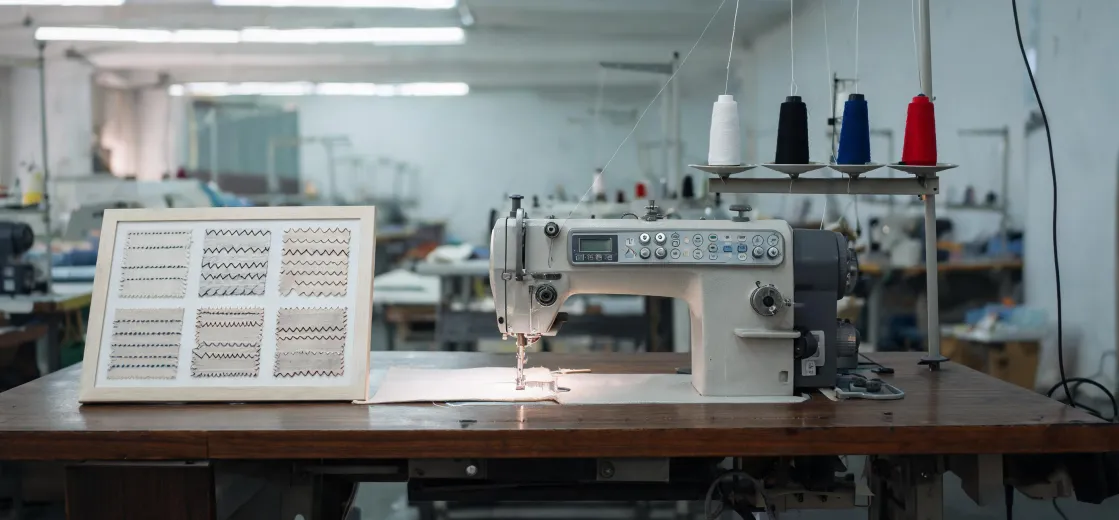
-
Start Here: The Approval Decision, Not the Brand Debate
-
Why I'm Qualified to Say This
- What Jack Sewing Machine USA Buyers Actually Need to Verify
-
Where Brother New Embroidery Machines Fit in the Evaluation
-
My Approval Checklist for Jack Sewing Machine Review
-
Boundaries: When This Advice Doesn't Apply
Start Here: The Approval Decision, Not the Brand Debate
When buyers search for a jack-sewing review, they often want a simple verdict. If you're buying a Jack sewing machine for a U.S. production floor, the decision isn't Jack or nothing. It's whether the exact model, distributor support, and spare-parts path match your line. I approve machines only after a first-article run and a documented spec match. In our Q1 2024 quality audit, I rejected 12% of first-delivery industrial machines because voltage, needle set, or accessory kits didn't match the approved PO.
That's the short answer. For most B2B buyers, a Jack sewing machine review should start with service coverage, not sticker price. The same goes for the PE545 embroidery machine and SE2000 embroidery machine. If your local tech can't get parts, the machine is a timeline risk no matter who made it.
Why I'm Qualified to Say This
I'm a quality and brand compliance manager at a commercial equipment company. I review every machine and accessory package before it reaches customers—roughly 200+ units a year. We've been running verification protocols since 2022, and I've learned the hard way that a showroom demo hides more than it shows.
Dodged a bullet last year when I double-checked voltage on a shipment before approving it. The quote said 220V, the machine labels said 380V, and the distributor was one email away from sending it to a U.S. shop. That would've been a return, a delay, and an angry customer. No spec, no approval. Simple.
Spec sheets are marketing until a machine is powered, threaded, and run on your material.
What Jack Sewing Machine USA Buyers Actually Need to Verify
When people ask about jack sewing machine usa availability, they usually mean two things: can I get it, and can I keep it running? Those are different questions. The first is freight and customs. The second is parts, training, and local service.
For B2B use, I put Jack in the same evaluation frame as any industrial brand. I don't assume the logo guarantees consistency. I don't assume the lowest quote is the lowest cost. I check:
- Voltage and plug configuration for your facility, not the warehouse it shipped from.
- UL/ETL or equivalent listing where required by your insurer or facility code.
- Parts list with U.S. stock levels and typical lead times for consumables.
- Needle system, bobbin size, and whether your existing accessories are compatible.
- Training: who teaches your operators, and in what language.
- Warranty process: who pays labor, who ships parts, and what voids coverage.
The most frustrating part of vendor management is when the same issue repeats despite clear specs. You'd think a PO would prevent misunderstandings, but interpretation varies. That's why I now require a signed spec sheet with photos of the exact configuration before release (ugh, every single time).
PE545 Embroidery Machine: Sampling First, Scale Second
The PE545 embroidery machine comes up in conversations about smaller production cells, sampling, and personalized runs. In my experience, that's where it fits best. If you're approving a PE545, run a test on your actual fabric and stabilizer. Don't approve based on a logo on a cap. Check registration, thread breaks, and trim consistency across a 30-minute run.
Why 30 minutes? Because short demos lie. A machine can look perfect for five minutes. At minute 25, tension drift and heat build-up start to show. I learned that in 2023 after a vendor demo that was flawless—until we ran it at our shop. The difference wasn't the brand. It was the setup and the material.
SE2000 Embroidery Machine: Throughput Needs a Support Plan
The SE2000 embroidery machine is usually part of a higher-throughput discussion. If you're considering it, the machine itself is only half the decision. The other half is your uptime plan. Who fixes it when a rotary hook or drive board fails? How long is the downtime? What's the cost of a spare board versus a spare machine?
I can only speak to U.S. domestic operations. If you're dealing with international logistics, customs, or multiple production sites, there are probably factors I'm not aware of. For us, the rule is simple: if the local service response is over 48 hours, we don't put that model on a critical line.
Where Brother New Embroidery Machines Fit in the Evaluation
Brother new embroidery machines often show up in RFQs as a benchmark. That's fair. They have a strong reputation for user interface and support in some segments. But a benchmark isn't a fit. I don't attack Brother, and I don't assume Jack beats it on every spec. I compare what matters for the job: hoop size, needle count, max speed, voltage, software compatibility, and local service.
If a Brother new embroidery machine is on your shortlist, compare the total workflow, not just the brochure. If your operators already know Brother, switching software and muscle memory has a real cost. If your shop is standardized on Jack parts and service, adding a different brand can create another spare-parts silo. The best choice depends on your workflow, not a slogan.
My Approval Checklist for Jack Sewing Machine Review
Before I sign off on any Jack sewing machine, PE545, or SE2000, I use a first-article inspection. It's not fancy. It's just consistent.
- Match the PO to the nameplate. Model, voltage, plug, serial range, and accessory kit.
- Run the actual job. Same thread, fabric, and operator who will use it.
- Measure the output. Stitch length, tension, embroidery registration, trim length, and noise/vibration.
- Check the parts path. Confirm two sources for the five most likely failure items.
- Document the rejection criteria. If it fails, what happens? Who pays? How fast?
That last point matters more than most buyers think. A machine that fails in the showroom is annoying. A machine that fails during a peak order is a business problem. The quality issue that cost us a $22,000 redo taught me that.
Boundaries: When This Advice Doesn't Apply
This worked for us, but our situation was a mid-size B2B operation with predictable ordering and domestic service. Your mileage may vary if you're a seasonal business with demand spikes, a one-person shop, or a buyer sourcing for resale without a service network.
Also, this was accurate as of January 2025. The U.S. market changes fast—tariffs, distributor agreements, and model availability can shift. Verify current pricing, voltage requirements, and warranty terms with your distributor before budgeting. I learned these vendor evaluation criteria in 2020, and the landscape has already evolved.
So here's the bottom line: don't pick a Jack sewing machine because someone online called it the best. Pick it because the specs match, the first-article run passes, and the parts plan survives a bad Friday. That's what keeps a production floor moving.

Elise Marceau
Elise Marceau is an LED display and digital-signage systems analyst covering LED video walls, modular screens, transparent LED, control processors, and indoor or outdoor signage. She applies IEC 62368-1 safety principles while comparing pixel pitch, luminance, contrast, refresh rate, colour uniformity, viewing angle, ingress protection, power density, module serviceability, and signal redundancy. Her specification guides help integrators, venue operators, retailers, and procurement teams align viewing distance, ambient light, content format, installation access, electrical load, and lifecycle support.