Jack sewing article
Jack Sewing Machine Brand FAQ: Overdeck, Senior Machines, and Maintenance
-
What is the Jack Sewing Machine brand, and why does it keep coming up?
-
What's an overdeck sewing machine, and do we need one?
-
What is a senior sewing machine, and when is it worth it?
-
How do I evaluate the Jack Sewing Machine company without getting lost in specs?
-
What does industrial sewing machine maintenance actually involve?
-
Where do parts and accessories fit into total cost?
-
What mistakes should I avoid when buying industrial sewing machines?
-
How do I compare a Jack-Sewing quote with other industrial sewing machine companies?
I'm an office administrator for a 140-person company. I manage all equipment ordering—roughly $180,000 annually across 12 vendors. I report to both operations and finance. When I took over purchasing in 2020, I thought buying an industrial sewing machine was just comparing price and delivery. It's not. In our 2024 vendor consolidation project, I had to sort through Jack-Sewing, overdeck sewing machine specs, senior sewing machine options, and maintenance plans. Here are the questions I wish I'd asked earlier.
What is the Jack Sewing Machine brand, and why does it keep coming up?
The Jack Sewing Machine brand is a major industrial sewing machine company. They make industrial sewing machines, embroidery machines, parts, and accessories. For a B2B buyer, the brand matters less than the dealer network. As of January 2025, Jack-Sewing has distribution in many markets, including Uzbekistan and Egypt, which tells me parts can be sourced globally. But global availability isn't the same as local support. I ask: who services it? What's the lead time on a tension spring? The Jack Sewing Machine company competes in the same general space as other established industrial sewing machine brands, but I don't pick sides. I look at total cost. The brand is a starting point, not the whole decision.
What's an overdeck sewing machine, and do we need one?
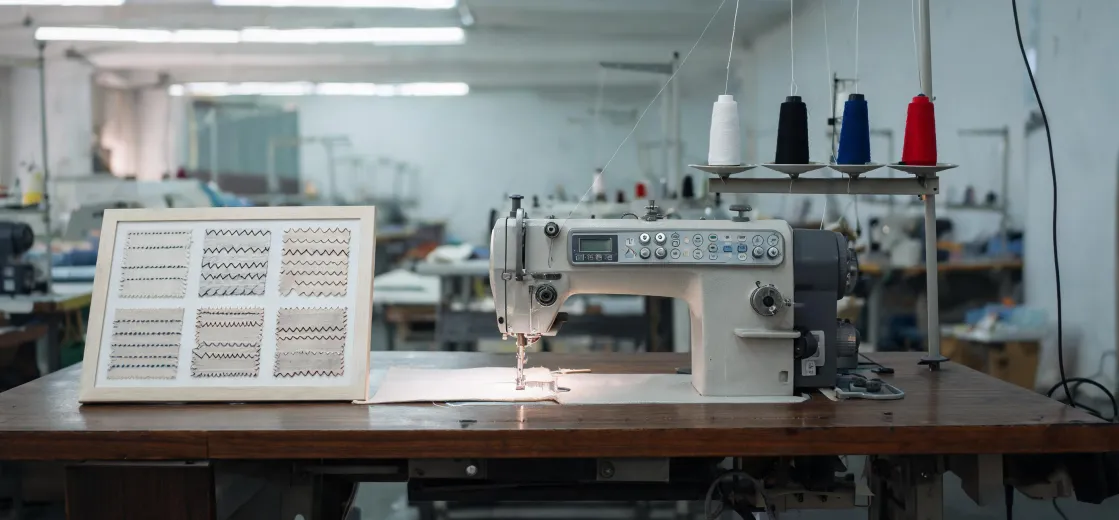
In my experience, an overdeck sewing machine is a setup for overedge or covering stitches—often a coverstitch or overlock-style unit. It's not a replacement for a standard lockstitch machine. It's for edge finishing, hemming, and stretch seams. Do you need one? Only if your product needs clean edge finishing at volume. If you're making flat seams or straight stitching, a standard industrial machine is enough. When I compared a standard lockstitch cell and an overdeck setup side by side, the overdeck cut finishing time by about 20% on our knit line. But it also added training and maintenance. Don't buy one because a spec sheet sounds advanced. Buy it because your product and volume demand it.
What is a senior sewing machine, and when is it worth it?
In our plant, senior sewing machine means a heavier-duty, higher-speed machine meant for an experienced operator and continuous production. It's not a starter unit. It's worth it when you have high daily volume, thick materials, or tight tolerances. We bought a senior sewing machine for our denim line in 2023. It cost more upfront, but it held timing better and needed fewer adjustments. If your volume is low or your operators are still learning, a standard machine is enough. The key is matching the machine to the operator and the material, not buying the most advanced model. A senior sewing machine can be a waste if nobody on your floor is ready to run it.
How do I evaluate the Jack Sewing Machine company without getting lost in specs?
Start with three things: parts availability, service response, and training. Specs like stitches per minute, needle bar stroke, and presser foot lift matter, but they don't tell you how long the machine will sit idle. I ask for a parts list with lead times. I ask for two local references. I ask who will train my operators. The Jack Sewing Machine company may have a wide product range, but wide isn't the same as right for you. A dealer once told me, 'this isn't our strength—here's who does it better.' That honesty earned my trust for everything else. A good dealer will tell you what they don't do well. That's a green flag.
What does industrial sewing machine maintenance actually involve?
More than oiling. Our industrial sewing machine maintenance schedule includes daily air-filter checks, weekly tension and timing checks, monthly belt and motor inspections, and annual lockout/tagout service. OSHA 29 CFR 1910.147 applies when we lock out machines for major repairs. I used to think maintenance was just cleaning and oil. Then we skipped a timing check and lost two days of production. Now I track it in a shared calendar. For a small floor, start with the manual and a simple log. As of January 2025, most manufacturers publish maintenance intervals. Follow those first. If a dealer can't give you a maintenance schedule, that's a warning sign.
Where do parts and accessories fit into total cost?
They're the quiet budget killer. The machine price is obvious. The parts and accessories are not. I now ask for a first-year consumables list: needles, presser feet, bobbins, belts, tension springs, and feed dogs. For embroidery machines, add hoops and backing. For industrial sewing machines, add gauges and attachments. When I compared two quotes side by side—same class of machine, different accessory packages—the lower machine price ended up 18% more expensive after parts. Plus, I check if parts are generic or proprietary. Generic is cheaper and faster. Proprietary can be fine if the dealer stocks it locally. Bottom line: ask for a total first-year cost, not just the machine price.
What mistakes should I avoid when buying industrial sewing machines?
Three mistakes. First, buying on price alone. Second, ignoring operator feedback. Third, not checking return and warranty terms. They warned me to check parts availability before buying. I didn't listen. The machine sat for three weeks waiting on a $12 tension spring. That mistake cost us a rush order. Also, don't assume a senior sewing machine is right for a junior operator. And don't sign a contract that doesn't state who pays for shipping on warranty repairs. I won't claim any brand is 100% defect-free. No brand is. So the goal is a dealer who fixes problems fast. That's worth more than a slightly lower quote.
How do I compare a Jack-Sewing quote with other industrial sewing machine companies?
Use the same checklist for every vendor: machine model, included accessories, training hours, warranty length, parts lead times, service response time, and payment terms. I score each vendor from 1 to 5 on those. I don't compare brand names in a vacuum. Every established brand has strengths. I'm not going to attack any of them. I care about the dealer behind the machine. If the Jack Sewing Machine company quote comes with a local service tech and a stocked parts room, that's a strong signal. If it comes with a low price and no support, I pass. Bottom line: the best machine is the one that keeps running when your order book is full.

Elise Marceau
Elise Marceau is an LED display and digital-signage systems analyst covering LED video walls, modular screens, transparent LED, control processors, and indoor or outdoor signage. She applies IEC 62368-1 safety principles while comparing pixel pitch, luminance, contrast, refresh rate, colour uniformity, viewing angle, ingress protection, power density, module serviceability, and signal redundancy. Her specification guides help integrators, venue operators, retailers, and procurement teams align viewing distance, ambient light, content format, installation access, electrical load, and lifecycle support.