Jack sewing article
How to Buy Industrial Sewing Machines Without Overpaying: A Cost Controller's 7-Step Checklist
-
1. Map the machine to the actual job
-
2. Shortlist real models, not brands
-
3. Get a delivered price, not a sticker price
-
4. Check parts and service before you fall in love with a machine
-
5. Look at the software and user ecosystem
-
6. Calculate TCO, not just unit price
-
7. Start with a pilot machine
-
Common mistakes to avoid
I'm a procurement manager at a 220-person garment production company. I've managed our equipment budget—around $180,000 annually—for six years, negotiated with 30+ vendors, and tracked every single invoice in our cost system.
This checklist is the exact process I go through when I need an industrial sewing machine, an embroidery machine, or both. It's not academic. It's practical. If you're buying equipment for a real business—whether you're in Egypt, Texas, or anywhere else—you can follow these same steps.
Here's the thing: companies overpay for sewing machines every day because they skip steps that seem like they don't matter. These seven points matter. I've learned that the hard way.
1. Map the machine to the actual job
Most people start by googling brands. Mistake. You start by defining the job.
Is this machine running straight stitching on heavy denim? Decorative embroidery? Multi-piece production of leather goods? A multi-head embroidery machine and a heavy-duty industrial sewing machine solve completely different problems. No single manufacturer—Jack, Vango, Happy Japan, Husqvarna Viking, none of them—makes the perfect machine for every application. And if a vendor tells you otherwise, walk.
A vendor who says "this isn't our strength—here's who does it better" earns more of my trust than one who claims to do everything. Because "we do everything" usually means "we do nothing particularly well." That's a lesson I've learned from eight vendor negotiations and two painful contracts.
Before you look at a single model, write down three things: fabric type, stitch type, and weekly production volume. That's it. Then start comparing machines.
2. Shortlist real models, not brands
"Which brand is best?" is the wrong question.
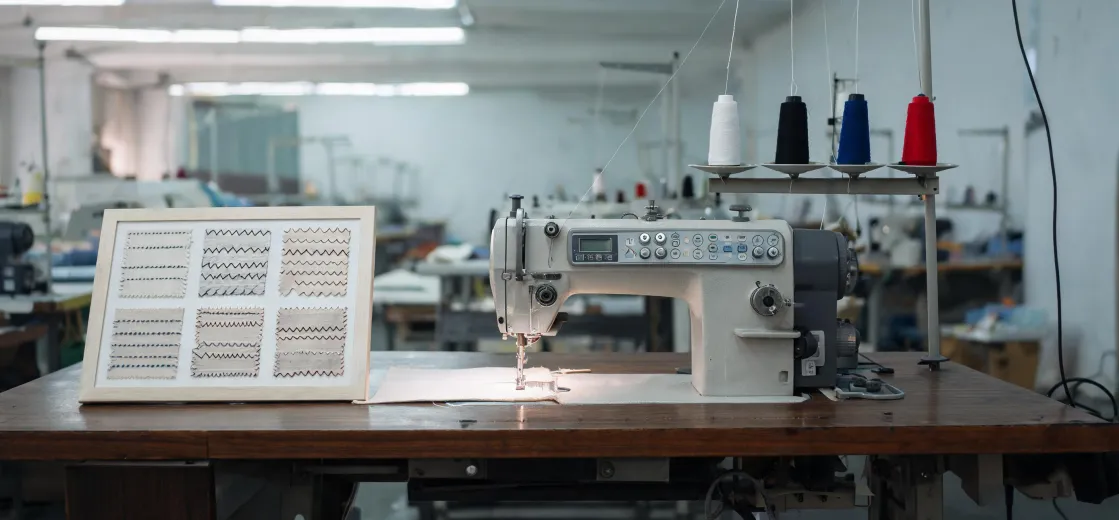
This is where understanding jack sewing machine models matters. The jack-sewing lineup covers a wide range: single-needle lockstitch, overlock, flatbed, post-bed, and specialized units for different production needs. The model number tells you more than the logo ever will.
For embroidery equipment, the picture changes. You're now comparing computerized multi-head systems—and brands like Vango and Happy Japan are often in that conversation. Don't assume the same brand that makes a solid industrial machine also makes a great embroidery system. The "one brand to rule them all" thinking comes from an era when product lines were simpler. This was true 30 years ago. Today, it's not. Specialization is the norm.
So: make a list of 3–5 concrete models that match your job requirements from Step 1. Compare those models, not the logos on them.
3. Get a delivered price, not a sticker price
The classic trap. You see a great price, then discover shipping, customs, installation, and tooling costs that turn the real number upside down.
We answer a lot of questions about jack sewing machine price in Egypt specifically, because that market is price-sensitive and import logistics add complexity. But this applies to every market: get the total delivered cost in writing before you compare anything.
Here's what I request from every vendor before their quote gets on my spreadsheet:
- FOB or EXW price
- Freight to the port or your door
- Customs duties and taxes (estimated or confirmed)
- Delivery lead time
- Installation and training: included or billed separately?
- Spare parts kit: what's in the box?
If a vendor hesitates to put these in writing, that's a red flag. Granted, some vendors are just slow. But more often than not, the ones who reply fast with exact numbers are also the ones who deliver on time.
They warned me about hidden fees with a vendor once. I didn't listen. The "cheap" quote ended up costing 30% more than the "expensive" one.
For rough context: based on publicly listed prices as of January 2025, entry-level industrial single-needle machines broadly range from $300–800. Mid-range production models run $800–2,500. Multi-head embroidery systems start around $5,000 and go up from there. These are wide ranges—actual quotes vary a lot by configuration and region. Don't hold me to exact numbers.
4. Check parts and service before you fall in love with a machine
A great machine with no parts support is a paperweight in eighteen months.
Before we buy, I ask three questions:
- Are common spare parts (needles, bobbin cases, feed dogs, belts) available locally, or do they ship from abroad?
- What's the typical turnaround for a repair part?
- Is there a trained technician nearby? Or remote diagnostics?
Specialized equipment makes this more critical. When you're evaluating a vango embroidery machine or a multi-head unit from Happy Japan, downtime costs more and parts availability is tighter. For industrial sewing machines, the Jack product line has decent parts and accessories coverage in many regions—but confirm it for your specific model and your specific region.
Side note: a "cheap" machine from a seller with no local parts network cost us 18 days of production when a feed dog broke. The $1,200 redo taught me to ask these questions first.
5. Look at the software and user ecosystem
For embroidery machines, the real product isn't the hardware. It's the software and file compatibility.
If the machine doesn't read the file formats your designers produce, you'll lose days reformatting—or lose designs entirely. Check:
- Which digitizing software does the machine work with?
- File format support: PES, DST, EXP, others?
- Is the software included, or an extra cost?
- What's the firmware update policy?
I'm not 100% sure about the current software bundles for every model—lineups change fast. So I always ask for a live demo before we sign. Don't skip that. A colleague once bought a used embroidery system and discovered the software was five versions behind what his designers used. The upgrade cost more than the machine.
People search for "www.husqvarnaviking.com embroidery machine" or "happy japan embroidery machine for sale" because these brands have established ecosystems. That's genuinely valuable: documentation, tutorials, community support. But confirm that the specific model you want is supported in your region, not just sold under the name.
6. Calculate TCO, not just unit price
This is the step that saves the most money—and the one most people skip.
I built our total cost of ownership calculator after getting burned on hidden fees twice. Actually, three times. But who's counting.
Total cost of ownership includes:
- Purchase price (delivered, per Step 3)
- Installation and labor cost
- Power consumption over expected lifetime
- Consumables: needles, thread, oil, filters
- Annual maintenance parts and repair cost
- Operator training cost
- Downtime cost per hour × expected breakdown frequency
- Resale value (yes, this matters more than you'd think)
A machine at $5,000 and one at $6,500 look very different on paper. But if the $6,500 machine uses 30% less electricity, has a two-year warranty instead of one, and holds resale value better, the TCO gap shrinks fast. Sometimes it reverses.
7. Start with a pilot machine
Every mistake I've made buying equipment came from ordering in bulk without testing. "This is the model everyone uses." Sure. But not necessarily in our facility.
If you need five machines, buy one first. Run it 2–4 weeks on your actual production line. Measure:
- Output speed vs. current machines
- Stitch consistency on your fabrics
- Operator learning time
- Breakdown frequency
- How easy it is to clean and maintain
I get why people skip pilots—deadlines, budgets, pressure. But the pilot pays for itself the first time it catches a problem that would have been multiplied across five machines.
Even after we approved our latest pilot order, I kept second-guessing. What if the software integration was clunkier than it looked in the demo? The three weeks until delivery were stressful. Didn't relax until the first 2,000 units ran through with zero stitch defects.
Common mistakes to avoid
Three more things I've learned the hard way:
1. Don't assume warranty coverage is worldwide. Some machines sold through export channels have warranties valid only in the country of purchase. Check the warranty territory before you commit.
2. Don't accept verbal training promises. "We'll provide training" is not a commitment. Put hours, materials, and who-pays-for-what in writing.
3. Respect the line between industrial sewing and embroidery. They're different specializations. If you need both, consider finding a specialist for each. The best embroidery machine dealer may not be the best industrial sewing machine supplier—and that's okay. Specialists who know their limits beat generalists who overpromise. Every time.

Elise Marceau
Elise Marceau is an LED display and digital-signage systems analyst covering LED video walls, modular screens, transparent LED, control processors, and indoor or outdoor signage. She applies IEC 62368-1 safety principles while comparing pixel pitch, luminance, contrast, refresh rate, colour uniformity, viewing angle, ingress protection, power density, module serviceability, and signal redundancy. Her specification guides help integrators, venue operators, retailers, and procurement teams align viewing distance, ambient light, content format, installation access, electrical load, and lifecycle support.